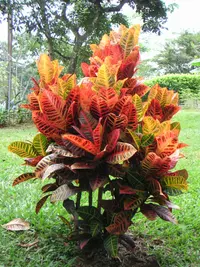


Garden croton (Codiaeum variegatum) Light Needs

Garden croton grows best in bright indirect or filtered light with a few hours of gentle direct sun.

Light Preference

Bright Indirect Light

Codiaeum variegatum Light Requirements

Codiaeum variegatum is native to tropical Southeast Asia and western Pacific islands, where it grows in warm, humid forest edges, thickets, and open clearings. Light is often bright and filtered, with periods of direct sun where overhead cover is open.

Cultivated plants keep stronger leaf color when light stays high. Preferred light is bright indirect or filtered light with some gentle direct sun.

  • Ideal exposure:

    Garden croton needs about 6–8 hours of bright indirect or filtered light daily, including 2–4 hours of gentle direct morning sun.

  • Direct sun:

    Mature, acclimated plants can tolerate several hours of direct sun and even full sun outdoors, but sudden harsh afternoon sun can scorch leaves.

  • Lower light:

    Dim rooms are not suitable and usually lead to duller color and weaker, stretched growth.

  • Afternoon heat:

    In hot windows or outdoor sites, filter intense midday and afternoon rays to prevent sun stress.

Indoors, choose the brightest spot available while protecting the leaves from intense, unfiltered afternoon sun.

NPoor
North-facing window:

A north-facing window is usually poor because the light is too weak for strong color and compact growth.

EBest
East-facing window:

An east-facing window is best because morning sun adds direct light without the strongest afternoon heat.

SSuitable
South-facing window:

A south-facing window is suitable if the plant is 2–4 ft from the glass or behind a sheer curtain.

WConditional
West-facing window:

A west-facing window is conditional because afternoon sun can be hot; filter it or keep the plant 3–5 ft back.

Adjust placement by watching color, stem spacing, and any sunburn on the most exposed leaves.

Excess light usually shows after a sudden move into stronger sun.

Bleached patches:

Leaves may develop pale, tan, or grayish areas where direct rays hit the surface.

Crisp spots:

Sunburned areas can become dry and papery, often on the most exposed upper leaves.

Faded color:

Very strong sun can wash out the normal contrast instead of making the foliage richer.

Leaf curl:

Leaves may curl or angle away during hot afternoon exposure, especially behind glass.

Move the plant out of harsh afternoon sun and keep it in bright filtered light. If a brighter site is needed, increase exposure gradually over 1–2 weeks.

Low light usually affects color and shape before it causes major decline.

  • Muted color:

    New leaves may show weaker contrast when light is too low.

  • Stretched stems:

    Growth can become leggy, with longer spaces between leaves.

  • Leaning growth:

    Stems may angle strongly toward the nearest window.

  • Small new leaves:

    New growth may emerge smaller during the active growing season.

  • Slow growth:

    Little change in spring or summer can suggest the light level is too weak.

Move the plant closer to a bright window or a brighter filtered position. Improve light gradually if the plant has been in a dim area for a long time.

If ideal light is not available, choose the brightest indirect light and allow gentle morning sun when possible.

Rotate the pot every 1–2 weeks so all sides receive exposure and the canopy stays even.

Avoid deep interior rooms because they cannot meet Codiaeum variegatum light needs for strong color and compact growth.

Get Personalized Care Plan

Scan your plant to receive care tips personalized for your specific plant

FAQ

The best light for Garden croton is bright indirect or filtered light for most of the day, with a few hours of gentle morning sun when available.

More Plant Light Guides

Get the Botan App

Discover how to care for your plants with Botan.

Botan app identifying a plant with a phone camera
Rice Water for Plants – Which Plants Love It and How to Make It

8 min read · 14 Jul 2026

Rice Water for Plants – Which Plants Love It and How to Make It

Rice water can be an ideal DIY solution for orchids, roses, or fruiting plants. It supports growth, leaf count, and height. We’ll share how to make and apply it correctly for your plant.

Plant Care
Rice Water for Plants – Which Plants Love It and How to Make It
13 Best Front Yard Trees for Every Home and Yard

12 min read · 7 Aug 2026

13 Best Front Yard Trees for Every Home and Yard

A front yard tree can stay for decades. Therefore, choosing one deserves serious consideration. Here are 13 trees that have proven themselves, sorted by their purpose. You'll also find five species to avoid and basic planting information.

Plant Recommendations
13 Best Front Yard Trees for Every Home and Yard
Best Time to Water Grass in Summer – Lawn Watering Tips

5 min read · 21 Jul 2026

Best Time to Water Grass in Summer – Lawn Watering Tips

Summer watering is easy to get wrong. This guide explains when to turn on your sprinkler, how much liquid your grass needs each week, and how to tell if you're overwatering or underwatering.

Plant Care
Best Time to Water Grass in Summer – Lawn Watering Tips