Hibiscus Luna Pink Swirl Care

Hibiscus Luna™ Pink Swirl

About Hibiscus Luna Pink Swirl

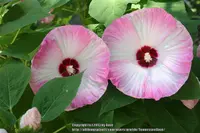
Hibiscus Luna Pink Swirl is a compact, herbaceous perennial hibiscus bred for bold, showy summer flowers. It forms a bushy clump with sturdy, upright stems and large maple-like leaves. The plant produces very large, flat blooms with pink and white swirled petals and a prominent red eye, giving a tropical look in a temperate garden. Although derived from North American hardy hibiscus species, it is grown mainly as an ornamental in gardens and containers.

This cultivar is considered relatively easy to grow if given full sun, consistent moisture, and well-drained, fertile soil. These traits make it suitable for gardeners who want to care for Hibiscus Luna Pink Swirl without complex maintenance.


Main Plant Requirements

Care Difficulty

Moderate Care

Light Preference

Full Sun

Water Requirements

Regular Water

Temperature Preference

Warm Climate

Hardiness Zone

5–9

Soil Texture

Loamy, Clay, Organic-rich

Soil pH

Acidic (5.5–6.5), Slightly acidic (6.5–7.0)

Soil Drainage

Moist but well-drained

Fertilization

Moderate (every 2–4 weeks)

Get Personalized Care Plan

Scan your plant to receive care tips personalized for your specific plant

Available on iOS and Android

How to Care for the Hibiscus Luna Pink Swirl

This compact hardy hibiscus performs best in strong, consistent light outdoors.

  • Provide 6–8 hours of direct sun daily, ideally with morning sun and light afternoon shade in hotter regions to protect flowers from scorching.
  • Tolerates partial shade (around 4–5 hours of sun), but Hibiscus Luna Pink Swirl may produce fewer and smaller blooms in reduced light.
  • In summer, avoid harsh reflected heat from walls or pavement; in cooler months, ensure the planting site is not heavily shaded by trees or buildings.

This plant prefers evenly moist soil but reacts poorly to both drought and waterlogging.

  • Water when the top 3–5 cm of soil feels dry, soaking the root zone deeply and then allowing excess water to drain away.
  • In hot summer weather, expect more frequent watering, while in cooler spring and fall conditions, extend the interval as drying slows.
  • Watch for yellowing, soft leaves as a sign of overwatering, and wilted, crisp foliage or bud drop as a sign the plant has stayed too dry.

This perennial hibiscus handles summer heat but is sensitive to cold and frost during active growth.

  • Aim for active growth in 70–90°F (21–32°C); foliage and flowering slow noticeably below about 65°F (18°C).
  • Protect from frost, as top growth is damaged around 32°F (0°C); roots in the ground can survive winter to about 0°F (−18°C) in many climates if mulched.
  • During heat waves above 95°F (35°C), provide extra water and light afternoon shade to reduce stress and prevent bud drop.

This hibiscus prefers moderate humidity but usually adapts to typical indoor and outdoor levels.

  • Aim for 40–60% humidity to support steady growth and flowering.
  • Dry indoor air may cause leaf edges to brown or buds to drop before opening.
  • Increase humidity by grouping plants or placing the pot on a pebble tray with water, keeping the base above the waterline.

Hibiscus Luna Pink Swirl grows best in moist, well-drained, nutrient-rich soil that does not stay waterlogged.

  • Use a loamy mix with high organic matter, such as garden loam blended with compost, for both moisture retention and structure.
  • Ensure sharp drainage by adding 20–30% perlite or coarse sand so water drains within a few minutes after thorough watering.
  • Target a slightly acidic to neutral pH of 6.0–7.0; avoid alkaline soil that can cause nutrient lockout and yellowing leaves.
  • Do not use heavy clay or compacted ground; improve aeration by loosening the top 10–15 cm and incorporating organic material before planting.

This compact hibiscus is well suited to container growing outdoors on patios or balconies.

  • Choose a sturdy, wide container to balance the plant’s tall flowering stems and reduce the risk of tipping in wind.
  • Select a pot at least 30–35 cm deep to accommodate its fleshy roots and maintain even moisture between waterings.
  • Use thick-walled or glazed containers in hot climates to slow moisture loss and prevent roots from overheating against sun-heated surfaces.

Feeding supports strong growth and abundant blooms on Hibiscus Luna Pink Swirl during its active season.

  • Use a balanced, water-soluble fertilizer (around 10-10-10 or 20-20-20) diluted to 1/2 strength for container plants.
  • Apply every 2–3 weeks from late spring through late summer when growth and flowering are strongest.
  • For in-ground plants, mix in compost or use a slow-release granular fertilizer once in spring.
  • Reduce feeding to once every 6–8 weeks in fall and stop during winter dormancy.

Thoughtful pruning keeps Hibiscus Luna Pink Swirl compact, healthy, and flowering well.

  • Use clean, sharp bypass pruners to avoid tearing stems and spreading disease.
  • In late winter or very early spring, remove dead, damaged, and crossing stems back to healthy tissue.
  • Lightly thin crowded shoots to improve air flow and light penetration into the canopy.
  • Deadhead spent blooms and remove seed pods to direct energy into new flowers and sturdier growth.

Container-grown plants benefit from periodic repotting or transplanting to maintain healthy roots and flowering.

  • Check for roots circling the pot, growing through drainage holes, or slowed top growth as signs it needs a larger container.
  • Plan repotting or transplanting in early spring before vigorous new growth begins, typically every 2–3 years.
  • Move into a pot 2–5 cm wider, using fresh, well-draining mix, and keep roots at the same soil depth as before.
  • Water thoroughly after moving, shade from harsh sun for a few days, and keep soil evenly moist to limit transplant shock.

New plants are most commonly produced from softwood cuttings or seeds rather than division.

  • Take 8–12 cm softwood cuttings in late spring to early summer from non-flowering shoots.
  • Remove lower leaves, dip the cut end in rooting hormone, and insert into a sterile, well-draining medium.
  • Maintain high humidity, bright indirect light, and a soil temperature around 70–75°F to encourage rooting.
  • Sow seeds indoors in early spring, lightly cover, and keep evenly moist until germination.

This hardy perennial hibiscus usually survives winter well but benefits from simple root-zone protection in colder regions.

  • Plants tolerate light to moderate frost once dormant, with woody stems dying back in many climates.
  • After hard frost, cut stems back to 5–10 cm above soil to tidy and reduce pest shelter.
  • Apply a 5–8 cm mulch layer over the root zone, keeping it just clear of the crown, to buffer freeze–thaw cycles.
  • For containers in colder zones, move pots into an unheated garage or sheltered area to reduce root freezing.

Care Tips

Seasonal container shift

In cold climates, grow this plant in a large, lightweight container so it can be moved into a frost-free garage or porch once night temperatures drop below 45°F, then returned outdoors after the last spring frost to extend its flowering season.

Bud protection strategy

During peak bloom, protect forming buds from heavy rain and strong wind by placing the plant near a windbreak or temporary shelter, which reduces bud drop and petal damage.

Targeted deadheading

Remove spent blooms daily by snapping or cutting them off at the base of the flower head, which keeps the plant tidy and can encourage more continuous flowering on new growth.

Soil surface cooling

Apply a 3–5 cm layer of light-colored mulch or fine pine bark around, but not touching, the crown to keep roots cooler in summer and reduce stress during heat waves when growing Hibiscus Luna Pink Swirl.

Early pest scouting

Inspect the undersides of leaves and tender shoot tips twice a week for aphids, whiteflies, and spider mites, and wash them off with a firm stream of water at first sight to prevent large infestations that can reduce flowering.

Common Pests and Diseases

Japanese beetles

These insects skeletonize leaves and chew large holes in flower buds and petals, often appearing in groups during warm, sunny weather.

Solution

Hand-pick beetles in early morning into soapy water, use fine mesh netting over plants during peak activity, and remove nearby favored host plants such as roses if possible; in heavy infestations, apply a targeted product labeled for Japanese beetles to foliage and buds, following label directions closely.

Hibiscus sawfly larvae

These pests feed on the undersides of leaves, leaving thin, transparent patches or a lace-like appearance, especially on young foliage.

Solution

Inspect leaves regularly, crush or rinse off larvae with a firm stream of water, prune heavily infested leaves, and if damage continues, use a spinosad-based product or insecticidal soap directed to the undersides of leaves.

Hibiscus leaf spot

This disease causes small brown or tan spots on leaves that can merge into larger blotches, leading to yellowing and premature leaf drop in warm, humid conditions.

Solution

Remove and discard affected leaves, avoid overhead watering, increase spacing and airflow around plants, and apply a copper or chlorothalonil fungicide labeled for hibiscus at the first sign of spotting if conditions remain wet.

Botrytis blight

This disease affects flower buds and spent blooms, which turn brown, become mushy, and may show gray fuzzy mold, especially in cool, damp weather.

Solution

Deadhead spent or moldy flowers promptly, improve airflow and avoid wetting buds and flowers, and in persistent cases use a fungicide labeled for botrytis on ornamental plants during prolonged cool, humid periods.

Aphids

These insects cluster on tender shoots, buds, and the undersides of leaves, sucking sap and causing distortion, sticky honeydew, and sometimes sooty mold on foliage and flowers.

Solution

Spray infested areas with a strong stream of water to dislodge aphids, encourage or introduce natural predators such as ladybird beetles, and use insecticidal soap or neem oil directed to new growth and leaf undersides, repeating as needed according to the product label.

Interesting Facts

Compact hardy hibiscus

This cultivar is a dwarf selection of Hibiscus moscheutos, reaching roughly 60–90 cm tall, which makes it unusually compact compared with traditional hardy hibiscus that often grow over 1.5 m.

Stable bicolor pattern

Its large flowers typically show a consistent pale pink to white background with deeper pink swirling or feathered streaks and a red eye, a stable bicolor trait that differentiates it from many seed-grown hardy hibiscus with more variable flower colors.

Northern climate suitability

Bred as a perennial for temperate regions, this plant is hardy to about USDA zone 5, allowing gardeners in relatively cold climates to grow tropical-looking hibiscus flowers outdoors in the ground.

FAQs about Hibiscus Luna Pink Swirl

This compact hibiscus is treated as a hardy perennial in warm regions and a tender perennial or annual in colder zones. In frost-prone areas it often dies back to the ground and re-sprouts from the crown in spring.

Grow Healthy Plants with Botan Care

Keep your plants happy and healthy with plant identification, disease detection, and easy care guidance.

Botan plant care app — identify plants on mobile

Explore More Plants