Provide sturdy support
Install discreet stakes or a low wire frame around young plants in late spring so the tall, flexible stems stay upright and do not lodge or flop after wind or heavy rain.

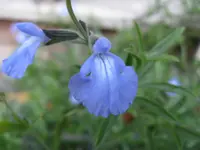
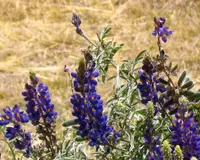
Azure blue sage, Salvia azurea, is a clump-forming perennial in the mint family grown mainly for its clear sky-blue flower spikes. It usually has tall, upright stems with narrow, gray-green leaves and airy blooms that attract bees and butterflies.
This species is native to prairies and open fields in central and southern North America, where it thrives in sun and lean, well-drained soils. Its tolerance of heat, drought, and poor soil makes it relatively simple to grow, as long as drainage is good. Gardeners who want to learn how to care for azure blue sage mainly need to provide strong light and avoid consistently wet conditions.

Care Difficulty
Easy Care

Light Preference
Full Sun

Water Requirements
Low Water

Temperature Preference
Cold Hardy

Hardiness Zone
5–9

Soil Texture
Sandy, Loamy, Rocky

Soil pH
Slightly acidic (6.5–7.0), Neutral (7.0)

Soil Drainage
Well-drained

Fertilization
Minimal (feed rarely)
Scan your plant to receive care tips personalized for your specific plant
Available on iOS and Android
This sun-loving perennial blooms best with strong, direct light.
This species prefers dry to moderately dry conditions once established.
This hardy perennial thrives in warm summers and tolerates substantial winter cold.
Humidity is rarely critical for Salvia azurea, which thrives in relatively dry air.
Salvia azurea prefers light, fast-draining soil that mimics its native prairie and roadside habitats.
This species can be grown in containers if the pot and setup prevent tipping and waterlogging.
This drought-tolerant prairie perennial needs only light feeding in most garden soils.
Thoughtful pruning helps maintain form and flowering performance in Salvia azurea.
This deep-rooted perennial is usually grown in the ground and only rarely kept long term in containers.
Salvia azurea is commonly propagated by seed, softwood cuttings, or careful division of established clumps.
This species is generally cold hardy in much of the US and needs only minimal winter attention.

Plant Health Check
Not sure what's wrong with your plant? Check your plant's health inside the app.
This species flowers very late in the growing season, often into fall, providing nectar and pollen for native bees and migrating butterflies when many other prairie plants have finished blooming.
Salvia azurea forms a deep, fibrous root system that helps it survive drought and prairie fires, an adaptation typical of long-lived North American prairie perennials.
Individual flowers often open a strong sky blue and can fade toward a paler bluish or whitish tone as they age, giving established clumps a softly multicolored appearance at peak bloom.

Wild populations of Salvia azurea are strongly associated with intact tallgrass and mixed-grass prairies of central North America, and conservation plantings using this species are sometimes included in prairie restoration projects to help reconstruct late-season forage and visual structure of these threatened ecosystems.
Poor flowering usually comes from too little direct sun, excess nitrogen fertilizer, or plants that are too young. Avoid heavy feeding, keep soil on the lean side, and deadhead spent stems to encourage more buds along current-season growth.
Keep your plants happy and healthy with plant identification, disease detection, and easy care guidance.