Acmispon tomentosus Care

Acmispon tomentosus

About Acmispon tomentosus

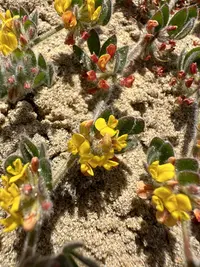
Acmispon tomentosus is a small, low-growing perennial legume native to arid and semi-arid regions of western North America. It often forms loose mats or open clumps with fine, gray-green, hairy foliage. The soft hairs give the plant a silvery look and help it tolerate sun, wind, and dry air. In season, it produces small pea-like flowers, usually yellow, that attract native pollinators. This species typically occurs on sandy or rocky slopes and open scrub, where soils drain quickly and rainfall is low. These traits make it best suited to dry, sunny gardens and naturalistic plantings. Understanding how to care for Acmispon tomentosus starts with providing strong light, lean soil, and only modest moisture.

Main Plant Requirements

Care Difficulty

Moderate Care

Light Preference

Full Sun

Water Requirements

Low Water

Temperature Preference

Warm Climate

Hardiness Zone

8–10

Soil Texture

Sandy, Loamy, Rocky

Soil pH

Slightly acidic (6.5–7.0), Neutral (7.0)

Soil Drainage

Well-drained

Fertilization

Minimal (feed rarely)

Get Personalized Care Plan

Scan your plant to receive care tips personalized for your specific plant

Available on iOS and Android

How to Care for the Acmispon tomentosus

This drought-adapted California native prefers full sun but can handle some light shade in hot climates.

  • Provide 6–8 hours of direct sun daily; open exposures suit Acmispon tomentosus in coastal or mild inland sites.
  • In very hot inland areas, give full morning sun with light afternoon shade or high, filtered light to reduce leaf scorch.
  • Plants in partial shade (3–4 hours direct sun) grow looser and flower less; too much shade leads to weak, lanky stems and fewer pods.

This species is adapted to dry conditions and needs infrequent, deep watering once established.

  • Let soil dry at least in the top 5–8 cm before watering; in-ground plants often need water only every 2–4 weeks in summer, less or none in winter rain.
  • Use very well-drained, sandy or gravelly soil so water does not sit around roots and cause yellowing, collapse, or root rot.
  • Thin, dull foliage and early leaf drop suggest underwatering, while soft stems, blackened crowns, or a sour soil smell indicate excess moisture.

This dryland legume prefers warm, low-humidity conditions and does not tolerate hard frost well.

  • Aim for 65–85°F (18–29°C) during active growth; plants stay most vigorous with warm days and cooler, but not cold, nights.
  • Established plants handle brief heat up to about 95–100°F (35–38°C) if soil is well drained, but flowering and foliage can suffer during prolonged heat waves.
  • Protect from frost; damage often begins below 28°F (-2°C), and prolonged exposure under 25°F (-4°C) can kill stems or entire plants, especially young ones.

This drought-adapted desert legume has no special humidity requirements and thrives in dry air.

This species prefers very well-drained, mineral, low-organic soil similar to native desert conditions.

  • Use a gritty mix of 50–70% coarse sand or fine gravel with the rest sandy loam or cactus mix.
  • Ensure extremely fast drainage; water should pass through the soil within seconds, not linger or pool.
  • Maintain slightly acidic to neutral pH around 6.0–7.5, avoiding strongly acidic or alkaline extremes.
  • Avoid heavy clay, peat-heavy, or compacted mixes that hold moisture and limit root aeration, as these promote rot.

This plant can be grown in containers if the setup strongly favors rapid drainage and root aeration.

  • Choose a wide, shallow pot to match the spreading, shallow root system and reduce the risk of waterlogged lower layers.
  • Use unglazed terracotta to let moisture evaporate through the pot walls, keeping the root zone dry between waterings.
  • Raise the container on feet or bricks so drainage holes remain fully open and runoff escapes quickly after irrigation.

This dryland native shrub usually grows well in lean soils and needs minimal feeding.

  • For container-grown Acmispon tomentosus, use a low-strength balanced NPK fertilizer (e.g., 10-10-10) diluted to 25–50% once in mid-spring.
  • Apply a thin layer of well-aged compost around the root zone if growth appears weak, avoiding direct stem contact.
  • Do not fertilize during summer heat stress, late fall, or winter dormancy to prevent soft, frost-tender growth.

Pruning is light and mainly aimed at maintaining health and a compact form.

  • Best time for pruning Acmispon tomentosus is late winter to very early spring, before vigorous new growth begins.
  • Remove dead, damaged, or crossing stems with clean, sharp hand pruners to improve air flow and reduce disease risk.
  • Shorten leggy shoots lightly to encourage bushier growth without removing too much of the flowering wood.
  • Avoid hard renovation cuts; instead, thin a few older stems at the base over successive seasons if needed.

This species is more often transplanted in the ground than kept long term in containers.

  • Transplant in late fall or early spring when temperatures are mild and soil is workable.
  • Look for signs such as roots circling the pot, rapid drying of the soil, or stalled growth before moving Acmispon tomentosus.
  • Shift to only 1 pot size larger or a well-drained in-ground site, disturbing the root ball as little as possible.
  • Water thoroughly after transplanting, then keep soil just lightly moist until new growth indicates that roots have re-established.

Propagation is most reliable from seed, with some potential for softwood cuttings in controlled conditions.

  • Collect mature seed pods in late summer, then dry and store seeds cool and dry until sowing.
  • Scarify seeds lightly with sandpaper or a brief hot-water soak to speed and even out germination.
  • Sow in a very well-drained, sandy mix, keeping temperatures around 60–70°F and moisture just barely moist, not wet.
  • For softwood cuttings, take non-flowering tips in late spring, use rooting hormone, and place under bright, indirect light with high humidity.

This drought-adapted legume is usually cold hardy in mild, frost-prone climates and needs limited winter care.

  • Established in-ground plants tolerate light to moderate frost once hardened off.
  • Apply a light, breathable mulch around the root zone in late fall, keeping it a few cm away from stems.
  • In colder regions or exposed sites, grow Acmispon tomentosus in containers and move to a bright, cool, frost-free shelter for winter.

Care Tips

Encourage Compact Form

Pinch soft shoot tips lightly in late winter or very early spring to promote a bushier, wind-resistant plant structure rather than tall, floppy stems.

Protect Root Zone

Use a thin mineral mulch layer such as small gravel around the crown to keep the root zone cool, reduce evaporation, and prevent soil crusting without holding excess moisture against the stems.

Inoculate With Rhizobia

When establishing new plants, dust seeds or roots with an appropriate native rhizobial inoculant so the roots form healthy nitrogen-fixing nodules and reduce future fertilizer needs.

Avoid Summer Disturbance

Limit transplanting, major pruning, or heavy foot traffic near the plant during peak summer heat, as this species often slows growth and relies on stable soil conditions to cope with drought.

Monitor Pod Development

Allow some seed pods to mature and dry fully on the plant, then collect and store seeds in a cool, dry place to maintain a local seed source and genetic line for future planting when caring for Acmispon tomentosus.

Common Pests and Diseases

Pea aphids

This pest feeds on young stems, leaves, and flower buds, sucking sap and causing distortion, sticky honeydew, and sooty mold growth. Symptoms include curled or yellowing foliage and clusters of soft green insects on tender tips.

Solution

Rinse colonies off with a firm stream of water and pinch back heavily infested soft tips. For persistent infestations, apply insecticidal soap or a light horticultural oil in the early morning, repeating every 5–7 days until natural enemies such as lady beetles regain control.

Leafhoppers

These insects hop quickly from stems and leaves, feeding on sap and causing pale stippling, yellow speckling, and reduced vigor. Symptoms include rapid leaf yellowing and, in severe cases, edge browning on drought-stressed plants in dry sites where this species commonly grows.

Solution

Reduce nearby tall weeds that harbor leafhoppers, and keep the plant well watered but not soggy during hot, dry periods to reduce stress. If damage is heavy, use insecticidal soap or neem oil directed at the undersides of leaves in the evening, repeating at 7–10 day intervals while monitoring for beneficial insects.

Fusarium wilt

This disease infects the vascular tissue, blocking water movement and causing sudden wilting, yellowing, and dieback, often on one side of the plant first. Symptoms include dull, grey-green foliage that does not recover even when soil is moist, especially in overwatered or poorly drained, warm conditions.

Solution

Remove and discard affected plants and nearby plant debris, and avoid replanting legumes in the same spot for several years. Improve soil drainage, avoid overhead watering, and use only clean tools and propagation material to limit spread, focusing on growing Acmispon tomentosus in well-drained, low-organic soils similar to its native habitat.

Powdery mildew

This disease appears as a white, powdery coating on leaves and stems, leading to reduced photosynthesis and premature leaf drop. Symptoms include dull, mottled foliage and reduced flowering, especially in plants grown in shade with warm, dry air and poor air movement.

Solution

Increase sun exposure and spacing to improve airflow, and remove the most affected leaves to reduce spore load. For ongoing issues, apply a baking soda-based or potassium bicarbonate fungicide or neem oil on dry foliage, repeating every 7–14 days while keeping irrigation at the soil level rather than over the foliage.

Interesting Facts

Desert legume specialist

This species is a small, woolly perennial legume native to arid and semi-arid regions of the southwestern United States and northern Mexico, where it is adapted to dry, rocky, often nutrient-poor soils.

Silvery hairs advantage

The dense, grayish hairs on its leaves and stems reduce water loss and reflect intense sunlight, a common xerophytic adaptation that helps the plant maintain cooler leaf temperatures in hot desert habitats.

Soil nitrogen partner

Like many members of the pea family, it forms root nodules with nitrogen-fixing bacteria, enriching surrounding soils and supporting other native desert plants over time.

FAQs about Acmispon tomentosus

The flowers provide nectar and pollen that appeal to many native bees and some small butterflies. It is considered a good support plant for local pollinator communities, especially in dry, open sites with minimal pesticide use.

Grow Healthy Plants with Botan Care

Keep your plants happy and healthy with plant identification, disease detection, and easy care guidance.

Botan plant care app — identify plants on mobile

Explore More Plants