Renewal coppicing
Every 3–4 years, cut back one-third to one-half of the oldest stems near the base in late winter to maintain a compact habit and encourage vigorous, floriferous new growth.

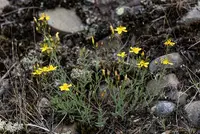
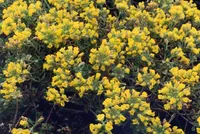
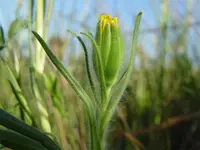
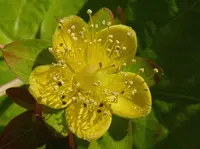
Hypericum linarioides is a small, woody shrub in the St. John’s wort group, valued mainly for its clusters of bright yellow flowers. It typically forms a low, bushy mound with narrow leaves and a fine, delicate texture that works well in rock gardens or dry borders.
This species is native to rocky, often mountainous habitats in parts of southeastern Europe and western Asia, where it copes with poor, well-drained soils. Its natural toughness and drought tolerance make it relatively straightforward to grow once established, especially in sunny, open sites. Gardeners who want to care for Hypericum linarioides should focus on providing good drainage and avoiding heavy, waterlogged soils.

Care Difficulty
Easy Care

Light Preference
Full Sun

Water Requirements
Low Water

Temperature Preference
Cold Hardy

Hardiness Zone
5–8

Soil Texture
Sandy, Loamy, Rocky

Soil pH
Slightly acidic (6.5–7.0), Neutral (7.0)

Soil Drainage
Well-drained

Fertilization
Minimal (feed rarely)
Scan your plant to receive care tips personalized for your specific plant
Available on iOS and Android
This sun-loving shrub thrives in open, bright positions with only light shade in hotter climates.
This species prefers moderately dry conditions and is more sensitive to excess moisture than to short dry spells.
This hardy shrub copes well with a broad temperature range once established in the ground.
This shrub tolerates typical outdoor humidity and is not sensitive to indoor air levels.
This species prefers light, well-drained mineral soils that do not stay wet.
This species can be grown successfully in containers outdoors if drainage and root space are managed carefully.
This drought-tolerant shrub needs only light feeding in average garden soil, so Hypericum linarioides care focuses more on sun and drainage than fertilizer.
Pruning Hypericum linarioides helps maintain a compact, floriferous shrub and remove aging wood.
This species is usually grown in the ground; transplanting Hypericum linarioides is more common than repotting mature plants.
Hypericum linarioides plant care includes straightforward propagation from both cuttings and seed when conditions are warm and bright.
In many temperate climates this shrub is quite hardy and usually needs minimal winter care once established outdoors.

Plant Health Check
Not sure what's wrong with your plant? Check your plant's health inside the app.
This species is naturally associated with rocky slopes, cliffs, and limestone outcrops in parts of southeastern Europe, where it often grows in shallow, mineral-rich but low-organic soils.
The leaves are unusually narrow and linear for a Hypericum species, giving the plant a delicate, almost heath-like texture compared with the broader leaves typical of many congeners.
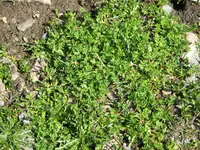
It usually forms low, spreading mats or mounds rather than upright shrubs, which reflects its adaptation to exposed, wind-influenced habitats where a compact form reduces mechanical stress.
This species forms a low, spreading subshrub but is not usually aggressive in typical garden settings. It can slowly expand by short rhizomes and self-seeding, so occasional thinning of seedlings keeps it within bounds.
Keep your plants happy and healthy with plant identification, disease detection, and easy care guidance.