bushman's poison Care (Adenium boehmianum)

Also known as: Kaoko Impala-Lily
bushman's poison

About bushman's poison

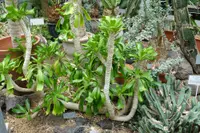
Bushman's poison, Adenium boehmianum, is a succulent shrub or small tree with a swollen, bottle-shaped trunk and sparse branches. It belongs to the desert rose group and stores water in its thick caudex.

This species is native to arid regions of Namibia and Angola, where it grows in rocky, well-drained soils with intense sun and little rainfall. Its showy, pale pink to purple flowers contrast with its often leaf-sparse stems.

The plant is slow-growing and drought-tolerant but sensitive to cold, excess moisture, and poor drainage, which can cause root rot. Understanding how to care for bushman's poison starts with bright light, low to moderate watering, and very free-draining soil.

Main Plant Requirements

Care Difficulty

Moderate Care

Light Preference

Full Sun

Water Requirements

Low Water

Temperature Preference

Tropical / Frost Sensitive

Hardiness Zone

10–12

Soil Texture

Sandy, Loamy, Rocky

Soil pH

Slightly acidic (6.5–7.0), Neutral (7.0)

Soil Drainage

Well-drained

Fertilization

Light (every 4–6 weeks)

Get Personalized Care Plan

Scan your plant to receive care tips personalized for your specific plant

Available on iOS and Android

How to Care for the bushman's poison

This desert succulent needs strong light to form a compact, flowering shrub.

  • Provide 6–8 hours of direct sun daily; morning and late-afternoon sun are ideal, with light midday shade in very hot regions.
  • Plant bushman's poison in an open, unshaded spot outdoors; it tolerates light partial shade but may grow leggy and flower less below 4–5 hours of direct sun.
  • In winter, ensure the brightest possible exposure; in cool, cloudy climates, a south-facing position or supplemental light reduces weak, stretched growth.

This species stores water in its caudex, so watering must be infrequent and controlled.

  • Water only when the top 3–5 cm of soil are completely dry; in warm growing weather this may mean deep watering every 7–14 days in very free-draining soil.
  • Use a gritty, fast-draining mix and allow excess water to run off; soft, yellowing leaves and a mushy caudex indicate overwatering and possible root rot.
  • Reduce watering sharply in cool seasons or dormancy, giving just enough to prevent full shriveling of Adenium boehmianum but never letting it sit in wet soil.

This arid-climate shrub prefers warm, stable conditions and is highly sensitive to frost.

  • Aim for 70–90°F (21–32°C) during active growth for strongest stems and flowering; brief peaks to 95°F (35°C) are tolerated if soil is well drained and not constantly wet.
  • Protect from cold below 50°F (10°C); growth slows markedly, and sustained exposure near 40°F (4°C) can damage roots and the caudex.
  • Never allow frost; temperatures at or below 32°F (0°C) can kill tissues, so move plants or provide cover before cold snaps, especially in late fall and early spring.

This species prefers dry to moderately dry air, so humidity control is usually low priority.

  • Aim for 30–50% relative humidity, similar to typical indoor air in heated homes.
  • Bushman's poison tolerates very dry air but may wrinkle slightly if combined with underwatering.
  • If leaves or tips shrivel while soil stays moist, lower humidity and improve air movement instead of misting.

This caudiciform succulent needs very fast-draining, mineral-heavy soil to avoid root and caudex rot.

  • Use a gritty mix of roughly 50–70% inorganic material such as pumice, coarse sand, or small gravel, with 30–50% cactus potting mix.
  • Keep pH slightly acidic to neutral (pH 6.0–7.0), which suits Adenium boehmianum and supports nutrient availability.
  • Ensure the mix feels loose and airy; water should pass through in seconds, not sit on the surface.
  • Avoid peat-heavy, compacted, or moisture-retentive soils that stay wet longer than 1–2 days after watering.

This species is very suitable for container growing due to its compact root system and sculptural caudex.

  • Choose a wide, shallow pot to encourage caudex flare and prevent toppling as the plant becomes heavier above ground.
  • Select unglazed terracotta if extra evaporation is needed in humid or cool climates to keep the root zone drier.
  • Elevate the pot on feet or a stand so drainage holes stay clear and excess water escapes quickly after heavy watering.

Adenium boehmianum benefits from light, controlled feeding to support growth while avoiding root and caudex burn.

  • Use a balanced liquid fertilizer (e.g., 10-10-10 or 20-20-20) diluted to 25–50% strength during active growth.
  • Feed every 4–6 weeks in spring and summer only when the plant is in strong light and actively growing.
  • Stop feeding in fall and winter; a resting bushman's poison with cool temperatures and low light should not receive fertilizer.
  • Avoid compost-rich mixes; use a gritty, fast-draining substrate and flush the pot occasionally to prevent salt buildup.

Pruning Adenium boehmianum helps maintain a compact crown, encourage branching, and remove weak tissue.

  • Carry out structural pruning in late spring to early summer, once active growth is clear.
  • Remove dead, diseased, crossing, or inward-growing stems with clean, sharp bypass pruners or scissors.
  • Shorten overly long or leggy branches to just above a healthy node to promote branching and denser foliage.
  • Allow cut surfaces to dry and callus in a warm, airy place and avoid watering heavily immediately after pruning.

Container-grown plants appreciate infrequent but timely repotting to maintain root health and strong caudex development.

  • Check for roots circling the container, pushing through drainage holes, or unexplained slow growth as signs it needs attention.
  • Plan to repot every 2–3 years in late spring, just before or as active growth starts for Adenium boehmianum.
  • Choose a shallow, wide pot with excellent drainage and a gritty, mineral-rich mix to keep roots aerated and prevent rot.
  • Gently loosen the root ball, trim rotten roots, let cuts callus for a day if needed, then replant and water lightly to reduce stress.

New Adenium boehmianum plants are usually raised from seed, with cuttings as a secondary option for cloning specific forms.

  • Sow fresh seeds in late spring to early summer in a warm (75–85°F), bright, and lightly shaded position.
  • Use a sterile, free-draining mix, keep it just moist, and provide bottom warmth for faster germination.
  • Once seedlings emerge, give strong light and careful watering to build a thick caudex and avoid damping-off disease.
  • For cuttings, allow the base to dry and callus for several days, then root in a gritty medium kept slightly moist and warm.

This species is very frost-sensitive and needs warm, dry winter conditions, especially in containers.

  • Move potted plants indoors or into a heated greenhouse before temperatures drop below 50°F.
  • Provide bright light and keep soil almost dry; water just enough to prevent severe shriveling of the caudex.
  • Avoid cold drafts and sudden temperature swings; aim for a stable 55–65°F rest period.
  • In mild climates, container plants can stay outside only if fully frost-free and sheltered from winter rain.

Care Tips

Caudex shaping

Rotate the pot by 90° every 2–3 weeks during active growth to encourage an evenly thickened caudex and balanced branching rather than a lopsided plant.

Dry-season resting

Reduce water gradually at the end of the warm season and keep the plant much drier while leafless to mimic its natural dry-season dormancy and extend caudex longevity.

Root collar protection

Plant with the upper roots and caudex slightly raised above the soil line and use a coarse mineral top-dressing to keep the neck dry and reduce rot at the root crown.

Branch selection

Pinch or prune overcrowded or crossing shoots at the start of the growing season to direct energy into fewer, stronger branches that can support future flowering.

Preventive pest checks

Inspect leaf undersides, caudex folds, and branch junctions every 1–2 weeks with a hand lens so mealybugs and spider mites are found and treated early when caring for bushman's poison.

Common Pests and Diseases

Oleander aphids

These insects cluster on tender stems and flower buds, sucking sap and causing distortion, sticky honeydew, and sooty mold growth. This pest is especially attracted to succulent Apocynaceae such as desert roses and bushman’s poison.

Solution

Physically remove colonies by pinching or rinsing with a firm stream of water, then treat remaining aphids with insecticidal soap or a light horticultural oil, repeating weekly until controlled. Limit excess nitrogen fertilization that encourages soft new growth, and isolate heavily infested plants to prevent spread when working on Adenium boehmianum care instructions.

Spider mites

These pests thrive in hot, dry conditions and feed on the undersides of leaves, causing fine stippling, dulling of foliage, and fine webbing between stems. Symptoms include gradual leaf yellowing and premature leaf drop when populations are high.

Solution

Increase humidity around the plant without wetting the caudex, then wash foliage thoroughly with water to remove mites and webs. Follow with targeted treatments using insecticidal soap or horticultural oil, ensuring good coverage on the leaf undersides and repeating every 5–7 days until new damage stops.

Mealybugs

These insects appear as white, cottony clusters in leaf axils, under leaves, and around the caudex, feeding on sap and weakening the plant. This pest also excretes honeydew that can lead to sooty mold and attract ants.

Solution

Spot-treat visible insects with cotton swabs dipped in isopropyl alcohol, then rinse the plant gently to remove residues. For persistent infestations, use multiple rounds of insecticidal soap or systemic insecticides labeled for succulent ornamentals, and quarantine affected plants away from other Adenium species.

Caudex soft rot

This disease affects the thickened stem base (caudex), where symptoms include soft, water-soaked tissue, surface discoloration, and a foul smell when advanced. The problem is usually triggered by overwatering, poorly draining soil, or water sitting in caudex crevices during cool periods.

Solution

Immediately reduce watering, unpot the plant, and cut away all soft, discolored tissue with a sterile blade, leaving only firm, healthy caudex. Allow the wounded areas to dry and callus for several days in a warm, airy place, then replant in a fast-draining, gritty mix and water sparingly until strong new growth appears.

Leaf spot fungus

This disease causes small brown or black spots on leaves that may enlarge and merge, sometimes with yellow halos around the lesions. Symptoms include premature leaf drop on stressed or overcrowded Adenium plants, especially in humid conditions or after prolonged leaf wetness.

Solution

Remove and discard affected leaves and improve airflow around the plant, avoiding overhead watering that keeps foliage wet. If the problem persists, apply a fungicide labeled for ornamental leaf spot and space plants so leaves dry quickly, especially during warm, humid weather.

Interesting Facts

Distinctive toxic cardenolides

The latex of this species contains potent cardenolide cardiac glycosides, similar to digitalis compounds, which strongly affect heart function and make all plant parts highly poisonous if ingested.

Namib dryland specialist

This plant is native to the arid regions of northern Namibia and southern Angola, where it grows on rocky slopes and gravelly soils and survives long dry periods by storing water in its thickened trunk base and roots.

Arrow poison heritage

Indigenous communities in its native range have traditionally used its latex as a component of hunting poisons applied to arrow tips, a practice noted in several ethnobotanical records.

Botan icon

Did you know?

Field observations describe its pale pink to purplish, funnel-shaped flowers often appearing after rain on otherwise bare, leafless stems, an adaptation that reduces water loss while still attracting pollinators in its very dry habitat.

FAQs about bushman's poison

Flowering declines when the plant is young, recently repotted, or stressed by temperature swings or root disturbance. Excess nitrogen fertilizer, insufficient rest in cooler, drier conditions, or lack of maturity also reduce bud formation and flowering reliability.

Grow Healthy Plants with Botan Care

Keep your plants happy and healthy with plant identification, disease detection, and easy care guidance.

Botan plant care app — identify plants on mobile

Explore More Plants