Rotate Container Safely
Turn container-grown plants 90° every 4–6 weeks using thick gloves and long tongs so the rosette receives even light without risking injury from the stiff, fibrous leaves.

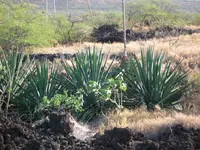
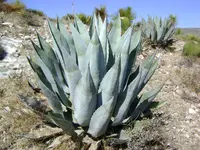
Sisal hemp, Agave sisalana, is a rosette-forming succulent grown mainly for its strong leaf fibers. It has stiff, sword-shaped leaves that arise from a short, trunk-like base. Mature plants can form large clumps and send up a tall flowering stalk once near the end of their life cycle.
This species is native to arid regions of Mexico but is now cultivated in many warm, dry climates worldwide. It is generally robust and drought-tolerant, which makes it relatively easy to care for sisal hemp in suitable conditions.
The plant prefers bright light, low to moderate moisture, and very well-drained, sandy or gritty soil to avoid root problems.

Care Difficulty
Easy Care

Light Preference
Full Sun

Water Requirements
Low Water

Temperature Preference
Tropical / Frost Sensitive

Hardiness Zone
9–11

Soil Texture
Sandy, Loamy, Rocky

Soil pH
Slightly acidic (6.5–7.0), Slightly alkaline (7.0–7.5)

Soil Drainage
Well-drained

Fertilization
Minimal (feed rarely)
Scan your plant to receive care tips personalized for your specific plant
Available on iOS and Android
Agave sisalana thrives in strong sun and needs bright, open exposure to develop compact, sturdy rosettes.
This drought-adapted species prefers deep, infrequent watering and very fast-draining soil.
This species is adapted to warm, semi-arid climates and is sensitive to prolonged cold and frost.
This species is highly tolerant of dry air, so humidity is rarely a concern for healthy growth of sisal hemp.
Agave sisalana needs very fast-draining, mineral-based soil to prevent root and crown rot.
This species is suitable for container growing, especially in cooler climates or where garden drainage is uncertain.
Agave sisalana needs only light feeding, as it is adapted to poor, sandy soils and can be overfed in cultivation.
Pruning Agave sisalana focuses on safety and hygiene rather than shaping, since the rosette form is naturally compact.
Transplanting or repotting Agave sisalana is infrequent but important when roots outgrow the container or planting space.
Agave sisalana is most commonly propagated vegetatively from offsets rather than from seed.
Winter care for Agave sisalana is important in any region with sustained frost or freezing temperatures.

Plant Health Check
Not sure what's wrong with your plant? Check your plant's health inside the app.
Sisal hemp from this species is one of the most widely traded hard plant fibers in the world and has been a major raw material for ropes, twines, and agricultural baler twine since the late 19th century.
Modern populations are largely the result of cultivation and vegetative propagation, and truly wild origins are uncertain, although the species is thought to derive from a form of Agave angustifolia native to southern Mexico.
Commercial plantations mostly use bulbils and suckers rather than seeds, so global sisal crops are composed of extensive clonal stands with very low genetic diversity.

This species helped transform maritime and shipping industries in the 19th and early 20th centuries because its strong, salt-tolerant fiber replaced many traditional ropes on ships before synthetic fibers became dominant.
Yellowing usually comes from overwatering, compacted or poorly drained soil, or prolonged cold. Check that the pot or bed drains freely, let the soil dry more between waterings, and protect the plant from temperatures below 50°F.
Keep your plants happy and healthy with plant identification, disease detection, and easy care guidance.