
Red Alder Identification (Alnus rubra)

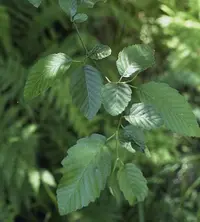
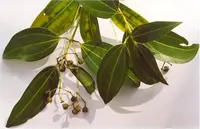
Recognize Red Alder by its alternate, oval leaves with clearly double-serrated edges and a blunt or slightly notched tip, plus smooth gray bark on young trunks.

Another strong clue is the persistent, cone-like female catkins, about 1 inch (2.5 cm) long, held in small clusters on short stalks.

Alnus rubra Identification

Identify a Plant by Photo

Not sure about your plant ID? Upload a photo and check it with Botan.

Clear images work best. Avoid photos taken too close or too far away

  • 1 free identification
  • No sign-up
  • 30,000+ plants in database

Check the leaves, cones, and bark first.

  • Leaves are alternate, oval, and about 3-6 inches (8-15 cm) long, with coarse teeth mostly along the outer half.
  • Many leaves have a blunt or slightly notched tip rather than a pointed end.
  • Small woody cone-like fruits hang in clusters and often stay on the twigs.
  • Bark is thin, smooth to lightly fissured, and pale gray, often with whitish patches on the trunk.

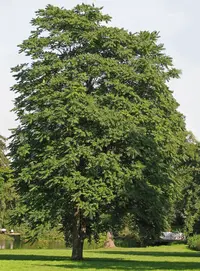
A rounded crown with a straight trunk adds another useful visual clue.

Red Alder shows clear visual shifts from sapling form to catkins and cone-like fruits.

  • Young plant: Young plants are narrow and fast growing, with smooth gray bark and larger-looking ovate leaves on slender, upright stems.
  • Mature plant: Mature trees develop a straight trunk and broader crown, often reaching 40 to 80 feet (12 to 24 m), with bark still relatively smooth.
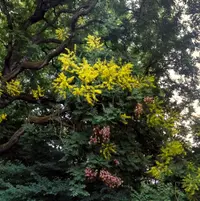
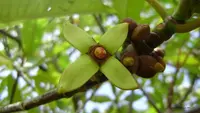
  • Flowering stage: Flowering branches carry dangling male catkins and smaller upright female catkins, making the branch tips look more pendant and textured than vegetative shoots.
  • Fruiting stage: Fruiting branches hold persistent woody, cone-like strobiles about 1 inch (2.5 cm) long, a distinct shift from the softer catkin-bearing flowering stage.

In late winter to early spring, Red Alder often stands out before leaf-out because its dangling male catkins become obvious, while small woody cone-like structures from the previous season may still be present on bare twigs. By fall, the leaves turn yellow and drop, exposing smooth gray bark, pointed buds, and the tree’s straight to slightly ascending branch pattern. This leafless look can help with winter identification.

A few riparian trees are regularly mistaken for Red Alder.

white alder(Alnus rhombifolia)

Often confused because both have oval, serrated leaves and small woody cones. White alder leaves are usually less hairy and have a wedge-shaped to rounded base, not the distinctly uneven, heartlike base often seen on Alnus rubra.

black cottonwood(Populus trichocarpa)

Young trees can resemble it in wet sites and similar leaf size. Black cottonwood has long, flattened leaf stalks and pointed, triangular to egg-shaped leaves; alder leaves are broader, with double teeth and persistent cone-like fruits.

Native to the Pacific coast of North America, Alnus rubra occurs from southeastern Alaska through British Columbia, Washington, Oregon, and into coastal and western mountain areas of California. It is most often found in moist lowland and foothill sites, especially streambanks, floodplains, wet forest edges, and disturbed coastal forests. In that region, a tall alder in damp ground strongly points toward this species.

Confirm the Species with Botan

Upload a photo to compare key details and get help identifying the plant or checking that your current ID is correct.

FAQ

In winter, this deciduous tree shows smooth gray bark, reddish-brown twigs, and persistent small cone-like female strobiles from the previous season. Clusters of dangling male catkins are also visible before leaf-out, helping with identifying Red Alder.

More Plant Identification Guides

Identify First. Learn What Comes Next.

Use Botan to identify a plant from a photo, then get species-specific plant details, care information, and common problems.

Botan app identifying a plant from a photo
How to Plant Pumpkin Seeds for a Fall Harvest and Grow Your Own Patch

7 min read · 4 Nov 2026

How to Plant Pumpkin Seeds for a Fall Harvest and Grow Your Own Patch

A backyard pumpkin patch starts months before the first leaves turn: the harvest that ends up on the porch in October is decided by what a gardener does in late spring.

Beginner Guides
How to Plant Pumpkin Seeds for a Fall Harvest and Grow Your Own Patch
How to Group Plants in Landscaping: A Practical Layout Guide

8 min read · 31 Aug 2026

How to Group Plants in Landscaping: A Practical Layout Guide

Good plant grouping can mean the difference between a well-planned garden and one that looks sloppy. This guide explores layers, spacing, cluster shapes, and the plants that thrive when you group them.

Plant Care
How to Group Plants in Landscaping: A Practical Layout Guide
How to Winterize Your Garden in 6 Steps

5 min read · 28 Sept 2026

How to Winterize Your Garden in 6 Steps

Learn how to prepare your garden for winter with a practical six-step checklist covering cleanup, tender plant care, watering, mulching, winter protection, and winterizing equipment and containers.

Plant Care
How to Winterize Your Garden in 6 Steps