Alocasia sarawakensis Care

Alocasia sarawakensis

About Alocasia sarawakensis

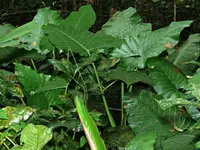
Alocasia sarawakensis is a large, tropical aroid grown mainly for its bold, architectural foliage. It typically forms an upright clump of broad, shield-shaped leaves on sturdy petioles. Native to Borneo, it thrives in warm, humid forest conditions with bright, filtered light and consistently moist, airy soil. The plant can grow quickly in the right environment but reacts poorly to cold, low humidity, and waterlogged or very dry substrates. For many indoor growers, the main challenges are providing stable warmth, high humidity, and enough light without direct sun. Understanding how to care for Alocasia sarawakensis helps prevent leaf stress and root problems.


Main Plant Requirements

Care Difficulty

Hard Care

Light Preference

Bright Indirect Light

Water Requirements

Keep Soil Moist

Temperature Preference

Tropical / Frost Sensitive

Hardiness Zone

10–11

Soil Texture

Loamy, Peaty, Organic-rich

Soil pH

Acidic (5.5–6.5), Slightly acidic (6.5–7.0)

Soil Drainage

Moist but well-drained

Fertilization

Moderate (every 2–4 weeks)

Get Personalized Care Plan

Scan your plant to receive care tips personalized for your specific plant

Available on iOS and Android

How to Care for the Alocasia sarawakensis

This plant prefers bright, filtered light that mimics light under a tree canopy.

  • Provide 4–6 hours of bright, indirect light daily, such as near an east or north window or under light shade outdoors.
  • Tolerates partial shade, but in very low light leaves may grow sparse, petioles stretch, and new growth emerges smaller and duller.
  • Protect from strong midday and afternoon sun, which can cause scorch patches, fading, and crisp leaf edges, especially through hot summer months.

This species likes evenly moist but not waterlogged soil.

  • Water when the top 3–5 cm of soil feels dry, applying water slowly until it drains through, then discard any standing water from trays or saucers.
  • Use a loose, well-draining mix and avoid compacted, heavy soils that keep roots saturated and increase risk of rot and sour odors.
  • Reduce watering in cooler months when growth slows; drooping, dry leaf edges signal underwatering, while yellowing lower leaves and a sour smell suggest overwatering.

Stable warmth is important for strong growth and leaf production.

  • Aim for 70–85°F (21–29°C) for active growth; below 68°F (20°C) growth slows and the plant becomes more susceptible to root issues.
  • Avoid temperatures below 55°F (13°C); brief dips may cause leaf yellowing or collapse, and frost can kill foliage and severely damage the corm.
  • In hot spells above 90°F (32°C), increase shade and airflow, and monitor soil moisture closely, as heat stress can cause limp leaves and faster drying of the root zone.

This species needs high, stable humidity to maintain large, healthy leaves.

  • Aim for 60–80% humidity; lower than 50% often causes leaf-edge browning and curling.
  • Tolerates short dry-air spells if soil moisture is steady, but prolonged heated or air-conditioned rooms increase stress.
  • Increase humidity with grouped plants, a humidifier, or a wide pebble tray placed under but not touching the pot.

This aroid prefers loose, airy, organic-rich soil that holds moisture yet drains quickly.

  • Use a mix of roughly 40% peat or coco coir, 30% fine bark, 20% perlite, and 10% compost to support Alocasia sarawakensis.
  • Target slightly acidic to neutral pH around 6.0–7.0, which keeps nutrients available without causing toxicity.
  • Check that water drains through in seconds, not minutes; heavy, compacted, or sticky mixes promote root rot.
  • Improve aeration by increasing bark and perlite content if the mix stays wet longer than 3–4 days at the root zone.

This species is suitable for container growing when the pot supports its large leaves and moisture needs.

  • Choose a wide, heavy container to counterbalance tall foliage and reduce tipping in wind or high-traffic areas.
  • Select slightly porous materials like terracotta only if you can water more often, as they speed moisture loss compared with plastic.
  • Ensure elevated drainage, such as pot feet or a grid stand, so runoff clears quickly and does not reabsorb into the root zone.

This tropical aroid benefits from moderate, consistent feeding during active growth.

  • Use a balanced liquid fertilizer (such as 10-10-10 or 20-20-20) at 1/4–1/2 strength for Alocasia sarawakensis.
  • Apply every 2–4 weeks in spring and summer when growth is strongest.
  • Pause or reduce to monthly feeding in fall and winter as growth slows or dormancy starts.
  • Occasionally supplement with a light top-dressing of fine compost or a mild slow-release product in spring.

This species needs only light, hygienic pruning to stay healthy and tidy.

  • In any season, remove yellowing, dead, or diseased leaves at the base with clean, sharp shears.
  • Cut back torn or heavily damaged foliage to reduce stress and redirect energy to new leaves on Alocasia sarawakensis.
  • Thin out congested inner leaves if airflow is poor, which can lower the risk of fungal problems.
  • Disinfect tools before and after pruning to limit the spread of pathogens.

Container-grown plants respond well to timely repotting that prevents root congestion.

  • Plan to repot every 1–2 years in spring when new growth begins on Alocasia sarawakensis.
  • Check for roots circling the pot, growing from drainage holes, or unexplained slow growth as signs it needs more space.
  • Move up only 2–5 cm in pot diameter, using a chunky, fast-draining aroid mix to limit waterlogging stress.
  • Handle roots gently, keep the crown at the same depth, water thoroughly once, then keep slightly humid and shaded for 1–2 weeks.

Division is the most reliable method for increasing this plant.

  • Divide the rhizome or clump in late spring or early summer when Alocasia sarawakensis is actively growing.
  • Lift the plant, gently tease apart natural offsets, and ensure each division has healthy roots and at least one growing point.
  • Plant divisions in a small pot with airy, moist, well-drained mix, keeping the crown just above the surface.
  • Maintain warm temperatures (70–80°F), high humidity, and bright, indirect light until new growth is established.

This species is very sensitive to cold and demands careful winter management in most climates.

  • Avoid exposure below 55°F; frost can severely damage or kill Alocasia sarawakensis foliage and stems.
  • In cold regions, grow in containers and move indoors before nighttime temperatures drop in fall.
  • Indoors, reduce watering, maintain 60–75°F, and provide bright, indirect light during the cooler months.
  • For plants in very mild climates, add a light mulch layer to insulate the root zone from brief cool spells.

Care Tips

Rotate container regularly

Turn the pot 90° every 1–2 weeks to keep the petioles growing upright and prevent the huge leaves from permanently leaning toward a single light source, which reduces the risk of the plant becoming lopsided and tipping over.

Provide sturdy support

For large specimens, insert 1–3 slim, rustproof stakes close to the petioles and secure them loosely with soft plant ties so the heavy leaves do not snap at the base when moved or during drafts.

Use wide, stable pots

Choose a low, wide container with a weighted base or heavy potting sleeve to counterbalance the tall, sail-like foliage and reduce the chance of the plant toppling, especially in high-traffic indoor areas.

Seasonal growth rest

If growth slows in cooler, darker months, reduce disturbance, avoid repotting, and accept some leaf yellowing as older foliage is shed, focusing instead on gentle monitoring and stable conditions while caring for Alocasia sarawakensis.

Prevent fungal spotting

Water at the soil level and avoid wetting the leaves in the evening, then ensure good air movement around the foliage to lower the chance of fungal leaf spots that can spread quickly across the large leaf surface.

Common Pests and Diseases

Spider mites

This pest thrives in warm, dry indoor air and can cause fine speckling, dulling, and eventual yellowing of the large leaves, often with thin webbing on leaf undersides and petioles.

Solution

Rinse both sides of the leaves thoroughly with a strong but controlled stream of lukewarm water, then wipe undersides with a cloth and apply insecticidal soap or a neem-based spray every 5–7 days until new growth is clean; raise humidity to 60–70% and avoid placing the plant in very dry airflow to reduce reinfestation.

Aphids

These insects cluster on tender new growth and inflorescences, sucking sap and causing curling, distortion, and sticky honeydew that can attract sooty mold on broad leaves.

Solution

Manually remove heavy clusters by pinching or rinsing under water, then treat new and existing growth with insecticidal soap or horticultural oil, repeating weekly for several cycles; remove heavily infested flower stalks and avoid overfertilizing with high-nitrogen feed, which encourages soft, aphid-prone growth when growing Alocasia sarawakensis.

Leaf spot (fungal)

This disease causes irregular brown or dark purple lesions on the large foliage, often starting as water-soaked spots that expand and sometimes develop yellow halos around the damaged tissue.

Solution

Remove and discard affected leaves, keep water off the foliage, increase air movement around the plant, and allow the top of the potting mix to dry slightly between waterings; in persistent cases, apply a copper-based or other houseplant-safe fungicide according to label directions and avoid crowding plants together.

Bacterial blight

This disease leads to rapidly spreading, translucent, water-soaked patches on leaves that turn dark brown or black, often with a foul smell if tissue collapses.

Solution

Isolate the plant at once, cut away all affected tissue with a sterile blade, and avoid misting or splashing water on leaves; improve airflow, keep leaves dry, and if progression continues despite these steps, consider discarding the plant and sterilizing pots and tools to prevent spread to other aroids.

Mealybugs

These insects appear as white, cottony clusters in leaf axils, along petioles, and sometimes on roots, leading to yellowing, stunted growth, and sticky residue on the large blades.

Solution

Dab visible insects with cotton swabs dipped in isopropyl alcohol (70%), then rinse the plant and follow with a systemic or contact insecticide labeled for houseplants; inspect weekly, repeat treatments as needed, and avoid bringing in unquarantined plants that may harbor hidden mealybugs, as these can spread quickly on a single large specimen.

Interesting Facts

Bornean riverbank specialist

This species is native to lowland riverbanks and swampy forest margins in Sarawak, Borneo, where it grows in seasonally very wet but fast-draining, organic-rich soils under broken canopy light.

Massive shield leaves

Mature plants can develop huge, upward-facing leaves with a shallowly bowl-shaped surface that can temporarily collect rainwater before it runs off, an adaptation to heavy tropical downpours.

Unusual dark petioles

The thick, often dark to purplish petioles provide strong mechanical support for the large leaf blades and help the plant withstand wind and water load in exposed river-edge habitats.

Botan icon

Did you know?

In suitable tropical conditions outdoors, this species can form a single clump over 1.5 m tall with a striking architectural outline, making it one of the more imposing aroids used in landscape design in warm, humid climates.

FAQs about Alocasia sarawakensis

Growth is moderate in warm, bright, humid conditions, often adding several leaves during the growing season. In cooler rooms, low light, or when underpotted, growth slows noticeably and the plant may appear almost dormant in winter.

Grow Healthy Plants with Botan Care

Keep your plants happy and healthy with plant identification, disease detection, and easy care guidance.

Botan plant care app — identify plants on mobile

Explore More Plants