Mark Dormant Sites
Tag the plant’s location with discreet stakes or labels after flowering so you do not disturb the tubers during their summer dormancy and when surrounding vegetation is cut or weeded.

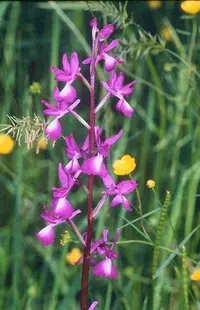
Loose-flowered orchid, Anacamptis laxiflora, is a terrestrial orchid that grows from underground tubers rather than clinging to trees. It forms slender, upright stems with narrow leaves at the base and loose spikes of purple to reddish flowers in late spring.
This species is native to damp meadows and marshy grasslands across parts of Europe and the Mediterranean region. It prefers moist, low-nutrient soils and cool to mild conditions, which can make it more challenging in typical garden settings.
Gardeners who want to care for Loose-flowered orchid need to mimic its natural wet meadow habitat, especially consistent moisture and good light without strong heat.

Care Difficulty
Hard Care

Light Preference
Full Sun

Water Requirements
Keep Soil Moist

Temperature Preference
Cool Climate

Hardiness Zone
5–9

Soil Texture
Loamy, Silty, Organic-rich

Soil pH
Acidic (5.5–6.5), Slightly acidic (6.5–7.0)

Soil Drainage
Moist but well-drained

Fertilization
Minimal (feed rarely)
Scan your plant to receive care tips personalized for your specific plant
Available on iOS and Android
This wet-meadow terrestrial orchid prefers bright, gentle light rather than intense, direct sun.
This species comes from moist habitats and needs consistently damp, not flooded, soil around the roots.
This orchid prefers cool to mild conditions with some tolerance of winter cold if the soil stays moist but not waterlogged.
This terrestrial orchid accepts moderate humidity but grows best with slightly moist air.
This species prefers consistently moist, airy soil that mimics a damp, nutrient-rich meadow.
This orchid can be grown in containers if the pot is set up to stay evenly moist without becoming waterlogged.
This wild terrestrial orchid is adapted to low-nutrient soils and usually needs no fertilizer in garden settings.
Pruning needs for Anacamptis laxiflora are minimal and focus on hygiene rather than reshaping the plant.
This species is usually grown in the ground; any transplanting should be infrequent and handled with care to avoid tuber damage.
Propagation of this orchid is possible but technically demanding and usually attempted by specialists rather than casual gardeners.
This hardy terrestrial orchid generally tolerates typical temperate winters if soil drainage and site conditions are suitable.

Plant Health Check
Not sure what's wrong with your plant? Check your plant's health inside the app.
This orchid is naturally adapted to seasonally flooded grasslands and marshy meadows, often growing where soils remain waterlogged in spring but slowly dry in summer.
The species name laxiflora refers to its characteristic airy flower spikes, with individual purple blooms spaced widely apart rather than densely crowded on the stem.
In parts of Europe, this orchid often persists only in hay meadows and pasturelands that are lightly grazed or traditionally mown, so its presence can indicate low-intensity, long-established land use.

In several European regions, this orchid forms part of nationally protected wet grassland communities, and its decline has been closely linked to drainage schemes and agricultural intensification, making it a flagship species for wet meadow conservation.
Lack of flowers usually comes from insufficient winter chill, too much shade, or nutrient-rich, dry soil. This species needs a cool, moist winter–spring period and a summer rest. Avoid heavy fertilizing, which encourages leaves but suppresses flowering.
Keep your plants happy and healthy with plant identification, disease detection, and easy care guidance.