Pinch Young Stems
Pinch out the tips of young shoots once or twice in early growth to encourage a denser, more wind-resistant clump with more flowering stems rather than a few tall, floppy ones.

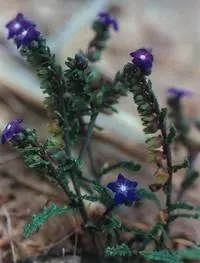
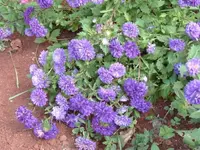
Buglosse crÈpue (Anchusa crispa) is a small, short-lived perennial from coastal habitats, mainly around the Mediterranean. It typically forms low clumps with rough, wavy leaves and clusters of bright blue flowers.
In the wild, it often grows in sandy or rocky soils close to the sea, where conditions are dry, windy, and nutrient-poor. This background makes it relatively tough but sometimes short-lived in gardens.
Anchusa crispa prefers full sun, well-drained soil, and moderate moisture. Gardeners who understand how to care for Buglosse crÈpue usually focus on drainage and avoiding heavy, waterlogged soils.

Care Difficulty
Hard Care

Light Preference
Full Sun

Water Requirements
Moderate Water

Temperature Preference
Warm Climate

Hardiness Zone
8–10

Soil Texture
Sandy, Loamy, Rocky

Soil pH
Slightly acidic (6.5–7.0), Neutral (7.0)

Soil Drainage
Well-drained

Fertilization
Minimal (feed rarely)
Scan your plant to receive care tips personalized for your specific plant
Available on iOS and Android
Anchusa crispa grows best in bright, open conditions with plenty of direct sun.
Anchusa crispa prefers moderately moist, well-drained soil that never stays soggy for long.
This coastal species handles a range of outdoor temperatures but dislikes prolonged hard frost or extreme heat.
Anchusa crispa tolerates a wide humidity range and rarely needs special humidity control outdoors.
Anchusa crispa prefers lean, very well-drained, sandy soil that mimics coastal conditions.
This species can be grown in containers if drainage and root depth are carefully managed.
Anchusa crispa benefits from light, targeted feeding but grows acceptably in lean soils.
Anchusa crispa responds well to light, purposeful pruning that supports compact growth and flowering.
This species is more often transplanted in the garden than kept long term in containers.
Anchusa crispa is commonly propagated from seed and, in suitable clumps, by careful division.
This plant has moderate cold tolerance but benefits from simple winter protection in cooler climates.

Plant Health Check
Not sure what's wrong with your plant? Check your plant's health inside the app.
Anchusa crispa is a low-growing herb restricted to a few coastal sites along the western Mediterranean, and is listed as Critically Endangered due to habitat loss, trampling, and coastal development.
This species is adapted to grow on mobile sandy substrates near the sea, where constant sand movement and salt spray create harsh, unstable conditions that many other plants cannot tolerate.
Anchusa crispa is included in Annex II of the EU Habitats Directive, which requires member states to designate and manage Special Areas of Conservation specifically to safeguard its remaining populations.

Anchusa crispa forms part of a very localized floristic assemblage on Mediterranean dune systems, and its presence is often used by botanists as an indicator of relatively undisturbed coastal habitat with high conservation value.
This coastal species is a short-lived perennial. Individual plants may persist several years but often behave almost like biennials, flowering and setting seed early, then declining. Allowing self-seeding helps maintain a stable population in the garden.
Keep your plants happy and healthy with plant identification, disease detection, and easy care guidance.