


Install sturdy support
Provide a strong trellis, wire mesh, or tensioned wires at planting time so the vigorous vines can be trained early and prevented from tangling around nearby shrubs or structures.

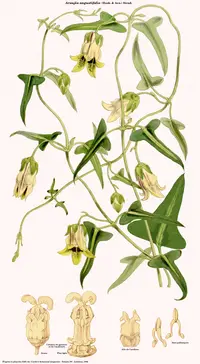
Araujia angustifolia is a twining, woody vine from South America, belonging to the dogbane family. It is grown mainly for its narrow leaves and twining habit rather than for showy flowers.
In suitable climates it can climb over supports and nearby plants, forming a dense, green screen. It tends to grow vigorously where conditions are mild.
This species prefers sun to light shade, well-drained soil, and moderate moisture. Once established, it usually tolerates short dry periods, which simplifies how to care for Araujia angustifolia compared with more demanding climbers.

Care Difficulty
Moderate Care

Light Preference
Full Sun

Water Requirements
Moderate Water

Temperature Preference
Warm Climate

Hardiness Zone
9–11

Soil Texture
Sandy, Loamy, Organic-rich

Soil pH
Slightly acidic (6.5–7.0), Neutral (7.0)

Soil Drainage
Well-drained

Fertilization
Minimal (feed rarely)
Scan your plant to receive care tips personalized for your specific plant
Available on iOS and Android
This vigorous climber prefers bright outdoor conditions with several hours of direct sun for strong growth and flowering.
This plant prefers moderately moist, well-drained soil and handles short dry spells better than standing water.
This species grows best in warm, frost-free conditions and can tolerate moderate heat once established outdoors.
This species handles a wide humidity range but benefits from moderate air moisture.
This vine prefers light, sharply drained soil that still holds some moisture around the roots.
This species can be grown successfully in containers when given enough root space and support.
This vigorous vine benefits from light, controlled feeding rather than heavy fertilization.
Pruning keeps this twining climber manageable and encourages healthy, controlled growth.
This species is more often grown in the ground, but container plants or young specimens may need occasional transplanting.
This vine is commonly propagated from both seeds and semi-ripe cuttings under suitable conditions.
Mature plants in mild climates are fairly hardy, but young or container-grown Araujia angustifolia benefit from basic winter protection.

Plant Health Check
Not sure what's wrong with your plant? Check your plant's health inside the app.
In its native South American range, this species is mainly pollinated by long-tongued sphinx moths that can reach nectar deep inside its tubular flowers, an example of close coevolution between flower shape and pollinator anatomy.
It flowers in late summer to early autumn in many regions, providing nectar for moths and other night-active insects when many other native plants have already finished blooming.
Like many members of the Apocynaceae family, it produces a white, sticky latex in its stems and leaves that deters most herbivores and can gum up the mouthparts of small feeding insects.
This species can spread vigorously through fast-growing stems and abundant seed production in mild climates. In suitable conditions it may overwhelm nearby plants, so use strong supports, prune regularly, and deadhead seed pods to limit unwanted spread.
Keep your plants happy and healthy with plant identification, disease detection, and easy care guidance.

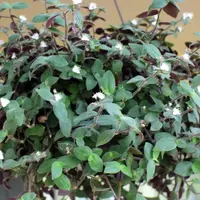
Speedy Jenny
Tradescantia chrysophylla 'Baby Bunny Bellies'
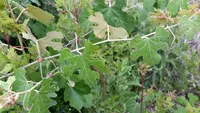
calloose grape
Vitis shuttleworthii
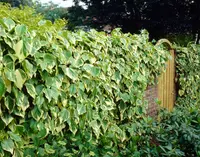
Persian Ivy
Hedera colchica 'Dentata Variegata'
Wild Melon
Lagenaria sphaerica
Washington DC Dewberry
Rubus flagellaris
twining monkshood
Aconitum volubile
garden bougainvillea
Bougainvillea × buttiana
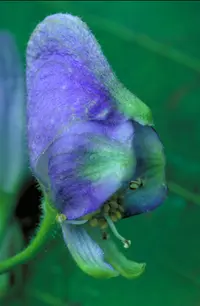
southern blue monkshood
Aconitum uncinatum