


Rhizome Containment
Install a root barrier 30–45 cm deep around the planting area or grow it in a large, heavy container to keep rhizomes from spreading into lawns or neighboring beds.

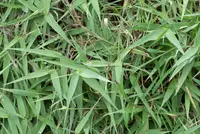
Arundo formosana is an ornamental grass valued for its tall, upright stems and narrow, arching leaves. It forms dense clumps that create a strong vertical accent in gardens. In mature plants, feathery flower plumes may appear, adding light texture above the foliage. Native to parts of East Asia, it prefers mild climates and performs best where winters are not too harsh. This species can be vigorous but is usually less aggressive than the giant reed, Arundo donax. Its relatively fast growth, tolerance of different soils, and preference for sunny, evenly moist sites make it manageable for gardeners who learn how to care for Arundo formosana.

Care Difficulty
Moderate Care

Light Preference
Full Sun

Water Requirements
Regular Water

Temperature Preference
Warm Climate

Hardiness Zone
7–10

Soil Texture
Sandy, Loamy, Silty

Soil pH
Slightly acidic (6.5–7.0), Neutral (7.0)

Soil Drainage
Moist but well-drained

Fertilization
Light (every 4–6 weeks)
Scan your plant to receive care tips personalized for your specific plant
Available on iOS and Android
This grass prefers bright, open conditions with plenty of direct sun for strong, upright growth.
This species prefers consistently moist soil but not prolonged waterlogging.
This ornamental grass grows best in mild to warm climates with cool winters and warm summers.
This reed prefers moderately moist air but adapts to a wide humidity range.
This grass thrives in deep, moisture-retentive soil with structure that still allows air around the roots.
This species can be grown in large containers if stability and moisture are carefully managed.
Nutrient-rich soils support strong growth in Arundo formosana, but heavy feeding is rarely necessary in the landscape.
Pruning Arundo formosana helps maintain size, remove winter damage, and refresh foliage.
This vigorous grass is usually grown in the ground; transplanting Arundo formosana focuses on managing its strong rhizomes.
Division is the most practical method for multiplying Arundo formosana in gardens.
In many temperate climates Arundo formosana is root-hardy, but above-ground growth often dies back in winter.

Plant Health Check
Not sure what's wrong with your plant? Check your plant's health inside the app.
This species is native to Taiwan, where it occurs on moist mountain slopes and stream banks, unlike the more widespread Arundo donax that favors lowland river systems.
Arundo formosana is best known in cultivation for its strongly variegated leaves, with stable cream or yellow striping that persists through the growing season rather than fading in strong light.
Compared with giant reed relatives, this species typically forms smaller, denser clumps with thinner culms, making it one of the more manageable arundo species in ornamental plantings.

In parts of East Asia, traditional artisans have used the straight, hollow culms of Arundo formosana for small-scale craft work such as simple musical reeds and lightweight stakes, taking advantage of its combination of flexibility and rigidity.
This species forms expanding clumps via rhizomes and can spread steadily, especially in moist, fertile ground. In suitable climates it may become difficult to control, so install deep root barriers and remove unwanted shoots regularly.
Keep your plants happy and healthy with plant identification, disease detection, and easy care guidance.


Achnatherum paradoxum
Achnatherum paradoxum
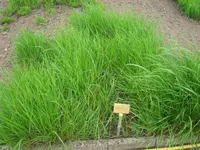
spear grass
Achnatherum calamagrostis
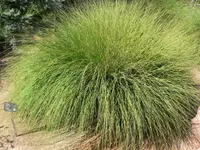
deergrass
Muhlenbergia rigens
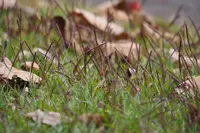
centipede grass
Eremochloa ophiuroides

Achnatherum virescens
Achnatherum virescens

Achnatherum bromoides
Achnatherum bromoides
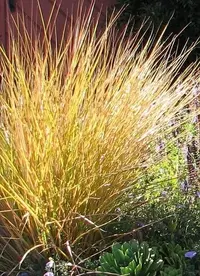
New Zealand Wind Grass
Anemanthele lessoniana
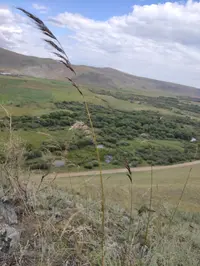
Achnatherum sibiricum
Achnatherum sibiricum