


Clump Renewal
Every 3–4 years, slice and remove the oldest, woody center of the clump in late winter, then backfill with soil to keep plants vigorous and prevent lodging or splitting.

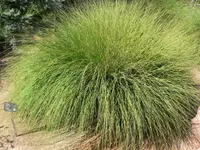
Deergrass, Muhlenbergia rigens, is a perennial bunchgrass native to the southwestern United States and northern Mexico. It naturally grows in open plains, streambanks, and dry slopes. The plant forms upright, fountain-like clumps of narrow leaves topped with tall, airy flower spikes that give a fine-textured look in the landscape. It is valued in gardens for its tidy form, drought tolerance, and ability to handle heat and poor soils. This grass is generally easy to maintain once established, which makes it suitable for low-care plantings. It performs best in sun with well-drained soil, and learning how to care for deergrass is straightforward for most gardeners.

Care Difficulty
Easy Care

Light Preference
Full Sun

Water Requirements
Low Water

Temperature Preference
Cold Hardy

Hardiness Zone
6–10

Soil Texture
Sandy, Loamy, Rocky

Soil pH
Slightly acidic (6.5–7.0), Neutral (7.0)

Soil Drainage
Well-drained

Fertilization
Minimal (feed rarely)
Scan your plant to receive care tips personalized for your specific plant
Available on iOS and Android
This sun-loving grass thrives in open, bright sites with long daily exposure.
This drought-adapted species prefers infrequent, deep watering once established.
This perennial grass is naturally suited to regions with hot summers and mild to cool winters.
Muhlenbergia rigens is highly tolerant of dry air, so humidity is rarely a concern.
Muhlenbergia rigens prefers lean, well-drained mineral soils rather than rich, moisture-retentive mixes.
This species can be grown in containers outdoors if the pot drains quickly and remains stable in wind.
Muhlenbergia rigens is a tough native grass that needs only light feeding in most garden soils.
Pruning Muhlenbergia rigens is mainly done to refresh growth and keep the clump tidy.
Deergrass is usually grown in the ground, with transplanting done only when clumps outgrow their space or decline in vigor.
Muhlenbergia rigens is most commonly propagated by division, with seed used for larger restoration plantings.
Muhlenbergia rigens is cold hardy in much of its range and usually needs minimal winter care in the ground.

Plant Health Check
Not sure what's wrong with your plant? Check your plant's health inside the app.
This bunchgrass is widely used in restoration projects along streams and dry washes in the southwestern US because its dense, fibrous roots help stabilize sandy and gravelly banks and reduce erosion.
The tight basal clumps and narrow leaves tend to burn quickly but low to the ground, allowing the plant to resprout after wildfire and helping limit long-lasting fuel in its native chaparral and coastal sage scrub habitats.
Mature clumps create sheltered microhabitats used by ground-nesting birds, small mammals, and invertebrates, providing cover and foraging space in otherwise open, arid landscapes.

This species was an important thatching and basketry material for several Indigenous peoples of California and the Southwest, who used its long, flexible flowering stems for roofing, mats, and other woven items in traditional material culture.
Leaf tips often brown from drought stress, reflected heat, or excess fertilizer salts. In windy or very hot sites, foliage dries quickly. Remove dead blades and adjust irrigation gradually rather than suddenly increasing water.
Keep your plants happy and healthy with plant identification, disease detection, and easy care guidance.

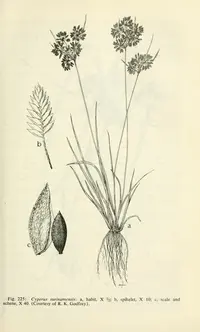
tropical flatsedge
Cyperus surinamensis

Achnatherum bromoides
Achnatherum bromoides

Achnatherum paradoxum
Achnatherum paradoxum
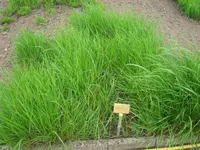
spear grass
Achnatherum calamagrostis
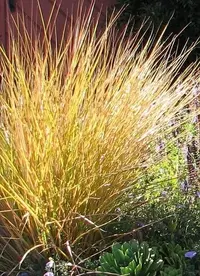
New Zealand Wind Grass
Anemanthele lessoniana

Achnatherum virescens
Achnatherum virescens
Achnatherum sibiricum
Achnatherum sibiricum
centipede grass
Eremochloa ophiuroides