Blood Vine Care (Austrosteenisia blackii)

Blood Vine

About Blood Vine

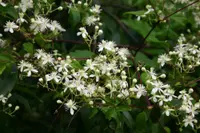
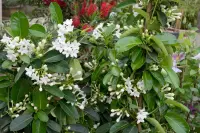
Blood vine, Austrosteenisia blackii, is a vigorous evergreen climber native to subtropical and tropical rainforests of eastern Australia. It naturally scrambles through trees and shrubs, forming dense, leafy cover. The plant is known for its dark, glossy foliage and striking clusters of deep red to maroon pea-shaped flowers that appear mainly in the warmer months. Its twining growth habit makes it useful for covering fences, pergolas, or large trellises in mild climates. Once established, it is generally robust but needs space to climb and support for its stems. It prefers warm conditions, consistent moisture, and well-drained soil, which guides how to care for Blood Vine in gardens or larger outdoor containers.

Main Plant Requirements

Care Difficulty

Moderate Care

Light Preference

Partial Sun

Water Requirements

Moderate Water

Temperature Preference

Tropical / Frost Sensitive

Hardiness Zone

10–11

Soil Texture

Loamy, Sandy, Organic-rich

Soil pH

Acidic (5.5–6.5), Slightly acidic (6.5–7.0)

Soil Drainage

Moist but well-drained

Fertilization

Minimal (feed rarely)

Get Personalized Care Plan

Scan your plant to receive care tips personalized for your specific plant

Available on iOS and Android

How to Care for the Blood Vine

This vigorous climber prefers bright, warm conditions with some protection from harsh midday sun.

  • Provide 4–6 hours of direct morning sun with light shade or filtered light in the hot afternoon, especially in summer.
  • Tolerates partial shade, but flowering and the dark bracts of Blood Vine are best when it receives strong light and open sky exposure.
  • In very hot climates, reduce exposure during 12–3 pm to prevent leaf scorch, and avoid deep shade, which leads to weak, stretched growth.

This plant prefers evenly moist, well-drained soil rather than long dry spells or constant saturation.

  • Water when the top 3–5 cm of soil feel dry, soaking the root zone deeply, then allow excess water to drain away fully.
  • During warm growing seasons, expect faster drying and more frequent watering; in cooler months, extend intervals so the surface dries slightly more between soakings.
  • Watch for yellowing, soft leaves or persistent wet soil as signs of overwatering, and crisp leaf edges or drooping vines as indications of underwatering in Austrosteenisia blackii.

This subtropical climber thrives in warm, frost-free conditions with mild seasonal variation.

  • Optimal growth occurs around 65–85°F (18–29°C), where steady warmth supports continuous vine extension and flowering.
  • It tolerates brief dips to about 40°F (4°C), but foliage may be damaged; prolonged exposure near this range slows growth significantly.
  • Plant in sites protected from frost and cold winds, and in very hot areas above 95°F (35°C) give partial afternoon shade to reduce heat stress and leaf scorch.

This species benefits from moderately humid air but usually copes with typical household levels.

  • Aim for 40–60% humidity to reduce leaf edge browning and maintain steady growth.
  • It tolerates short spells of drier air, but prolonged humidity below 35% may cause curling or crispy leaf tips.
  • Increase humidity with a nearby humidifier or grouped plants rather than misting, which adds little lasting moisture.

This climbing species prefers a loose, well-drained, organic-rich soil that stays lightly moist but not waterlogged.

  • Use a mix of roughly 50% peat-free potting mix, 25% fine compost, and 25% coarse material such as perlite or fine bark for structure and drainage.
  • Aim for slightly acidic to neutral pH, around 6.0–7.0, which supports nutrient uptake for Austrosteenisia blackii.
  • Ensure the mix feels springy, not compacted; add more perlite or bark if water sits on the surface for longer than a few seconds.
  • Avoid heavy clay, poorly drained spots, or pure sand, which either suffocate roots or dry out so fast that vines decline.

This vine can be grown successfully in containers when given enough root space and stable support.

  • Choose a deep, heavy pot that resists tipping when the vine climbs or when a trellis is attached.
  • Select a container material that slightly insulates roots, such as thick plastic or glazed ceramic, to reduce rapid drying in hot weather.
  • Elevate the pot on feet or bricks so excess water drains freely and air can move under the container base for healthier roots.

Austrosteenisia blackii responds well to modest feeding during active growth in warm months.

  • Use a balanced NPK fertilizer or slow-release granules suited to flowering vines, applied to moist soil.
  • Feed every 4–6 weeks in spring and summer, or use a single slow-release application at season start.
  • Dilute liquid feed to 1/2 strength to avoid salt buildup and root burn in containers.
  • Reduce or stop feeding Blood Vine in fall and winter when growth slows.

Pruning helps manage size and flowering performance in Austrosteenisia blackii.

  • Carry out main pruning in late winter or very early spring before vigorous new growth starts.
  • Remove dead, damaged, or crossing stems first, then thin congested growth to improve light and airflow.
  • Shorten excessively long shoots to maintain structure and direct growth along trellises or supports.
  • Use clean, sharp bypass pruners and make angled cuts just above a healthy bud or side shoot.

This vigorous climber is usually grown in the ground, so care focuses on transplanting young plants correctly.

  • Transplant in late spring after frost risk, when roots fill the pot and growth slows or roots circle the container.
  • Loosen circling roots gently and set the plant at the same soil level in a larger hole with well-drained soil.
  • Water deeply after transplanting and keep soil evenly moist for 2–3 weeks to limit transplant shock.
  • Container-grown plants may need shifting to a larger pot every 2–3 years if growth declines or drainage worsens.

Austrosteenisia blackii is most often propagated from semi-hardwood cuttings taken during warm weather.

  • Take 10–15 cm semi-hardwood cuttings in late spring or summer from non-flowering shoots.
  • Remove lower leaves, dip the cut end in rooting hormone, and insert into a free-draining mix like perlite and peat or coco coir.
  • Maintain high humidity and warmth around 70–80°F with bright, indirect light until roots form.
  • Seed propagation is possible but slower; sow fresh seed in a warm, consistently moist, well-drained medium.

This subtropical vine has low frost tolerance and needs protection in colder climates.

  • In mild climates, apply a 5–8 cm mulch layer around the root zone in late fall, keeping it away from the main stem.
  • In areas with light frosts, cover young plants with breathable frost cloth on the coldest nights.
  • Grow Austrosteenisia blackii in containers in cooler regions and move indoors or to a greenhouse before temperatures drop near 32°F.

Care Tips

Sturdy Climbing Support

Install a strong trellis, pergola, or tensioned wire system before planting so the vigorous woody stems can be tied in as they grow and trained in the desired direction without snapping or tangling.

Selective Stem Training

Each spring, choose several main leaders and loosely tie them to the support, removing weak or crossing shoots so the vine puts energy into a few well-placed, sun-exposed stems that flower more reliably.

Root Zone Protection

Mulch the root area with 5–8 cm of coarse organic material, keeping it a few cm away from the stems, to stabilize soil temperature, conserve moisture, and reduce weed competition without causing rot at the base.

Planned Space Management

When planting near structures, allow at least 60–90 cm of clearance from gutters, fences, and rooflines and install a pruning access path so the plant can be contained and serviced safely as it matures.

Routine Pest Scouting

From spring through early autumn, inspect new growth and the undersides of leaves every 1–2 weeks for sap-sucking insects or scale and treat early with targeted products, which simplifies caring for Blood Vine over the long term.

Common Pests and Diseases

Scale insects

This pest attaches tightly to stems and leaf veins, sucking sap and causing yellowing, leaf drop, and overall decline in vigor.

Solution

Physically scrape or wipe scales off twigs and leaves with a cotton pad dipped in diluted alcohol or insecticidal soap, then rinse foliage thoroughly; for heavier outdoor infestations, apply a horticultural oil spray to all stem surfaces, repeating after 7–14 days while monitoring new growth closely as part of general Austrosteenisia blackii care instructions.

Mites

These insects are tiny sap-feeders that create fine webbing on foliage, often leading to stippling, bronzing, and leaf drop in warm, dry conditions.

Solution

Increase humidity around the vine, thoroughly hose down both sides of leaves to remove mites, and apply insecticidal soap or horticultural oil to all foliage, repeating treatments at short intervals until new growth appears clean.

Leaf spot

This disease causes scattered brown or black spots on leaves, sometimes with yellow halos, and can lead to premature leaf drop in dense or shaded plantings.

Solution

Prune and dispose of affected leaves, avoid overhead watering, and improve airflow through the canopy; if spotting continues, use a copper- or chlorothalonil-based fungicide labeled for ornamental vines, applying it evenly to both upper and lower leaf surfaces.

Powdery mildew

This disease appears as white, powdery patches on leaves and young stems, which may curl, discolor, and lose vigor in humid, shaded conditions.

Solution

Thin crowded growth to increase light and airflow, water at the base rather than overhead, remove badly affected leaves, and apply a sulfur or potassium bicarbonate fungicide labeled for ornamental plants, repeating as directed until new foliage stays clean.

Interesting Facts

Darkest red flowers

This species is noted as having some of the darkest red flowers among legumes, with long dangling racemes that can appear almost black under low light, which gives rise to the common name blood vine.

Specialist rainforest climber

It is a woody liana native to subtropical and tropical rainforests of eastern Australia, where it uses other trees for support to reach higher light levels in the canopy.

Legume family member

Although grown mainly as an ornamental climber, it belongs to the Fabaceae (legume) family, with typical pea-like flowers that develop into pods containing hard seeds.

Botan icon

Did you know?

In its native Australian rainforest habitat, this species can form dense curtains of foliage and flowers on host trees, creating striking red-black floral displays that are highly visible against the surrounding green canopy during its main blooming period.

FAQs about Blood Vine

Growth is moderately fast in warm, frost-free climates, typically extending 60–120 cm per year once roots are established. In cooler areas or containers, growth slows. Regular pruning and good nutrition help manage size and structure when growing Blood Vine.

Grow Healthy Plants with Botan Care

Keep your plants happy and healthy with plant identification, disease detection, and easy care guidance.

Botan plant care app — identify plants on mobile

Explore More Plants