
Cabbage (Brassica oleracea var. sabellica) Watering Guide

This page explains when, how often, and how much to water Brassica oleracea var. sabellica for basic care guidance.

Water Requirements

Regular Water

Brassica oleracea var. sabellica Watering

This cool-season leafy crop thrives where rainfall is regular and soil never stays parched for long. Brassica oleracea var. sabellica prefers steady, moderate moisture rather than cycles of full drying or constant saturation.

Think of watering Cabbage as keeping the root zone evenly damp, then adjusting for unusually hot, windy, or extended dry spells. In open garden beds needs often differ from containers, which lose moisture faster and demand closer attention.

Water when the top 1–2 inches (3–5 cm) of soil feel dry, rather than on a fixed schedule. Cabbage typically needs water every 2–4 days in warm, dry weather, but intervals may lengthen in cool conditions or for plants grown in moisture‑retentive soil.

Water Cabbage when the top 1-2 inches (3-5 cm) of soil feel dry, aiming for slow, deep moisture.

  • Apply water at soil level around the base, keeping the head and inner leaves as dry as possible.
  • Pour slowly in a wide ring to soak the full root zone without causing surface runoff or exposed roots.
  • Continue adding water until the soil is evenly moist several inches down, then allow excess to drain completely away.
  • Use a watering can or hose with a gentle flow setting to avoid soil compaction and splashing on foliage.

Incorrect soil moisture can damage Brassica oleracea var. sabellica and limit healthy growth.

Yellowing Lower Leaves:

Older leaves turn uniformly yellow from the base upward, often caused by chronically waterlogged, compacted soil.

Wilting Despite Moist Soil:

Plants droop even in damp beds, suggesting root rot from poor drainage or frequent overwatering.

Stunted Rosette Growth:

Tight, undersized leaf rosettes develop when shallow, inconsistent watering discourages deep, resilient root systems.

Cracked Dry Soil Surface:

Soil pulls from bed edges and crusts hard when infrequent deep watering fails to rehydrate fully.

Keep soil consistently moist, not soggy, with deep, even watering supported by well-drained, fertile ground.

Poor watering habits can stress Brassica oleracea var. sabellica, weakening growth and leaving cabbage heads less dense and flavorful.

  • Rigid watering schedule: Watering by calendar instead of soil moisture keeps roots alternately soggy and dry; check the top soil before each watering.
  • Heavy, compacted soil: Dense ground holds water too long around shallow feeder roots; amend beds with compost to improve drainage and structure.
  • Letting containers sit in runoff: Leaving pots in full saucers keeps roots saturated; empty excess water so the mix can slightly dry between waterings.

Aim for evenly moist, well-drained soil, adjusting watering to weather, plant size, and container or bed conditions for steady cabbage growth.

  • Spring: As growth resumes in cool weather, keep soil consistently moist but not soggy, adjusting only if rainfall already meets the plant’s needs.
  • Summer: In hotter conditions, water more deeply and monitor closely for faster drying soil, especially in containers or exposed, windy beds.
  • Fall: As temperatures cool again, slightly reduce watering, letting the topsoil dry a bit more between waterings while leaves remain harvestable.
  • Winter: In mild-winter regions, water sparingly during cold spells, avoiding waterlogged soil that can increase root rot risk in chilled ground.

Track Watering. Catch Problems Early

Use Botan for a clear watering guide and practical care steps for Brassica oleracea var. sabellica, plus gentle photo-based checks that help flag early signs of stress or pests.

Botan plant care app — identify plants on mobile

Interesting Watering Facts

Cold-enhanced water uptake

Kale tolerates and even benefits from regular watering in cold soils, remaining physiologically active at low temperatures when many crops slow down, so consistent moisture during cool weather supports leaf production instead of causing typical cold-related water stress.


Shallow, fibrous root system

Curly kale forms a dense, shallow root mat that relies on steady surface moisture rather than deep water reserves, which is why even short dry spells in the top few inches of soil can quickly affect leaf turgor and growth.

FAQ

In the ground, keep soil consistently moist with about 1–1.5 inches of water per week, including rainfall. In containers, check moisture more often and water when the top 1 inch feels dry.

More Plant Watering Guides

Is Your Watering Routine Hurting Your Cabbage?

Botan reviews your watering patterns so adjustments are simpler and more confident.

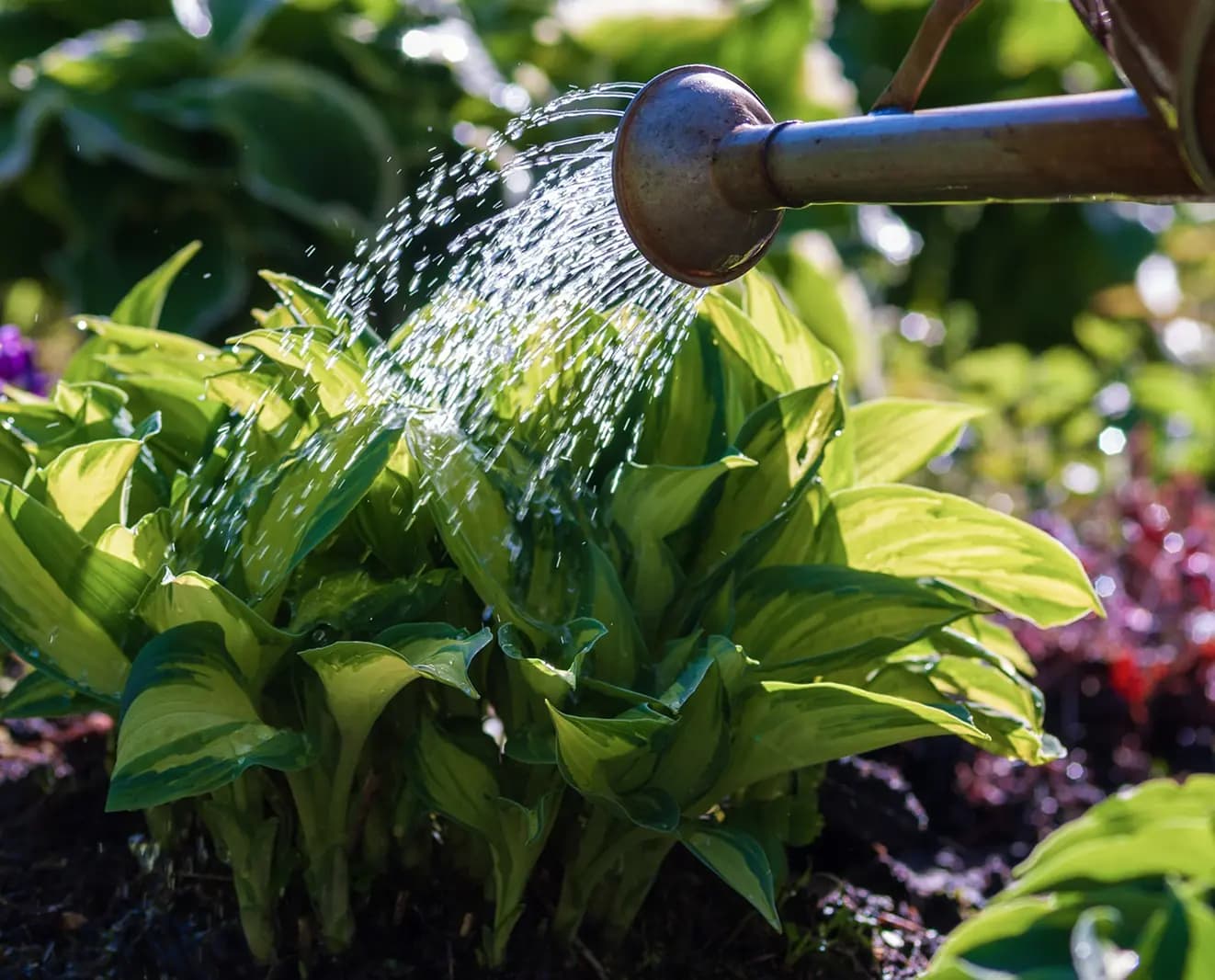
Watering a plant with a copper watering can
12 Best Landscaping Trees for Your Garden

8 min read · 6 Oct 2026

12 Best Landscaping Trees for Your Garden

Choosing the landscape tree depends on what your garden needs most. These 12 options include compact flowering specimens, colorful deciduous trees, shade varieties, and evergreens suitable for screening and year-round structure.

Plant Recommendations
12 Best Landscaping Trees for Your Garden
Best Fertilizer for Grass in Summer: How to Choose the Right One

6 min read · 18 Aug 2026

Best Fertilizer for Grass in Summer: How to Choose the Right One

The right fertilizer in summer can make a lawn thrive. The wrong one can damage it. Here, you’ll learn the best NPK ratios by grass type, when and how to apply your formula, and how to recognize the signs of over- or under-fertilizing.

Plant Care
Best Fertilizer for Grass in Summer: How to Choose the Right One
20 Funny Plant Names That Make You Laugh

8 min read · 16 Oct 2026

20 Funny Plant Names That Make You Laugh

Some plants carry names that sound like jokes. This guide explains the origins of 20 funny plant names. You will also see which of these plants you can grow at home.

Plant Recommendations
20 Funny Plant Names That Make You Laugh