Submerged Basket Use
Grow rhizomes in mesh aquatic baskets filled with heavy loam so plants stay contained and can be lifted easily for division or control.

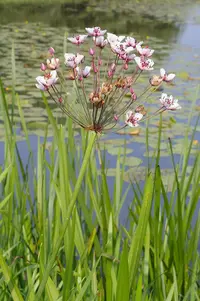
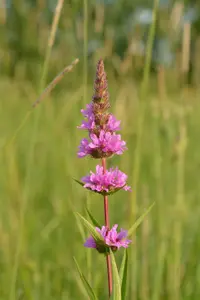
Flowering-rush, Butomus umbellatus, is an aquatic perennial often grown at the edges of ponds and slow-moving water. It forms upright, narrow, grass-like leaves in dense clumps. In summer it produces tall stalks topped with umbels of soft pink, star-shaped flowers, giving a delicate but architectural look. This wetland species is native to parts of Europe and Asia but is now naturalized in some regions of North America, sometimes behaving invasively. It is generally easy to grow if provided with constant moisture, full sun, and nutrient-rich, muddy or silty substrates. Gardeners who learn how to care for Flowering-rush usually find it resilient in suitable water gardens.

Care Difficulty
Moderate Care

Light Preference
Full Sun

Water Requirements
Aquatic

Temperature Preference
Cold Hardy

Hardiness Zone
3–9

Soil Texture
Loamy, Silty, Organic-rich

Soil pH
Slightly acidic (6.5–7.0), Neutral (7.0)

Soil Drainage
Waterlogged tolerant

Fertilization
Minimal (feed rarely)
Scan your plant to receive care tips personalized for your specific plant
Available on iOS and Android
This marginal aquatic plant performs best with strong, direct light in open exposures.
This species is a true aquatic marginal that requires constantly wet conditions rather than intermittent watering.
This hardy aquatic plant tolerates a wide temperature range but grows fastest in mild to warm conditions.
This aquatic species does not have specific air-humidity demands and tolerates typical outdoor humidity levels.
This plant prefers permanently wet, heavy, nutrient-rich substrates rather than typical potting soil.
This species can be grown in containers if the pot is treated as a submerged aquatic planter.
This aquatic perennial needs only light feeding, especially in nutrient-poor ponds or containers.
Pruning helps keep Butomus umbellatus tidy and supports healthy flowering in managed ponds.
This marginal aquatic is usually transplanted or divided rather than frequently repotted.
This species is commonly propagated by division, which preserves named forms and growth traits.
This hardy aquatic usually needs minimal winter care in established ponds in temperate climates.

Plant Health Check
Not sure what's wrong with your plant? Check your plant's health inside the app.
The flowers have a distinctive arrangement with a clear difference between inner and outer petals, and the inner three often show darker markings that guide pollinators toward the nectar.
This species spreads through robust rhizomes that easily break into fragments, allowing it to colonize new areas in slow-moving or still freshwater habitats.
Although native to Eurasia, this aquatic plant is considered invasive in parts of North America, where dense stands can outcompete native shoreline vegetation and alter habitat structure for fish and invertebrates.

Archaeobotanical studies have found charred seeds and plant remains of this species at prehistoric lake-dwelling sites in Europe, indicating that early human communities likely used it as a wild edible resource along shallow water margins.
This species spreads by both seed and rhizomes, especially in shallow water and along shorelines. In many North American regions it behaves aggressively and can displace native wetland plants, so containment and regular removal of stray shoots are important.
Keep your plants happy and healthy with plant identification, disease detection, and easy care guidance.