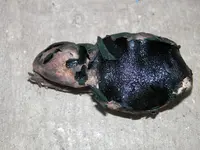
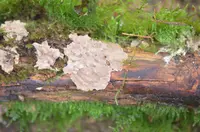
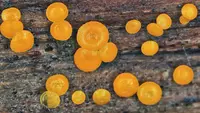
Dog's nose fungus Care (Camarops petersii)

Also known as: Black licorice drops, Dead man's tongue
Dog's nose fungus

About Dog's nose fungus

Dog's nose fungus, Camarops petersii, is a wood-decaying fungus rather than a traditional leafy plant. It typically appears as dark, crust-like or cushion-shaped patches on dead or decaying hardwood, often resembling a rough, blackened mass on bark or exposed wood. In nature it is found in temperate forests, especially on fallen branches and stumps. This species is specialized for life on rotting wood, which makes it challenging to maintain in typical home conditions. Those looking to care for Dog's nose fungus should understand that it prefers consistently damp, decaying wood, shaded locations, and stable, cool to mild conditions that mimic its forest habitat.


Main Plant Requirements

Care Difficulty

Hard Care

Light Preference

Partial Shade

Water Requirements

Moderate Water

Temperature Preference

Warm Climate

Hardiness Zone

Unknown

Soil Texture

Loamy, Organic-rich

Soil pH

Slightly acidic (6.5–7.0)

Soil Drainage

Moist but well-drained

Fertilization

Minimal (feed rarely)

Get Personalized Care Plan

Scan your plant to receive care tips personalized for your specific plant

Available on iOS and Android

How to Care for the Dog's nose fungus

Camarops petersii, often called Dog's nose fungus, develops best in low, forest-like light rather than direct sun.

  • Aim for dappled or filtered light equal to 1–3 hours of weak morning sun, with shade the rest of the day, mimicking a woodland floor microhabitat.
  • Allow bright shade under shrubs or trees; strong afternoon sun can dry the substrate and damage fruiting bodies, especially in exposed, open sites.
  • In summer, protect from hot reflective surfaces and intense midday sun; in winter, increased openness of tree canopies usually provides enough indirect light without extra exposure.

Water needs focus on keeping the substrate consistently moist but never waterlogged.

  • Check the top 2–5 cm of leaf litter or wood substrate; it should feel moist and springy, not dusty or cracked, before adding water or supplemental irrigation nearby.
  • For Camarops petersii on decaying wood, maintain even moisture by mulching and slow, deep watering of the surrounding soil rather than soaking the fungus directly.
  • Signs of excess moisture include standing water, sour or rotten odor, and slimy wood, while pale, shrinking, or brittle tissue usually indicates prolonged dryness.

Stable, cool to mild temperatures support healthy development of this wood-inhabiting fungus.

  • Target 50–70°F (10–21°C) as the preferred range, similar to a shaded woodland environment with moderate daily temperature swings.
  • Short exposures down to about 32°F (0°C) are usually tolerated if the substrate stays buffered, but hard, prolonged frost can damage fruiting structures.
  • Heat above 80°F (27°C), especially with low humidity and direct sun, can dry the substrate; provide shade, organic mulch, and steady moisture during hot periods.

This wood-decaying fungus tolerates a broad humidity range but benefits from consistently moist air around its substrate.

  • Aim for ambient humidity around 50–70% where the colonized wood or substrate is kept.
  • It tolerates short dry spells, but prolonged humidity below 40% can slow growth and dry the fruiting bodies.
  • Watch for shriveling, cracked, or overly tough fruiting surfaces as signs of humidity stress.
  • Increase humidity by lightly misting the surrounding air and storing the inoculated wood in a ventilated, enclosed space when caring for Dog's nose fungus.

This species naturally grows on decaying wood, so it is managed on a wood-based substrate rather than typical garden soil.

  • Use well-drained, fibrous material such as hardwood logs, chunky wood chips, or a mix of coarse bark and sawdust to mimic its natural habitat.
  • Ensure the substrate holds moisture but never stays waterlogged; excess free water quickly encourages competing fungi and bacteria.
  • If using a mix, combine roughly 60–70% hardwood sawdust or chips with 30–40% coarse bark or similar material to improve aeration and drainage.
  • Avoid compacted mineral soils, high-clay mixes, or peat-heavy potting media, as these reduce air spaces and do not suit Camarops petersii.

This fungus can be maintained in containers when grown on wood-based substrates rather than standard potting mixes.

  • Select a low, wide container that fits the wood pieces snugly so they do not shift while remaining accessible for inspection.
  • Use a breathable material like unglazed clay or perforated plastic trays to prevent stagnant moisture buildup around the substrate.
  • Elevate the container slightly and keep drainage openings clear so excess rinse or rainwater leaves quickly without pooling under the wood.

Camarops petersii (Dog's nose fungus) is a wood-decaying fungus that does not need additional fertilizer when established on suitable dead timber.

Pruning is not applicable to Camarops petersii, since it is a fungus naturally forming fruiting bodies on dead wood without structural shoots or foliage.

This species is not managed like a potted plant; it colonizes dead wood in situ and is not suited to routine repotting.

  • Transplanting attempts generally fail because the fungus depends on an established network inside decaying wood, not loose substrate.
  • If movement is necessary for study, transfer the entire colonized log or branch, minimizing cutting or disturbance.
  • Handle the wood gently to avoid cracking, which can dry the substrate and damage internal fungal tissue.
  • Keep the relocated wood in similar shade, moisture, and airflow conditions to limit stress on the fungal colony.

Propagation of Camarops petersii is specialist work and is rarely attempted in typical garden or indoor settings.

Specific winter care is not required for Camarops petersii, which persists outdoors on dead wood within its natural climate range.

Care Tips

Use hardwood blocks

For more controlled observation and study, inoculate small, untreated hardwood blocks with mature fruiting bodies or mycelium, then keep them in a shaded, consistently damp outdoor corner where airflow prevents stagnant moisture on the surface.

Monitor host wood

Inspect the dead or decaying host wood periodically, removing loose bark and heavily competing moss or lichens so the fungus has stable, firm substrate and less competition for surface space.

Maintain debris buffer

Leave a ring of coarse organic debris such as wood chips or leaf litter around the colonized wood to help buffer surface moisture and temperature while still allowing air circulation.

Minimize handling

Avoid frequent touching or scraping of the crust-like fruiting bodies and surrounding wood, since mechanical damage can slow development and make accurate identification or study of the structure more difficult.

Document site conditions

If interested in growing Dog's nose fungus over several seasons, keep simple notes on shade level, moisture patterns, and nearby vegetation so any changes in substrate colonization can be linked to specific environmental shifts.

Common Pests and Diseases

Substrate desiccation

This problem appears when the woody substrate holding the fungus becomes overly dry and the fruiting bodies harden, crack, or stop developing. Symptoms include pale, brittle stromata that may detach from the host wood.

Solution

Maintain consistently moist, but not waterlogged, wood by misting or soaking the log or wood block when it feels light and dry, then allowing excess water to drain. Increase ambient humidity to around 70–80% with a humidifier or humidity tent and avoid placing the culture in direct airflow from heaters or fans.

Bacterial soft rot

This disease causes localized water-soaked patches on the fruiting surface that quickly turn soft, slimy, and malodorous. Symptoms include collapsing tissue and discolored, wet areas that spread under warm, stagnant conditions.

Solution

Promptly cut away and discard all affected tissue and any obviously contaminated substrate, using clean tools. Improve air exchange around the culture, lower temperature to the recommended cool range, avoid overhead splashing, and keep surfaces and tools disinfected to reduce reinfection risk.

Green mold contamination

This disease is caused by fast-growing green molds, often Trichoderma species, that colonize the same wood and overrun slow-growing Camarops tissue. Symptoms include bright to dark green fuzzy patches on the substrate or near the fruiting bodies that expand quickly.

Solution

Physically remove contaminated sections of wood and discard heavily infested pieces, as these molds spread by airborne spores. Improve hygiene by sterilizing or pasteurizing new wood, cleaning containers and tools, increasing fresh air exchange, and slightly lowering substrate moisture to discourage aggressive mold growth.

Mite infestation

These insects are tiny arthropods that feed on fungal tissue, leading to pitted surfaces, reduced spore production, and slowed growth. Symptoms include fine speckling, tiny moving dots on the surface, and sometimes fine debris or frass around fruiting bodies.

Solution

Isolate the affected culture, then gently brush or rinse the surface under a light stream of water to dislodge mites without soaking the substrate. Reduce nearby organic clutter, keep the growing area clean, and use fine mesh barriers or sticky traps; in serious cases, apply a targeted miticide labeled safe for mushroom or fungal cultures, following label directions carefully.

Interesting Facts

Specialized on beech

This fungus is most often found on fallen trunks and large branches of European beech (Fagus sylvatica), where it develops in the dead heartwood rather than on freshly killed tissue.

Black carbonized crust

Mature fruiting bodies form hard, black, carbonized crusts that crack into angular plates, a distinctive feature that makes them look more like burnt bark than a typical mushroom.

Long-developing fruit bodies

The fungus forms perennial, long-lasting stromata (fruiting structures) that can persist and slowly expand over several years on the same piece of wood.

Botan icon

Did you know?

This species is considered rare and has been red-listed in several European countries, where its presence is used as an indicator of old-growth beech forests with long continuity of dead wood habitats.

FAQs about Dog's nose fungus

This wood-decaying fungus spreads slowly through dead hardwood, mainly via spores and gradual mycelial growth. It does not usually spread aggressively in managed gardens, as it needs suitable rotting wood rather than living plants to colonize.

Grow Healthy Plants with Botan Care

Keep your plants happy and healthy with plant identification, disease detection, and easy care guidance.

Botan plant care app — identify plants on mobile

Explore More Plants