Ornamental Pepper Care (Capsicum annuum 'Black Pearl')

Ornamental Pepper

About Ornamental Pepper

Capsicum annuum 'Black Pearl' is an ornamental pepper grown mainly for its striking foliage and fruit rather than for cooking. It is a compact, bushy annual or tender perennial that works well in containers, garden beds, and borders.

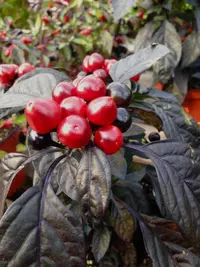
The plant is known for its dark, almost black leaves and round peppers that mature from black to bright red, creating strong color contrast. It originates from cultivated forms of Capsicum annuum, a species native to Central and South America.

This variety prefers warm conditions, plenty of light, and well-drained soil, and it usually grows quickly in suitable conditions. It suits beginners who want to learn how to care for Ornamental Pepper, as long as light and watering are monitored with some attention.

Main Plant Requirements

Care Difficulty

Moderate Care

Light Preference

Full Sun

Water Requirements

Moderate Water

Temperature Preference

Tropical / Frost Sensitive

Hardiness Zone

9–11

Soil Texture

Sandy, Loamy, Organic-rich

Soil pH

Acidic (5.5–6.5), Slightly acidic (6.5–7.0)

Soil Drainage

Moist but well-drained

Fertilization

Moderate (every 2–4 weeks)

Get Personalized Care Plan

Scan your plant to receive care tips personalized for your specific plant

Available on iOS and Android

How to Care for the Ornamental Pepper

This sun-loving pepper needs strong light to maintain dark foliage and heavy fruiting.

  • Provide 6–8 hours of direct sun daily; morning and midday sun are ideal for compact growth and deep leaf color.
  • It tolerates light afternoon shade in hot climates, but too much shade causes lanky stems, fewer fruits, and duller foliage on Ornamental Pepper plants.
  • In spring, harden off plants over 7–10 days to prevent leaf scorch, and in late summer protect from intense reflected heat on patios or against walls.

This plant prefers evenly moist, well-drained soil that never stays waterlogged.

  • Water when the top 2–4 cm of soil feels dry, aiming for a thorough soak that drains freely from the root zone.
  • In hot, dry weather increase checks to daily, watching for early wilt or dull, drooping leaves; reduce frequency in cool or rainy periods.
  • Yellowing lower leaves, soft stems, or a sour smell indicate overwatering, while persistent wilt, crisp leaf edges, and very light pots point to underwatering in Capsicum annuum 'Black Pearl'.

This warm-season pepper requires stable, frost-free conditions for reliable growth and fruiting.

  • Aim for 70–85°F (21–29°C) by day and 60–70°F (16–21°C) by night for strongest foliage color and flowering.
  • Avoid exposure below 55°F (13°C); growth slows, and brief dips near 40°F (4°C) can cause leaf drop, while any frost kills the plant.
  • In midsummer, plants tolerate short spikes to 95–100°F (35–38°C) if soil moisture is maintained; use mulch and light shade cloth during extreme heat to limit stress.

Capsicum annuum 'Black Pearl' handles typical indoor humidity but benefits from slightly moist air in heated or very dry homes.

  • Aim for 40–60% humidity to support steady growth and glossy foliage.
  • Leaves curling inward or developing dry, crispy edges indicate air that is too dry.
  • Group plants, place the pot on a pebble tray with water, or run a nearby humidifier during very dry periods when caring for Ornamental Pepper.

Capsicum annuum 'Black Pearl' grows best in light, well-drained, nutrient-rich soil that holds some moisture but never stays soggy.

  • Use a loamy mix based on all-purpose potting soil with 20–30% perlite or coarse sand to improve drainage and aeration.
  • Include 20–30% compost or well-rotted manure to supply nutrients and support strong foliage and fruiting.
  • Aim for slightly acidic to neutral pH around 6.0–7.0, which keeps most nutrients available to the roots.
  • Avoid compacted clay, peat-only mixes, or containers without free drainage, as these encourage waterlogging and root problems.

This compact ornamental pepper is well suited to growing in containers on patios, balconies, or sunny steps.

  • Choose a stable, heavy pot if exposed to wind, as the dense canopy and fruit clusters can make the plant top-heavy.
  • Select a container at least 20–25 cm wide and deep to allow adequate root volume for continuous flowering and fruiting.
  • Favor breathable materials like terracotta in wet climates to reduce water retention, but monitor watering more closely in hot, dry conditions.

Capsicum annuum 'Black Pearl' responds well to modest, consistent feeding during its active growing season.

  • Apply a balanced liquid fertilizer (for example 10-10-10) at 1/2 strength every 2–3 weeks from late spring through early fall.
  • Use a slow-release granular fertilizer in spring, mixed lightly into the top soil layer for steady nutrient supply.
  • Rinse soil with plain water every 4–6 weeks to reduce salt buildup from fertilizers.
  • Stop feeding in late fall and winter, when growth slows and Ornamental Pepper needs only basic water and light.

Pruning helps Capsicum annuum 'Black Pearl' stay compact, dense, and productive.

  • Best time for structural pruning is early spring, before strong new growth begins.
  • Remove dead, diseased, or damaged stems first, then thin weak, crossing, or crowded branches.
  • Pinch soft tips of young shoots to encourage bushier growth and more fruiting sites.
  • Use clean, sharp scissors or hand pruners, disinfected between plants to limit disease spread.

Container-grown plants benefit from occasional repotting to maintain vigorous growth and root health.

  • Check for roots circling the pot, pushing through drainage holes, or unexplained slow growth as signs it needs a larger container.
  • Plan to repot or transplant Capsicum annuum 'Black Pearl' in spring, every 1–2 years for container specimens.
  • Move into a pot 2–5 cm wider, using fresh, well-drained mix, and loosen circling roots gently to reduce future binding.
  • Water thoroughly after repotting, keep in bright but softer light for 3–5 days, and avoid heavy feeding until new growth appears.

This ornamental pepper is most commonly propagated from seeds, which maintain key traits reliably enough for home growers.

  • Sow ripe, cleaned seeds indoors in late winter to early spring, 8–10 weeks before the last expected frost.
  • Use a sterile seed-starting mix, keep it evenly moist, and maintain 70–80°F for faster germination.
  • Provide bright light after sprouting, such as a sunny window or grow lights, to produce sturdy, compact seedlings.
  • Transplant seedlings once they have 2–3 true leaves, handling roots gently to limit shock and stunting.

This warm-season annual is frost-sensitive and needs thoughtful handling in regions with cold winters.

  • Plants outdoors usually die back after the first hard frost, so treat most as seasonal displays.
  • In cool autumn weather, move container plants indoors before temperatures drop below 50°F.
  • Indoors, place in the brightest spot available and reduce watering, keeping soil slightly moist but never saturated.
  • Discard heavily stressed plants in spring and start fresh from seed for the best display each year.

Care Tips

Pinch Early Growth

Pinch out the soft tip of young plants once they have 4–6 true leaves to encourage a bushier shape and a heavier display of fruit and foliage color.

Staggered Pot Upsizing

Move plants gradually through 2–3 increasingly larger pots instead of jumping to a very big container to reduce transplant shock and keep root growth dense and efficient.

Color-Maximizing Light Shift

If grown outdoors, shift containers to the brightest, warmest spot as fruits start to form, which helps intensify the black foliage and pepper coloration without changing the basic watering or feeding routine.

Season-Extending Lifting

Before first frost, dig up or lift container plants and bring them into a bright indoor space or greenhouse so the shrubs can finish ripening existing fruits and potentially resprout next spring.

Targeted Pest Scouting

Inspect the undersides of leaves and flower clusters weekly for aphids and spider mites, and at the first sign of pests use a strong water spray or horticultural soap so issues are controlled before they distort new growth when growing Ornamental Pepper.

Common Pests and Diseases

Aphids

This pest often clusters on young shoots and undersides of leaves, sucking sap and causing curling, distortion, and sticky honeydew that can attract sooty mold.

Solution

Spray plants with a strong stream of water to dislodge colonies, then treat remaining insects with insecticidal soap or neem oil, repeating every 5–7 days until new growth appears clean and healthy.

Spider mites

These insects prefer hot, dry conditions and cause fine stippling, bronzing, and eventual leaf drop, sometimes with delicate webbing between leaves and stems.

Solution

Increase humidity around the plant, hose down foliage thoroughly to remove mites, and apply a miticidal product based on insecticidal soap or horticultural oil to leaf undersides, repeating at least twice to break their life cycle.

Pepper leaf spot

This disease produces small, water-soaked lesions on leaves that enlarge into tan or dark spots with yellow halos, often leading to premature leaf drop in stressed plants.

Solution

Remove and discard affected leaves, avoid overhead watering, space plants for better airflow, and if the problem persists, apply a copper-based fungicide according to label directions while rotating planting areas yearly to reduce pathogen buildup.

Bacterial spot

Symptoms include dark, angular leaf spots and small, raised, corky lesions on fruits, which can reduce ornamental quality and overall plant vigor.

Solution

Immediately remove infected leaves and fruits, avoid working with plants when foliage is wet, irrigate at soil level, and use disease-free seed or starts; in recurrent cases, apply labeled copper products preventively, as curative treatment is limited.

Pepper mosaic virus

This disease causes mottled, distorted leaves, stunted growth, and reduced fruit set, and is often spread by sap-feeding insects such as aphids.

Solution

Uproot and discard infected plants to prevent spread, control aphids and other vectors with regular monitoring and targeted soap or oil sprays, and keep tools clean to reduce mechanical transmission when caring for Ornamental Pepper.

Interesting Facts

Natural dark foliage

This ornamental pepper forms almost black leaves due to high levels of purple-black anthocyanin pigments, which intensify in strong light and give the plant its characteristic dark, glossy canopy.

Color-shifting fruits

The round peppers naturally change color as they mature, typically starting green, then turning glossy black, and finally ripening to bright red while often all three colors are visible on the plant at the same time.

Award-winning ornamental

This cultivar received the All-America Selections Ornamental Pepper award in 2006, recognized for its compact form, uniform habit, and high ornamental value in landscape beds and containers.

Botan icon

Did you know?

Although edible as a Capsicum annuum, the fruits of this ornamental cultivar are notably hot and bred mainly for decorative use, so they are usually not recommended as a culinary pepper for most home growers.

FAQs about Ornamental Pepper

The fruits are technically edible but extremely hot and bred mainly for appearance, not flavor. They can cause mouth and stomach irritation. Most growers treat them as decorative only and use culinary pepper varieties for cooking instead.

Grow Healthy Plants with Botan Care

Keep your plants happy and healthy with plant identification, disease detection, and easy care guidance.

Botan plant care app — identify plants on mobile

Explore More Plants