Staggered sowing
Sow small batches 10–14 days apart in early spring so flowering is spread over a longer period and losses from damping-off or pests in any one batch are reduced.

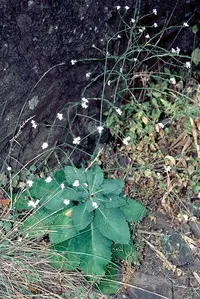
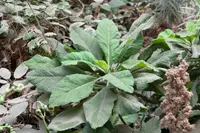
Crambe strigosa is a herbaceous perennial in the cabbage family, grown mainly as an ornamental foliage plant. It forms a low clump of textured, often slightly hairy leaves and can produce modest, branched flower stems.
This species is native to certain coastal and dry regions, where it adapts to relatively poor, free-draining soils. Its natural toughness and drought tolerance make it moderately easy to grow in similar garden conditions.
Those who want to care for Crambe strigosa should focus on providing sun to light shade, moderate moisture, and soil that does not stay waterlogged, as prolonged wetness can weaken the plant.

Care Difficulty
Moderate Care

Light Preference
Full Sun

Water Requirements
Moderate Water

Temperature Preference
Cool Climate

Hardiness Zone
6–9

Soil Texture
Sandy, Loamy, Organic-rich

Soil pH
Slightly acidic (6.5–7.0), Neutral (7.0)

Soil Drainage
Well-drained

Fertilization
Minimal (feed rarely)
Scan your plant to receive care tips personalized for your specific plant
Available on iOS and Android
This sun-loving perennial thrives in open, bright sites with cool roots and full exposure above ground.
This deep-rooted perennial prefers evenly moist but free-draining soil rather than frequent shallow watering.
This hardy perennial tolerates a wide temperature range but grows best in cool to mild conditions.
This species handles typical outdoor humidity and does not require special humidity management.
This perennial prefers deep, well-drained, moderately fertile soil to develop its substantial root system.
This species is generally not well suited to long-term container growing due to its deep, extensive root system.
This coastal perennial from nutrient-poor habitats needs only modest feeding to stay healthy.
This plant needs only light, targeted pruning to maintain a tidy, healthy clump.
This deep-rooted perennial is better transplanted than frequently repotted, and prefers to stay in one spot once established.
This species is usually raised from seed, with some success from careful root division on mature clumps.
This hardy perennial tolerates typical temperate winters with minimal intervention once established in well-drained soil.

Plant Health Check
Not sure what's wrong with your plant? Check your plant's health inside the app.
This species is naturally confined to the Madeira archipelago in the North Atlantic, where it grows on rocky coastal slopes and cliffs exposed to strong winds and salt-laden air.
It shows notable tolerance to salt spray and poor, stony soils, a trait that reflects its evolution as a maritime plant on steep ocean-facing habitats.
Crambe strigosa belongs to the mustard family Brassicaceae, sharing typical family traits such as four-petaled flowers and characteristic sulfur-containing compounds that give many relatives their pungent taste and smell.
This species is a perennial, returning from the same root system each year if conditions are suitable. Foliage may die back in winter, especially in colder climates, but underground parts usually survive and re-sprout in spring.
Keep your plants happy and healthy with plant identification, disease detection, and easy care guidance.