Staggered Succession Sowing
Sow a small patch every 3–4 weeks in the growing season so older plants can be harvested heavily while younger ones grow to replace them, keeping leaf quality and yield consistent.

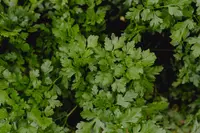
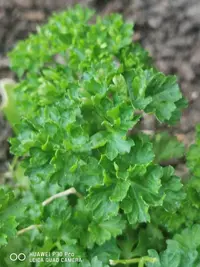
Italian parsley, Petroselinum crispum var. neapolitanum, is a leafy biennial herb usually grown as an annual for its flat, aromatic leaves. It forms upright, branching clumps with smooth, deep green foliage and a fresher, less curly look than common curly parsley.
This variety comes from the Mediterranean region and prefers mild conditions rather than extreme heat or cold. It is generally easy to grow if it receives consistent moisture, reasonably fertile, well-drained soil, and good light.
Gardeners who learn how to care for Italian parsley appreciate its steady leaf production and reliable flavor for cooking, both in garden beds and in containers.

Care Difficulty
Moderate Care

Light Preference
Full Sun

Water Requirements
Regular Water

Temperature Preference
Cool Climate

Hardiness Zone
4–9

Soil Texture
Loamy, Sandy, Organic-rich

Soil pH
Acidic (5.5–6.5), Slightly acidic (6.5–7.0)

Soil Drainage
Moist but well-drained

Fertilization
Light (every 4–6 weeks)
Scan your plant to receive care tips personalized for your specific plant
Available on iOS and Android
This plant grows best with steady light that supports leafy, flavorful growth.
Consistent, moderate moisture supports dense, tender foliage.
Stable, mild temperatures support steady leaf production and longer harvest life.
Humidity is rarely a limiting factor for this herb and is similar to typical indoor household levels.
Soil for Petroselinum crispum var. neapolitanum should be loose, evenly moist, and nutrient-rich.
This parsley variety adapts well to container growing when the pot supports its deep, fibrous root system.
This herb benefits from modest feeding to support steady leaf production without excessive softness or bitterness.
Thoughtful cutting of Petroselinum crispum var. neapolitanum encourages dense, productive foliage and prolongs harvest.
This parsley is usually treated as a short-lived herb, so transplanting young plants matters more than long-term repotting cycles.
New plants of Petroselinum crispum var. neapolitanum are most reliably produced from seed rather than cuttings or division.
This biennial herb is moderately cold-tolerant but benefits from simple winter measures in colder regions.

Plant Health Check
Not sure what's wrong with your plant? Check your plant's health inside the app.
Unlike the tightly curled leaves of common parsley, this variety has flat, triangular leaf segments with a higher surface area, which contributes to a stronger, more concentrated aroma and flavor.
Its leaves typically contain a higher proportion of volatile compounds such as myristicin and apiol compared with curly forms, which is why chefs prefer it when caring for Italian parsley for culinary use.
This variety originates from the central and eastern Mediterranean region and shows good adaptation to mild, maritime climates with cool winters and relatively dry summers, reflecting the seasonal patterns of its native range.

Historical records from Mediterranean cuisine show that flat-leaf parsley types like this one were favored in professional kitchens long before curly parsley became popular as a garnish, largely because their stronger, cleaner flavor remains detectable even after cooking.
Yellowing leaves usually result from overwatering, poor drainage, nutrient deficiency, or natural aging of older foliage. Check soil moisture, improve drainage, remove yellowed leaves, and use a balanced fertilizer at low strength during active growth.
Keep your plants happy and healthy with plant identification, disease detection, and easy care guidance.