Wind‑hardening seedlings
If starting plants from seed, expose young plants to increasing airflow outdoors over 7–10 days before planting out to build sturdy, less breakable flowering stems.

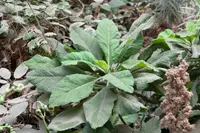
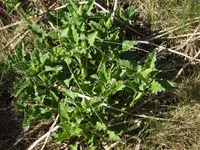
Crambe scaberrima is a perennial herb in the cabbage family, grown mainly for its tough foliage and tolerance of harsh conditions. It forms a clumping growth habit with coarse, often rough-textured leaves and branched flowering stems.
This species is native to dry, often rocky habitats, where soils are well-drained and nutrients can be limited. As a result, it generally prefers open, sunny locations and does not like waterlogged ground.
Gardeners who care for Crambe scaberrima usually find it fairly undemanding once established, provided drainage is good and the soil is not overly rich. Its drought tolerance and hardy nature make it more suitable for experienced beginners who are comfortable managing lower-water planting schemes.

Care Difficulty
Moderate Care

Light Preference
Full Sun

Water Requirements
Moderate Water

Temperature Preference
Cool Climate

Hardiness Zone
6–8

Soil Texture
Sandy, Loamy, Rocky

Soil pH
Slightly acidic (6.5–7.0), Neutral (7.0)

Soil Drainage
Well-drained

Fertilization
Minimal (feed rarely)
Scan your plant to receive care tips personalized for your specific plant
Available on iOS and Android
This sun-loving perennial thrives in open, bright conditions typical of dry, exposed sites.
This deep-rooted plant prefers infrequent, thorough watering rather than constant moisture.
This hardy perennial tolerates a wide temperature range but responds best to cool to warm conditions without extremes.
This species is highly tolerant of dry conditions, so humidity is rarely a concern in typical homes.
This perennial prefers lean, very well-drained, sandy or gravelly soil that stays on the dry side.
This species can be grown in containers if the potting setup mimics dry, free-draining ground conditions.
This deep-rooted perennial from nutrient-poor habitats needs only light feeding in cultivation.
Pruning needs for this plant are minimal and focus on tidiness rather than reshaping.
This species is better suited to open ground than long-term container culture, so focus on careful transplanting.
Propagation is possible but somewhat specialized, mainly using seeds and careful division of established clumps.
This hardy perennial tolerates typical temperate winters with minimal intervention once established in the ground.

Plant Health Check
Not sure what's wrong with your plant? Check your plant's health inside the app.
This species is naturally restricted to dry, often rocky habitats in parts of East Africa, where it grows in open, sun-exposed sites with very limited soil moisture.
The leaves and stems are covered with rough, abrasive hairs, a scabrous surface that likely reduces herbivory and limits water loss by slightly disrupting airflow across the leaf.
As a member of the cabbage family Brassicaceae, it produces characteristic four-petaled flowers and siliques (narrow seed pods), reflecting its close relationship to crop genera such as Brassica and Crambe maritima.
This species forms a clump and slowly enlarges from the crown, but it does not typically run by stolons or invasive roots. In normal garden conditions, it stays where planted and is easy to keep contained.
Keep your plants happy and healthy with plant identification, disease detection, and easy care guidance.