Mark Dormant Clumps
Label planting spots with unobtrusive markers in late summer so the plant is not accidentally disturbed or dug up while dormant, since foliage disappears completely by mid-summer.

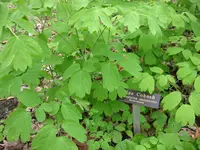
Caulophyllum thalictroides, commonly called blue cohosh, is a woodland perennial native to eastern North America. It grows in rich, shaded forests and moist ravines. The plant forms upright stems with finely divided, bluish-green foliage and small, yellow-brown flowers in spring, followed by clusters of striking blue berries. It dies back to the ground each winter and re-emerges from thick, knotty roots. Blue cohosh can be moderately challenging to grow because it needs consistent moisture, humus-rich soil, and protection from hot sun. Gardeners who care for blue cohosh successfully usually provide stable shade and an undisturbed, naturalistic setting.

Care Difficulty
Moderate Care

Light Preference
Partial Shade

Water Requirements
Regular Water

Temperature Preference
Cold Hardy

Hardiness Zone
3–8

Soil Texture
Loamy, Silty, Organic-rich

Soil pH
Acidic (5.5–6.5), Slightly acidic (6.5–7.0)

Soil Drainage
Moist but well-drained

Fertilization
Minimal (feed rarely)
Scan your plant to receive care tips personalized for your specific plant
Available on iOS and Android
This woodland perennial prefers cool, filtered light conditions similar to a shaded forest floor.
This species prefers consistently moist, humus-rich soil without becoming waterlogged.
This temperate woodland plant thrives in cool to mild conditions with a pronounced winter rest.
This woodland perennial prefers moderately moist air but usually adapts to typical home humidity.
This species grows best in moisture-retentive, humus-rich soil that still drains freely.
This species can grow in containers, but performance is often better in deep, shaded garden beds.
This woodland perennial usually needs little feeding when grown in rich, humus-based soil.
Caulophyllum thalictroides needs minimal pruning, mainly to keep the clump clean and healthy.
This species is usually grown in the ground and dislikes frequent disturbance of its fleshy roots.
Propagation of Caulophyllum thalictroides is possible but slow and best suited to patient growers.
This woodland perennial is cold hardy in much of the US and usually needs little winter attention.

Plant Health Check
Not sure what's wrong with your plant? Check your plant's health inside the app.
This woodland perennial often sends up its blue-green, stalked leaves very early in spring, sometimes before the forest canopy fully leafs out, allowing it to take advantage of bright, cool-season light in deciduous forests.
After inconspicuous yellowish flowers fade, the plant develops berry-like structures that turn a striking deep blue at maturity, contrasting strongly with the foliage and leaf litter on the forest floor.
In the wild, it typically grows in rich, moist, deciduous forests on calcareous or loamy soils, and its presence can indicate relatively undisturbed, high-quality woodland habitat.

Pollination is often limited in this species, and it can persist for many years in a site primarily through slow clonal spread from its thick, underground rhizomes rather than relying heavily on seed production.
This woodland perennial forms slow-growing clumps and expands mainly through short rhizomes and self-sown seed. It does not spread aggressively and is unlikely to become invasive under typical garden conditions when seedling numbers are monitored.
Keep your plants happy and healthy with plant identification, disease detection, and easy care guidance.