Tidal tank setup
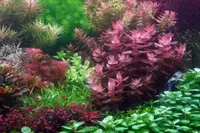
If growing this seaweed in a tank, use a shallow, wide container with strong aeration and a gentle circulation pump to mimic tidal water movement and prevent stagnation and rot.

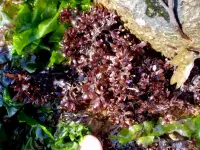
Irish moss, Chondrus crispus, is a small red seaweed rather than a true land moss. It forms low, branching, cartilaginous fronds that create dense, cushion-like mats under water. Color ranges from deep red to purple or yellow-green, depending on light exposure.
This species occurs naturally along the rocky Atlantic coasts of Europe and North America, where it anchors to stones in the intertidal zone. It is relatively easy to maintain in specialized marine or coastal-style setups but is not a typical houseplant. Stable moisture, cool conditions, and clean, well-aerated seawater are key if you want to learn how to care for Irish moss.

Care Difficulty
Moderate Care

Light Preference
Partial Shade

Water Requirements
Aquatic

Temperature Preference
Cool Climate

Hardiness Zone
3–8

Soil Texture
Sandy, Rocky, Organic-rich

Soil pH
Slightly acidic (6.5–7.0)

Soil Drainage
Waterlogged tolerant

Fertilization
Minimal (feed rarely)
Scan your plant to receive care tips personalized for your specific plant
Available on iOS and Android
Chondrus crispus prefers cool, bright coastal light rather than harsh, direct sun.
Chondrus crispus is a marine alga that relies on consistent moisture and periodic seawater immersion.
This cold-temperate seaweed thrives in cool water and mild air temperatures.
This red seaweed prefers cool, moist marine air and suffers quickly in dry indoor conditions.
On land, Chondrus crispus needs a coastal-style, sharply drained yet moisture-retentive substrate.
This species can be grown in containers outdoors for experimental or ornamental purposes if its marine-like moisture and drainage needs are met.
Chondrus crispus grows in nutrient-rich marine environments and usually needs only light supplemental feeding in culture.
Pruning Chondrus crispus is minimal and focuses on maintaining healthy, productive fronds.
Transplanting Chondrus crispus is mainly relevant for cultured or tank-grown stocks rather than typical houseplant containers.
Propagation of Chondrus crispus is commonly done by vegetative division of existing fronds and holdfasts.
Chondrus crispus is naturally cold tolerant, so outdoor coastal populations usually need little intentional winter care.

Plant Health Check
Not sure what's wrong with your plant? Check your plant's health inside the app.
This red alga naturally grows along cold-temperate Atlantic coasts, especially in the North Atlantic, where it tolerates strong waves and low temperatures that would damage many other seaweeds.
It is one of the main natural sources of kappa- and lambda-carrageenan, gelling and thickening polysaccharides that are widely used in food products, cosmetics, and some laboratory media.
Its frond shape and thickness change with environment: plants in wave-exposed areas tend to be shorter and more robust, while those in sheltered waters often grow more delicate, finely branched fronds.

During the Irish Potato Famine in the 1840s, this seaweed became an emergency food and household staple along some coastal communities, where it was boiled with milk or water to make a simple nourishing pudding often called Irish moss.
Sparse or absent flowers usually result from excessive shade, very poor nutrition, or stress from heat, drought, or salinity. Provide stable, cool conditions, moderate nutrient availability, and avoid heavy disturbance of the holdfasts to support normal reproductive growth.
Keep your plants happy and healthy with plant identification, disease detection, and easy care guidance.