Mark Dormant Sites
Mark planting spots with discreet labels or pebbles before foliage dies back, so you avoid disturbing the small tubers when cultivating or replanting in the dormant season.

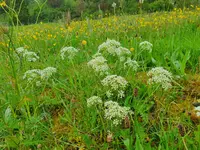
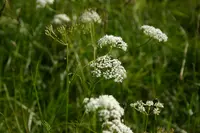
Pignut, Conopodium majus, is a small perennial from the carrot family that grows from an underground edible tuber. It forms fine, fern-like foliage and airy clusters of tiny white flowers.
In the wild it occurs in light woodlands, hedgerows, and grasslands across parts of Europe, preferring undisturbed, well-drained soils. It is generally modest in size and not invasive, but its small tuber makes it sensitive to disturbance.
Gardeners who care for pignut should know it prefers dappled light, consistent but not heavy moisture, and relatively low-nutrient soil, which keeps growth balanced and reduces competition from stronger plants.

Care Difficulty
Moderate Care

Light Preference
Partial Shade

Water Requirements
Moderate Water

Temperature Preference
Cool Climate

Hardiness Zone
6–9

Soil Texture
Sandy, Loamy, Organic-rich

Soil pH
Acidic (5.5–6.5), Slightly acidic (6.5–7.0)

Soil Drainage
Moist but well-drained

Fertilization
Minimal (feed rarely)
Scan your plant to receive care tips personalized for your specific plant
Available on iOS and Android
Conopodium majus prefers bright, gentle outdoor light that mimics open woodland edges.
This species grows from a small tuber and prefers evenly moist but never waterlogged soil.
This woodland geophyte prefers mild climates with cool, moist growing seasons.
This species grows well in typical outdoor humidity and does not need special air moisture management.
This tuber-forming woodland plant needs loose, moist, sharply draining soil to avoid rot.
This species can be grown in containers if the pot is prepared to protect the small tubers from waterlogging.
Conopodium majus is a light-feeding woodland species that needs only modest nutrition in cultivation.
Pruning needs for Conopodium majus are minimal and focus on tidiness rather than shaping.
Conopodium majus is usually grown in the ground and dislikes frequent disturbance, so transplanting should be infrequent and gentle.
Conopodium majus is usually propagated by seed or by carefully dividing dormant tubers.
Conopodium majus is cold hardy in much of the US and usually needs little special winter attention once established.

Plant Health Check
Not sure what's wrong with your plant? Check your plant's health inside the app.
This species produces a small, nut-like tuber sometimes called an earthnut or pignut, which has been traditionally eaten raw or roasted in parts of Europe.
It typically grows in light, acidic woodlands and species-rich grasslands across western Europe, often indicating long-established, relatively undisturbed habitats.
The plant bears loose, airy umbels of small white flowers that attract a range of pollinating insects, including hoverflies and solitary bees, in late spring to early summer.

Historical records show that rural communities in Britain and Ireland once gathered its small tubers as a seasonal wild food, and children were often particularly skilled at locating and digging them up using knowledge passed down through families.
The small underground tuber is edible and has a mild, nutty taste. Only harvest where identification is certain and collecting is legal. Avoid roadside or contaminated sites to reduce risks from pollutants or animal contamination.
Keep your plants happy and healthy with plant identification, disease detection, and easy care guidance.