Pacific madrone Care (Arbutus menziesii)

Also known as: madrona, Arbutus, Arbutus Tree, refrigerator tree
Pacific madrone

About Pacific madrone

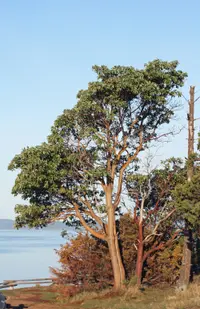
Pacific madrone, Arbutus menziesii, is an evergreen tree native to the Pacific Coast of North America, from California to British Columbia. It is known for its smooth peeling bark in copper, orange, and red tones, along with leathery dark green leaves and clusters of white spring flowers followed by red berries.

In nature it typically grows on rocky slopes and dry, well-drained forest edges, often mixed with conifers. It can be challenging to grow in cultivation because it resents root disturbance, excess summer water, and poorly drained soils.

Gardeners who care for Pacific madrone need to provide full sun, good air flow, and lean, well-drained soil that mimics its native habitat conditions.

Main Plant Requirements

Care Difficulty

Hard Care

Light Preference

Full Sun

Water Requirements

Low Water

Temperature Preference

Cool Climate

Hardiness Zone

7–9

Soil Texture

Sandy, Loamy, Rocky

Soil pH

Acidic (5.5–6.5), Slightly acidic (6.5–7.0)

Soil Drainage

Well-drained

Fertilization

Minimal (feed rarely)

Get Personalized Care Plan

Scan your plant to receive care tips personalized for your specific plant

Available on iOS and Android

How to Care for the Pacific madrone

Arbutus menziesii needs bright, open conditions to develop a healthy crown and bark.

  • Provide full sun for 6–8 hours daily; light afternoon shade is helpful in very hot inland sites to reduce leaf scorch.
  • Young Pacific madrone trees tolerate light or dappled shade but grow more slowly and develop looser canopies there.
  • Avoid deep shade, which leads to sparse foliage and dieback, and avoid reflective heat from walls that can overheat bark in summer.

This species is adapted to dry summers and is sensitive to excess soil moisture.

  • After establishment, water only when the top 5–8 cm of soil are completely dry, typically during prolonged summer drought.
  • Ensure sharply drained, rocky or sandy soil; pooling water or heavy clay increases risk of root rot in Arbutus menziesii.
  • Signs of overwatering include yellowing leaves and sudden leaf drop, while crisp, curling leaves and twig dieback indicate prolonged drought stress.

This tree prefers mild, coastal-type climates with cool, wet winters and dry, warm summers.

  • Optimal growth occurs around 55–75°F (13–24°C), with best performance in areas lacking strong temperature extremes.
  • Mature trees tolerate short cold spells down to about 10–15°F (-12 to -9°C), but young plants are more vulnerable to hard frost.
  • Arbutus menziesii handles dry summer heat near 85–95°F (29–35°C) if roots are shaded and soil is not saturated during hot periods.

This species is adapted to dry, coastal and upland air, so humidity is rarely a concern for Pacific madrone.

Arbutus menziesii needs sharply draining, lean soil that mimics rocky, coastal or upland habitats.

  • Use sandy or gravelly loam with low to moderate organic matter, not rich potting mixes that stay wet.
  • Aim for slightly acidic to neutral pH, roughly 5.5–7.0, avoiding strongly alkaline or salty substrates.
  • In garden settings, blend native soil with coarse sand or small gravel to increase drainage and root aeration.
  • Avoid compacted clay, heavy irrigation zones, or any site where water pools for more than a few hours.

This tree is generally unsuitable for long‑term container growing due to its deep, wide‑spreading root system and size potential.

Native Pacific madrone usually needs little or no fertilizer in normal garden soil.

  • In very poor or disturbed soils, apply a light layer of compost around the drip line in early spring, keeping it off the trunk.
  • If using a balanced slow-release NPK fertilizer, choose a low to moderate strength product and apply once in spring only.
  • Avoid high-nitrogen or frequent feeding, which encourages weak, lush growth and increases disease susceptibility.
  • Do not fertilize in late summer or winter, as new tender growth may be damaged by cold and overall vigor can decline.

Pruning Arbutus menziesii is mainly for safety and tree health rather than shaping.

  • Carry out pruning in late summer or very early fall, when disease pressure is lower and cuts seal more reliably.
  • Remove dead, diseased, crossing, or storm-damaged branches first to improve structure and airflow.
  • Limit live-wood removal to small branches to avoid large wounds that decay easily in this species.
  • Use clean, sharp bypass pruners or a handsaw, making clean cuts just outside the branch collar without flush cutting.

This species dislikes root disturbance, so transplant Arbutus menziesii as seldom and as gently as possible.

  • Look for tight root spirals, roots emerging from drainage holes, or stalled growth as signs a container plant has outgrown its pot.
  • Schedule transplanting for late fall to very early spring, when the tree is least active and soil moisture is more stable.
  • Plan on only 1–2 careful transplants from nursery pot to final site, using a well-drained, low-organic, slightly acidic soil.
  • Handle the root ball gently, avoiding teasing or cutting roots; water deeply after planting, then keep evenly moist until re-established.

Arbutus menziesii is challenging to propagate and is usually raised by specialized growers.

  • Seed propagation requires fresh seed sown in fall with natural cold stratification over winter to trigger germination.
  • Use a sharply drained, low-nutrient medium and shallow sowing, keeping it slightly moist but never waterlogged.
  • Semi-ripe cuttings in late summer sometimes root with bottom heat and a rooting hormone, though success rates are low.
  • Transplant very young seedlings carefully into individual cells to minimize later root disturbance and improve survival.

Established Arbutus menziesii is cold hardy in much of its native range and usually needs minimal winter care.

  • In climates colder than its usual range, mulch 5–8 cm around the root zone, keeping mulch a few cm away from the trunk.
  • Young or container-grown plants benefit from a sheltered site out of harsh wind to reduce leaf scorch and desiccation.
  • Move containers into an unheated but frost-free garage or porch in very cold regions, watering sparingly to keep soil just barely moist.

Care Tips

Encourage Deep Rooting

During the first 2–3 summers, give a single, slow, deep soak every 2–4 weeks rather than frequent light watering to encourage a deep, drought-resilient root system that will support the tree long term.

Protect Trunk Bark

Install a simple, open-sided physical barrier (such as posts with loose wire or slats) around young trees to prevent pets, deer, or tools from scraping the thin bark, which can lead to canker and decay.

Manage Natural Leaf Litter

Allow a thin layer of the tree’s own leaves to remain as mulch under the canopy to conserve soil moisture and moderate temperature, but lightly rake it back from the trunk base to keep the root collar dry and well aerated.

Avoid Summer Disturbance

Schedule any necessary root-zone work, such as trenching or irrigation installation, for late fall or winter when the tree is less physiologically stressed, since soil disturbance in summer can trigger decline in this species.

Plan for Mycorrhizae

When planting into previously disturbed or lawn areas, keep a wide, unplanted, non-irrigated zone around the tree so native mycorrhizal fungi can establish, which significantly improves nutrient uptake and overall resilience when growing Pacific madrone.

Common Pests and Diseases

Leaf spot

This disease causes brown to black spots with purple or dark margins on leaves, often leading to premature leaf drop. Symptoms include heavier damage on stressed or shaded trees and in areas with prolonged leaf wetness.

Solution

Prune out and dispose of heavily spotted leaves and small twigs to reduce inoculum, and avoid overhead irrigation that keeps foliage wet. Improve air movement around the canopy and maintain tree vigor with proper site selection and minimal summer watering, since caring for Pacific madrone starts with keeping it in a dry, well-drained, open location.

Trunk canker

This disease produces sunken, discolored areas on branches or trunk, sometimes oozing dark sap, and can girdle stems over time. Symptoms include branch dieback above the affected area and rough, cracked bark around old cankers.

Solution

Prune out infected branches several inches below visible damage during dry weather and disinfect tools between cuts. Avoid wounding the trunk, prevent soil and mulch from contacting the lower stem, and keep irrigation away from the base to reduce moisture that favors canker fungi.

Leaf blight

This disease leads to irregular brown patches on leaves that may coalesce, giving foliage a scorched or blighted appearance. Symptoms include rapid browning during wet, cool periods followed by leaf drop.

Solution

Remove and discard heavily blighted leaves from the tree and ground to limit fungal spread. Reduce humidity around the canopy by thinning overcrowded branches, avoid summer watering of the foliage, and plant new trees only in sites with excellent drainage and full sun exposure.

Wood decay fungi

This disease affects older or stressed trees, causing internal wood rot and structural weakness, sometimes indicated by conks or mushrooms on the trunk or major branches. Symptoms include crown thinning, dead branches, and brittle wood that is prone to breakage.

Solution

Inspect mature trees regularly for decay fruiting bodies and significant deadwood, and remove hazardous limbs promptly. For large specimens near structures or paths, consult a certified arborist to assess structural risk and plan staged pruning or removal if decay is advanced.

Scale insects

These insects appear as small, immobile bumps on stems and leaves that suck sap and may cause yellowing foliage, reduced vigor, and sticky honeydew. This pest often thrives on stressed trees or those in sheltered, low-airflow sites.

Solution

Prune out and destroy heavily infested twigs and gently scrub reachable stems with a soft brush and water or mild horticultural soap solution. Encourage natural predators by minimizing broad-spectrum insecticides, and if needed, apply a labeled horticultural oil during the appropriate dormant or crawler stage, following local extension guidance.

Interesting Facts

Peeling cinnamon bark

This tree naturally sheds its smooth, reddish-orange outer bark in thin curls, revealing a fresh, pale green layer underneath. The peeling is part of its normal growth, not a disease, and helps reduce parasites and lichens on the surface.

Deep taproot strategy

It develops a strong taproot that can reach deep moisture reserves in rocky, well-drained soils, which makes transplanting mature trees very difficult. This deep root system helps it survive long, dry summers in its native range.

Specialist bird food source

Its orange-red berries are an important late-season food for many birds such as band-tailed pigeons, varied thrushes, and waxwings. The fruit is often produced in large clusters, supporting migrating and overwintering bird populations along the Pacific coast.
Botan icon

Did you know?

Charcoal layers from archaeological and geological studies show that this species has persisted through thousands of years of natural fire cycles in Pacific coastal forests, demonstrating a long evolutionary history of adapting to and recovering from recurring wildfire disturbance.

FAQs about Pacific madrone

Growth is generally slow to moderate. Young trees may add 15–30 cm per year, sometimes more in ideal coastal conditions. Growth often slows with age as energy shifts to maintaining the trunk, bark, and root system.

Grow Healthy Plants with Botan Care

Keep your plants happy and healthy with plant identification, disease detection, and easy care guidance.

Botan plant care app — identify plants on mobile

Explore More Plants