Britton's Dudleya Care (Dudleya brittonii)

Britton's Dudleya

About Britton's Dudleya

Dudleya brittonii, commonly called Britton's dudleya, is a rosette-forming succulent from the coastal cliffs of Baja California, Mexico. It naturally grows on rocky, very well-drained slopes exposed to sun and wind.

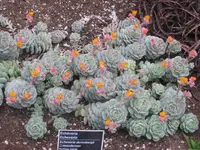
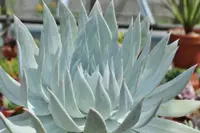
Plants form flat, symmetrical rosettes with powdery, silver-white leaves and tall flower stalks carrying yellow to red blooms. The leaf coating helps reduce water loss and gives the plant its distinctive frosted look.

This species is slow-growing and long-lived, but it dislikes frequent disturbance, poor drainage, and high summer humidity. To care for Britton's Dudleya successfully, it is important to provide bright light, lean mineral soil, and careful, infrequent watering.

Main Plant Requirements

Care Difficulty

Hard Care

Light Preference

Full Sun

Water Requirements

Low Water

Temperature Preference

Warm Climate

Hardiness Zone

9–11

Soil Texture

Sandy, Rocky, Loamy

Soil pH

Slightly acidic (6.5–7.0), Neutral (7.0)

Soil Drainage

Well-drained

Fertilization

Minimal (feed rarely)

Get Personalized Care Plan

Scan your plant to receive care tips personalized for your specific plant

Available on iOS and Android

How to Care for the Britton's Dudleya

This succulent prefers strong light that mimics its native coastal cliffs.

  • Provide 6–8 hours of direct sun daily outdoors, ideally with morning sun and light afternoon shade in very hot, inland sites.
  • Britton's Dudleya tolerates bright, open shade for part of the day, but prolonged low light causes elongated, weak growth and dull leaf color.
  • In summer, protect from extreme afternoon sun that exceeds local norms, which can scorch leaves; in winter, prioritize maximum direct light when days are short.

Watering should mimic a dry coastal climate with brief, infrequent soakings.

  • Allow the soil to dry completely, at least the top 5 cm, before watering; then water deeply so excess drains quickly from the root zone.
  • Reduce or stop watering in summer dormancy and during cool, wet seasons to prevent root rot, especially in the ground or poorly sloped sites.
  • Resume occasional watering when temperatures are mild and new growth appears; shriveling lower leaves suggest slight underwatering, while mushy, translucent leaves indicate overwatering.

This species prefers mild, dry conditions and dislikes prolonged cold or humid heat.

  • Aim for an active growth range of about 60–75°F (16–24°C), with good air movement to keep foliage dry.
  • Dudleya brittonii can tolerate brief drops to around 25–30°F (-4 to -1°C) if kept very dry, but repeated hard frost damages leaves and crowns.
  • In hot climates above 90°F (32°C), provide afternoon shade and avoid reflected heat from walls or rock to reduce stress and sunburn risk.

This species prefers very dry air and does not need added humidity.

  • Aim for 20–40% humidity, similar to arid outdoor conditions.
  • Prolonged humidity above 50% can cause leaf spotting, powdery coatings, and increased risk of rot.
  • In humid climates, increase air movement, space plants apart, and avoid grouping with moisture-loving plants.

Use a very fast-draining, mineral-based mix that mimics a rocky slope.

  • Choose a gritty, sandy substrate with minimal organic matter, such as 60–70% pumice, coarse sand, or crushed granite plus 30–40% cactus mix.
  • Ensure sharp drainage by using a mix that dries fully within 1–3 days after watering, avoiding any dense or peat-heavy blends.
  • Keep pH slightly acidic to neutral (around 6.0–7.0), which suits Dudleya brittonii and supports nutrient availability without excess salts.
  • Improve aeration by adding extra pumice or coarse perlite and avoid fine compost, clay, or water-retentive additives that hold moisture around the roots.

This species is suitable for container growing if the pot and mix stay very fast-draining.

  • Choose a wide, shallow pot to match the shallow root system and keep the rosette above splashing water.
  • Use an unglazed clay pot when possible so the walls wick moisture away and shorten drying time after watering.
  • Raise the container slightly on pot feet or stones to let water exit quickly and prevent the drain holes from sealing against the saucer or ground.

This drought-adapted succulent needs very little feeding, as excessive nutrients can weaken growth and shorten lifespan.

  • Use a low-strength, balanced NPK cactus or succulent fertilizer at 1/4–1/2 label rate if new growth appears pale in spring.
  • Apply once at the start of the active growing season, then reassess; many plants need no further feeding.
  • Avoid fertilizing during summer dormancy or winter, when roots are less active and salt buildup risk is higher.
  • For Britton's Dudleya in very poor soil, a thin top-dressing of gritty compost in spring is usually sufficient.

Pruning needs for Dudleya brittonii are minimal and focus mainly on hygiene rather than shaping.

  • Best time for light cleanup is late winter to early spring, before strong new growth starts.
  • Remove only dead, shriveled, or diseased leaves at the rosette base to reduce rot and insect shelter.
  • Use clean, sharp scissors or fingers to gently twist off dry leaves without tearing healthy tissue.
  • Avoid cutting into the rosette center, as this can deform the plant and reduce flowering.

This species dislikes frequent disturbance, so repotting or transplanting should be done rarely and with care.

  • Look for roots tightly circling the pot, water running straight through, or very slow growth as signs to move Dudleya brittonii.
  • Plan any move for late winter to early spring, before new roots and leaves expand fully.
  • Repot only every 3–5 years, using a shallow container and a very fast-draining mineral mix.
  • Handle the root ball gently, keep roots as intact as possible, and avoid watering for 3–5 days afterward to limit stress and rot.

Propagation is possible but should be done thoughtfully, especially for wild-origin plants and protected populations.

  • Use offsets or rosette division from established container plants rather than taking material from wild Dudleya brittonii.
  • Best season is late winter to early spring, when roots are ready to grow but heat stress is low.
  • Allow cut surfaces to dry and callus for several days, then place on barely moist, gritty, well-lit substrate.
  • For seeds, sow on the surface of sterile, mineral mix under bright, cool conditions and keep slightly moist until germination.

This succulent is somewhat cold tolerant but benefits from basic winter precautions in many climates.

  • Mature plants tolerate brief light frosts around 25–30°F if soil is very well drained and kept fairly dry.
  • In colder areas, grow in containers and move under cover or indoors to a bright, cool, frost-free spot for winter.
  • Avoid wet soil in cold weather; ensure excellent drainage and water sparingly to prevent root rot.

Care Tips

Summer rain protection

In areas with warm summer rain, move containers under a solid overhang or use a simple cold frame roof so water does not sit in the rosette and crown, which greatly reduces rot risk when growing Britton's Dudleya outdoors.

Root collar elevation

When potting, set the base of the rosette slightly above the soil line and top-dress with 1–2 cm of coarse gravel so water sheds away from the neck of the plant and leaves stay cleaner and drier.

Winter growth adjustment

During the cool active season, lightly rotate containers every 2–3 weeks and gradually increase light exposure to keep the rosette symmetrical and prevent it from leaning toward one direction.

Calcium-friendly substrate

If local water is very soft or acidic, mix a small proportion of crushed limestone or calcareous grit into the mineral component of the mix to mimic the natural lime-rich cliffs and support stronger leaf and root development.

Minimal handling practice

Avoid touching the leaf surfaces and handle the plant only by the pot or very low on the stem, since preserving the natural white waxy coating improves both sun tolerance and the characteristic silvery appearance during long-term caring for Britton's Dudleya.

Common Pests and Diseases

Aphids

This pest feeds on tender new growth, sucking sap and causing distorted leaves and a sticky residue on rosettes. Symptoms include slowed growth and occasional sooty mold developing on the honeydew they excrete.

Solution

Rinse the rosettes with a firm stream of water to dislodge aphids, then allow the plant to dry quickly in bright, airy conditions. For persistent infestations, spot-treat clusters with a cotton swab dipped in diluted insecticidal soap or neem oil, avoiding repeated heavy spraying that might damage the glaucous leaf coating important for Dudleya brittonii care.

Mealybugs

These insects hide in leaf bases and around the stem, appearing as small white cottony clusters that weaken the plant over time. Symptoms include stunted growth, leaf yellowing, and occasional leaf drop if colonies become dense.

Solution

Inspect crevices closely and remove visible mealybugs with a cotton swab dipped in isopropyl alcohol, repeating weekly until no new insects appear. Keep the plant in a dry, well-ventilated spot and quarantine affected plants away from other succulents to limit spread.

Snails and slugs

These pests feed at night, chewing irregular holes in leaves and scarring the blue-white surface of the rosette. Symptoms include missing leaf tissue, slime trails, and unsightly cosmetic damage that does not heal.

Solution

Hand-pick snails and slugs in the evening or early morning and remove nearby hiding places such as dense ground cover, boards, and pots resting directly on soil. Use copper tape barriers or iron phosphate slug baits around outdoor plantings to protect the rosettes without contaminating the plant itself.

Fungal leaf spots

This disease appears as small brown or black spots on leaves, often starting where water sits on the surface, and may enlarge under cool, damp conditions. Symptoms include localized discoloration and premature leaf decline on lower leaves.

Solution

Remove and discard affected leaves and ensure the rosette stays dry by watering at the soil line rather than overhead. Improve airflow, keep the plant in a bright, low-humidity location, and avoid frequent light watering that keeps the foliage damp.

Crown and stem rot

This disease is usually caused by opportunistic fungi or bacteria attacking the crown or stem when the plant is kept too wet, especially in warm conditions. Symptoms include soft, dark, mushy tissue at the base of the rosette and a rapid collapse of the plant center while outer leaves may remain intact for a short time.

Solution

At the first sign of soft tissue, reduce watering immediately and unpot the plant to inspect the base, trimming away all affected parts with a sterile knife. Allow the remaining healthy tissue to dry for several days, then replant in a sharply draining mineral mix, and in outdoor plantings, improve drainage and avoid summer irrigation around the crown.

Interesting Facts

Natural coastal cliff specialist

This species is native to steep, coastal cliffs of northwestern Baja California, where it grows in very shallow, rocky pockets that drain almost instantly after rain.

Reflective white leaf coating

Its thick, chalky white coating (farina) reflects intense sunlight and reduces water loss, which helps the rosette stay cool and protected in full coastal sun.

Large solitary rosettes

Mature plants can form a single, wide rosette with leaves often exceeding 30 cm long, making it one of the more robust rosette-forming species in the genus Dudleya.

Botan icon

Did you know?

Wild populations of this species in Baja California have been threatened by illegal poaching for the international succulent trade, leading to increased conservation attention and cross-border enforcement efforts.

FAQs about Britton's Dudleya

This species performs best outdoors in mild, dry-summer climates, where it receives abundant light and excellent drainage. Indoors it usually declines over time, so Britton's Dudleya indoor care is considered challenging except in very bright, cool, dry spaces.

Grow Healthy Plants with Botan Care

Keep your plants happy and healthy with plant identification, disease detection, and easy care guidance.

Botan plant care app — identify plants on mobile

Explore More Plants