threestamen waterwort Care (Elatine triandra)

Also known as: Mudwort, three-stamened waterwort, Waterwort
threestamen waterwort

About threestamen waterwort

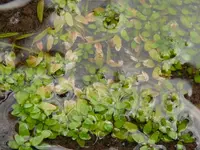
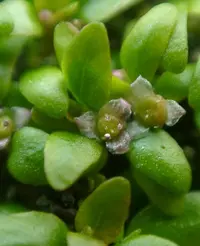
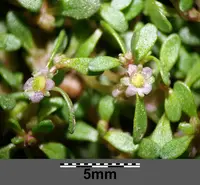
Threestamen waterwort (Elatine triandra) is a tiny, creeping aquatic plant often used as a foreground carpet in aquariums and shallow water gardens. It forms low, dense mats of fine green leaves that create a smooth, lawn-like appearance under water.

In nature, it occurs in slow-moving or still freshwater habitats such as ponds, ditches, and the edges of streams across parts of Europe, Asia, and other temperate regions. It prefers clean, well-lit, consistently moist to submerged conditions and benefits from stable water quality.

Because it is small and sensitive to changes, it can be moderately demanding, especially regarding light and nutrient balance. Understanding how to care for threestamen waterwort helps maintain compact growth and prevent dieback in submerged setups.

Main Plant Requirements

Care Difficulty

Hard Care

Light Preference

Partial Sun

Water Requirements

Aquatic

Temperature Preference

Tropical / Frost Sensitive

Hardiness Zone

Unknown

Soil Texture

Sandy, Loamy, Organic-rich

Soil pH

Acidic (5.5–6.5), Slightly acidic (6.5–7.0)

Soil Drainage

Waterlogged tolerant

Fertilization

Moderate (every 2–4 weeks)

Get Personalized Care Plan

Scan your plant to receive care tips personalized for your specific plant

Available on iOS and Android

How to Care for the threestamen waterwort

This small aquatic plant needs bright, gentle light to form dense, healthy mats.

  • Provide 8–10 hours of bright light daily, ideally with morning sun and filtered light by midday to prevent leaf scorch.
  • Threestamen waterwort tolerates light partial shade, but stems lengthen and color pales if light drops below about 6 hours per day.
  • In summer, protect from harsh afternoon sun in shallow water; in winter, maximize exposure by avoiding heavy shade from taller plants.

This species prefers consistently saturated conditions and does not tolerate drying out.

  • Grow Elatine triandra in shallow water or waterlogged substrate so the surface never dries; leaves should stay at or just below the waterline.
  • Use fine, nutrient-rich substrate with gentle water movement; avoid strong currents that uproot plants or stir debris onto foliage.
  • Signs of underwatering include browning, crisping edges and shrinking mats; overwatering in low oxygen substrates shows as black, foul-smelling soil and melting stems.

Stable, cool to warm conditions support compact, vigorous growth for this species.

  • Aim for 64–77°F (18–25°C) as the main growth range, where carpeting spreads reliably and foliage remains dense.
  • Below 50°F (10°C) growth slows sharply and tissue may die back; brief dips are tolerated, but hard frost can kill exposed emersed parts.
  • Above 82°F (28°C) increase aeration and shading, as prolonged heat combined with strong light encourages algae and weak, elongated growth.

This small aquatic carpet prefers stable, very high humidity close to saturation around its leaves.

  • Aim for 80–100% humidity by growing emersed sections in closed tanks or covered trays with minimal air gaps.
  • It tolerates only brief exposure to dry air; edges curl and stems shrivel when humidity drops below ~70%.
  • Increase humidity by using tight-fitting lids, shallow water trays beneath emersed mats, and limiting ventilation directly across threestamen waterwort.

Elatine triandra needs fine, nutrient-rich substrate with stable moisture for dense, healthy growth.

  • Use fine sand or sandy loam enriched with 20–30% well-aged compost or aquatic plant substrate to support delicate roots.
  • Aim for mildly acidic to neutral pH 6.0–7.2, which supports nutrient availability and healthy root function.
  • Keep substrate saturated but not anaerobic; avoid deep, compacted mud that traps gases and excludes oxygen.
  • Improve structure and drainage with a thin base layer of coarse sand or fine gravel under the main rooting layer.

This species is well-suited to shallow containers and tanks where water level and substrate can be tightly controlled.

  • Choose wide, shallow trays or tanks so stems can spread horizontally, forming an even carpet without thick substrate layers.
  • Use rigid containers that do not flex when moved, which prevents delicate rooted mats from cracking or lifting.
  • Maintain a very thin water layer above the substrate surface to stabilize moisture while keeping foliage from floating.

In nutrient-poor substrates, threestamen waterwort benefits from light, consistent feeding during active growth.

  • Use a balanced, water-soluble NPK aquarium or pond fertilizer at 1/4–1/2 strength to avoid burn.
  • Apply small doses every 2–3 weeks during the main growing season while monitoring algae growth.
  • Reduce or stop feeding in winter or dormancy when growth slows noticeably.
  • Avoid heavy organic compost; use nutrient-rich aquatic substrate or root tabs instead.

Pruning Elatine triandra focuses on keeping low, dense growth and preventing shading in aquariums or shallow ponds.

  • Trim stems or mats during active growth, removing dead, yellowing, or floating pieces.
  • Cut back crowded or overlong shoots to encourage horizontal spreading and a compact carpet.
  • Use sharp aquascaping scissors and make clean cuts just above healthy nodes.
  • Remove trimmings promptly to maintain water quality and avoid decay.

Elatine triandra is usually transplanted rather than repotted, as it forms low mats in shallow substrates or aquatic setups.

  • Transplant when growth becomes patchy, plants lift from the substrate, or carpeting needs reshaping.
  • Carry out moves in spring or early growing season, every 6–18 months depending on tank or pond conditions.
  • Gently tease small clumps apart, keeping roots as intact as possible to limit transplant shock.
  • Replant in fine, nutrient-rich substrate, then reduce water flow and strong disturbance for several days.

Elatine triandra is commonly propagated by division and replanting of small stem or mat sections.

  • Divide healthy, dense patches in spring or early active growth for fastest establishment.
  • Cut or tear small plugs, each with several rooted stems, using clean scissors or fingers.
  • Plant sections shallowly in fine substrate, spacing 1–2 cm apart for even coverage.
  • Provide stable water conditions, moderate light, and gentle flow to encourage rapid rooting.

In mild climates and indoor aquariums, Elatine triandra needs little specific winter care.

  • In outdoor setups, it is sensitive to hard frost and may die back if water or soil freezes solid.
  • Where winters drop below freezing, overwinter a portion indoors in a tank or tray under grow lights.
  • Avoid drastic winter temperature swings; maintain stable, cool to mild conditions for indoor culture.

Care Tips

Dense Carpet Planning

Plant very small clumps with fine tweezers in a checkerboard pattern and trim early runners so the mat thickens evenly rather than forming sparse, patchy areas.

Flow And CO₂

Position the plant where there is gentle but constant water movement and, in aquariums, direct CO₂-enriched flow just above the foliage to keep oxygen and carbon dioxide levels stable at the substrate.

Substrate Maintenance

Vacuum debris lightly from the surface without disturbing roots and avoid deep gravel cleaning in the carpet zone to prevent uprooting and sudden nutrient release that can stress the plants.

Algae Pressure Control

Shade the foreground slightly if light is very intense and maintain stable nutrients so fast-growing stem plants outcompete algae, which helps when caring for threestamen waterwort in high-light tanks.

Adaptive Trimming Routine

Use sharp, fine scissors to give shallow, frequent trims rather than rare, deep cuts, which keeps new growth low and compact while minimizing shock to the carpet.

Common Pests and Diseases

Green spot algae

This pest forms tight, hard green spots on leaves and glass, especially under strong light and high nutrients. Symptoms include slow spread of small, dark green pin-point or coin-sized dots that are difficult to scrape off delicate leaves.

Solution

Reduce light intensity or duration to a stable 8–10 hours, keep phosphate and nitrate in balance, and maintain consistent CO2 and flow over the carpet. Gently clean affected glass and hardscape with an algae scraper, and improve overall Elatine triandra care so the plant produces dense, healthy growth that shades the substrate and outcompetes the algae.

Filamentous algae

This pest appears as soft, hair-like or cottony green strands that tangle around the fine stems and leaves. Symptoms include reduced light penetration into the carpet and trapped debris around the plant, which weakens new shoots.

Solution

Increase and stabilize CO2, avoid overfeeding fish, and perform regular partial water changes to reduce excess nutrients. Manually remove as much algae as possible with a thin brush or tweezers, improve water circulation across the carpet, and use a short-term, label-directed liquid algae treatment only if the plant is otherwise healthy.

Aquarium planaria

These insects are actually flatworms that glide over substrate and plant surfaces, sometimes irritating delicate foreground plants. Symptoms include small, flat, arrow-headed worms visible on the glass or crawling among the Elatine stems, often in tanks with heavy feeding and leftover food.

Solution

Reduce feeding, vacuum the substrate gently around the carpet, and remove detritus to lower their food supply. If populations stay high, use an aquarium-safe planaria treatment at the lowest effective dose and increase water changes to protect sensitive Elatine growth.

Aquatic snail overgrazing

This pest involves high populations of small snails that graze tender new shoots and biofilm on leaves. Symptoms include tiny holes, nibbled tips, or missing fresh growth at the edge of the carpet while older leaves remain mostly intact.

Solution

Manually remove snails, use baited traps, and avoid overfeeding fish, since excess food drives snail booms. In already dense carpets, thin the planting slightly to remove hidden egg clusters, and consider adding a compatible snail-controlling fish species if appropriate for the aquarium.

Blue-green algae (cyanobacteria)

This disease is caused by photosynthetic bacteria that form slimy, dark green to blue-black sheets over the substrate and plant bases. Symptoms include a strong musty smell, rapid spread over open patches in the carpet, and smothered new runners.

Solution

Increase water movement over the foreground, siphon out as much cyanobacteria as possible, and correct underlying issues such as low nitrate, excess organic waste, or dead spots in flow. A short blackout period of 2–3 days combined with careful gravel vacuuming near, but not into, the Elatine roots helps clear it while allowing the plant to regrow.

Interesting Facts

Tiny annual amphibious herb

This species is a minute annual plant that completes its life cycle in shallow water and on exposed muddy substrates, switching between submerged and emergent forms depending on water levels.

Specialized mudflat habitat

In the wild, it typically occurs on periodically exposed lake shores, slow river margins, rice fields, and other disturbed wet soils, making it sensitive to changes in water regime and land use.

Grain-like seed capsules

Its small, ovoid seed capsules contain numerous tiny seeds that resemble coarse grains, allowing dense natural reseeding in fine sediments when water recedes.

Botan icon

Did you know?

Elatine triandra is used by aquarists as a foreground carpeting plant in high-light, CO2-enriched aquariums, where its naturally low stature and rapid lateral spread can create a compact underwater lawn-like effect.

FAQs about threestamen waterwort

Growth is generally moderate under stable conditions. In nutrient-rich, shallow water with adequate dissolved CO2, it can form a low carpet within a few weeks, but cooler water, low light, or poor nutrients slow spread noticeably.

Grow Healthy Plants with Botan Care

Keep your plants happy and healthy with plant identification, disease detection, and easy care guidance.

Botan plant care app — identify plants on mobile

Explore More Plants