Southern Waterwort Care (Elatine macropoda)

Southern Waterwort

About Southern Waterwort

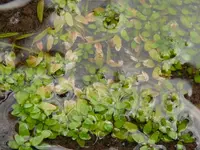
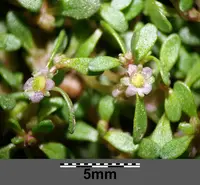
Southern waterwort (Elatine macropoda) is a small, creeping aquatic plant often used as a foreground or carpeting species in freshwater aquariums and ponds. It forms low, dense mats of tiny green leaves that root along slender stems.

In nature, it occurs in shallow, slow-moving or still waters, usually in sunny, open habitats. The plant grows quickly when conditions are stable, but can decline if water quality changes suddenly.

Its fine structure and compact growth make it attractive but slightly demanding, especially for beginners learning how to care for Southern Waterwort. It prefers clean, nutrient-rich water, gentle water movement, and consistent moisture in fine-grained, soft substrates.

Main Plant Requirements

Care Difficulty

Hard Care

Light Preference

Partial Shade

Water Requirements

Aquatic

Temperature Preference

Warm Climate

Hardiness Zone

Unknown

Soil Texture

Silty, Loamy, Organic-rich

Soil pH

Acidic (5.5–6.5), Slightly acidic (6.5–7.0)

Soil Drainage

Waterlogged tolerant

Fertilization

Light (every 4–6 weeks)

Get Personalized Care Plan

Scan your plant to receive care tips personalized for your specific plant

Available on iOS and Android

How to Care for the Southern Waterwort

This low aquatic plant needs bright, gentle light to form dense, healthy mats.

  • Provide 6–8 hours of bright light daily, ideally with morning sun and light midday shade in shallow water or along pond edges.
  • Southern Waterwort tolerates light partial shade, but stems may elongate and foliage thin if light drops below about 4 hours per day.
  • Avoid harsh, unfiltered afternoon sun in warm climates, which can overheat shallow water, encourage algae growth, and stress the foliage, especially in summer.

This species is adapted to consistently wet or shallowly submerged conditions rather than fluctuating soil moisture.

  • Grow in shallow water, saturated soil, or a thin water layer over the substrate; the surface should never dry out between checks.
  • If grown at a pond margin, use fine, silty or sandy substrate; avoid fast-draining, coarse gravel that allows roots to dry between inundations.
  • Signs of underwatering include browning, crisp tips, and shrinking mats; overwatering in non-aquatic pots shows as foul odor, blackened stems, and slimy, rotting roots.

This aquatic plant prefers mild, stable temperatures and is sensitive to frost and extreme heat.

  • Aim for 64–77°F (18–25°C) for steady growth; cooler water within this range supports compact, healthy foliage.
  • Below about 50°F (10°C), growth slows sharply and foliage may die back; light frost can kill exposed emersed shoots.
  • Above 82–86°F (28–30°C), warm, shallow water can reduce oxygen levels and stress Elatine macropoda, so provide shade and avoid overheated, stagnant pools in midsummer.

This species prefers consistently high humidity to thrive in shallow aquatic or bog-style setups.

  • Aim for 70–90% humidity or fully submerged growth; emersed plants decline quickly in drier air.
  • Dry air causes browning at leaf edges, stunted shoots, and sparse carpeting in Southern Waterwort.
  • Increase humidity by using covered aquaria, tight-fitting lids, or shallow trays with standing water around the planting zone.

Elatine macropoda grows best in fine, nutrient-rich, waterlogged substrates rather than typical potting soil.

  • Use a fine-textured, silt- or sand-based aquatic substrate with high organic content to anchor the delicate roots.
  • Ensure slow water movement above the substrate so nutrients stay available while avoiding anaerobic black sludge formation at the surface.
  • Aim for slightly acidic to neutral conditions around pH 6.0–7.2, which support healthy growth and nutrient uptake.
  • Avoid coarse gravel-only beds, strongly alkaline substrates, or compacted clay that limit root spread and encourage rot.

This species is suitable for container growing when kept in shallow aquatic tanks or trays.

  • Choose wide, shallow containers to maximize horizontal carpeting while keeping the substrate layer thin and evenly saturated.
  • Use rigid containers that resist bowing so the fine substrate profile and water level remain stable over time.
  • Position the container where light reaches the entire surface evenly, preventing shaded zones that thin out the carpet.

This small aquatic species needs only light feeding to maintain steady, compact growth in planted tanks or shallow water setups.

  • Use a balanced liquid aquatic fertilizer or general 10-10-10 NPK at 1/4–1/2 strength to avoid algae issues.
  • Dose weekly during the active growing season when light and CO2 are stable, especially when caring for Southern Waterwort in nutrient-poor substrates.
  • Reduce feeding to once every 3–4 weeks in winter or when growth slows noticeably.
  • Avoid heavy root tabs; instead, combine mild water-column dosing with occasional organic compost in the substrate if growth wanes.

Pruning keeps Elatine macropoda low, dense, and healthy as a foreground or carpeting aquatic plant.

  • Trim during active growth, usually spring through early fall, when plants recover fastest.
  • Remove yellowing, damaged, or shaded lower stems to improve water flow and reduce decay.
  • Clip the top 0.5–1 cm of dense patches with fine scissors to thicken the carpet and prevent lifting.
  • Collect and discard trimmings promptly to avoid clogging filters or decomposing in the tank.

This species is usually transplanted within aquariums or shallow water trays rather than conventionally repotted.

  • Transplant when growth becomes patchy, runners crowd each other, or mats lift from the substrate.
  • Best timing is during stable warm conditions with consistent light and CO2, typically spring to early fall.
  • Lift small clumps gently, divide into tiny plugs, and replant 1–2 cm apart in fine inert or nutrient-rich substrate.
  • Minimize root stress by keeping roots submerged, handling quickly, and avoiding large layout changes all at once.

Elatine macropoda is commonly propagated by division and replanting of small stem or mat sections.

  • Best season is active growth in spring–summer, when plants root and spread fastest.
  • Cut healthy, compact pieces of the mat or short stems using sharp aquascaping scissors.
  • Plant small plugs into fine-grained substrate, spacing 1–2 cm so light reaches each piece.
  • Maintain high light, stable CO2, and gentle flow to encourage rapid rooting and lateral spread.

This aquatic plant has low cold tolerance and needs stable, above-freezing conditions in winter.

  • For outdoor tubs, move containers indoors to a frost-free room or heated garage before temperatures drop near freezing.
  • Indoors, maintain water at 64–75°F with stable light duration to prevent dieback.
  • Avoid sudden temperature swings and keep filtration gentle so weakened winter growth is not uprooted.

Care Tips

Carpet Management

Regularly trim the mat with fine scissors and gently siphon away clippings during water changes to keep growth low, dense, and to prevent decay pockets in the carpet.

Substrate Oxygenation

Use a gentle gravel vacuum around the edges of the patch and periodically lift a few small plugs of plants to reduce compaction and improve oxygen flow in the substrate, which limits root rot and anaerobic zones.

CO2 Stability

If using injected CO2, keep the level stable with a drop checker and a timer so CO2 comes on 1–2 hours before lights and turns off 1 hour before lights out, which supports even, compact growth instead of leggy stems.

Flow Optimization

Position the filter outlet or a small circulation pump so that a broad, gentle current passes just over the plant surface, preventing debris buildup on the leaves without uprooting the shallow roots.

Algae Prevention

When caring for Southern Waterwort in high light, add fast-growing stem plants or floating plants to absorb excess nutrients, and remove any early algae manually from the tiny leaves before it becomes established.

Common Pests and Diseases

Filamentous algae

This disease appears as green, hair-like strands that quickly overgrow the substrate and plant mats, blocking light and trapping debris around shoots and leaves.

Solution

Reduce excess light and dissolved nutrients, increase gentle water movement over the carpet, and manually remove as much algae as possible using a toothbrush or siphon; in established aquaria, targeted liquid carbon or an appropriate algae-control product can be used while maintaining stable CO2 and avoiding sudden parameter swings to protect Elatine macropoda plant care balance.

Blue-green algae

This disease forms slimy, dark green to blue-black sheets over the substrate and plant cushions, producing a strong earthy or musty odor and smothering new growth.

Solution

Syphon off affected areas during water changes, reduce organic waste and excess nutrients, increase flow and oxygenation, and perform several large, spaced water changes; in stubborn cases, a short blackout period and, if needed, an aquarium-safe antibiotic treatment for cyanobacteria can help, followed by strict maintenance to prevent recurrence.

Planaria

These pests are small flatworms that may glide over the substrate and plant cushions, indicating high organic load and potentially stressing delicate new shoots.

Solution

Reduce overfeeding and detritus, vacuum the substrate around the carpet frequently, and use a planaria-specific aquarium treatment while monitoring sensitive invertebrates; adding planaria-eating fish only in suitable setups can help long term if stocking and tank size allow.

Snail overgrazing

These insects are not involved; instead, small freshwater snails can multiply quickly and rasp at tender new leaves, slowing the spread of the carpet and leaving pinholes or shredded tips.

Solution

Manually remove snails, use snail traps baited with vegetables, and limit overfeeding to reduce reproduction; if needed, introduce natural predators compatible with the tank or apply an invertebrate-safe control product, testing first in a small area and closely observing other tank inhabitants.

Bacterial melt

This disease causes sudden softening and transparent or white decay of stems and leaves, often after transport, replanting, or abrupt changes in water chemistry.

Solution

Promptly remove all mushy or decaying tissue to prevent spread, improve gentle water circulation over the planting area, and stabilize temperature, hardness, and CO2; frequent small water changes and replanting only firm, healthy tops in thin, well-spaced plugs support recovery when caring for Southern Waterwort.

Interesting Facts

Mediterranean specialist

This species is native to Mediterranean temporary wetlands, especially in the Iberian Peninsula, where it grows on seasonally flooded mud around ponds and slow streams.

Amphibious growth form

It can switch between tiny submerged, oxygen-rich shoots under water and more compact, denser growth when water recedes, a typical strategy of annual amphibious herbs in its genus.

Threatened habitat dependence

Its survival depends on traditional, low-intensity land use that maintains shallow, fluctuating water bodies, so drainage, agriculture intensification, and shoreline alteration have made many of its known sites vulnerable or lost.

FAQs about Southern Waterwort

This species forms low, creeping mats but is not typically invasive in managed tanks. It can spread quickly across open substrate. Regular trimming and defined planting zones keep growth controlled and maintain desired carpet density.

Grow Healthy Plants with Botan Care

Keep your plants happy and healthy with plant identification, disease detection, and easy care guidance.

Botan plant care app — identify plants on mobile

Explore More Plants