rubber rabbitbrush Care (Ericameria nauseosa)

Also known as: Chamisa
rubber rabbitbrush

About rubber rabbitbrush

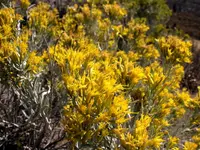
Rubber rabbitbrush (Ericameria nauseosa) is a hardy, woody shrub native to arid regions of western North America. It is common along roadsides, rangelands, and disturbed soils. The plant forms dense, rounded clumps with narrow, gray-green leaves and bright yellow flower clusters that appear late in the growing season. Its deep roots and tough stems help it tolerate drought, wind, and poor, sandy or rocky soils. Rubber rabbitbrush prefers full sun and dry conditions, so it suits low-water landscapes and restoration plantings. For anyone learning how to care for rubber rabbitbrush, its main needs are sun, fast-draining soil, and avoidance of overwatering.

Main Plant Requirements

Care Difficulty

Easy Care

Light Preference

Full Sun

Water Requirements

Low Water

Temperature Preference

Cold Hardy

Hardiness Zone

3–9

Soil Texture

Sandy, Loamy, Rocky

Soil pH

Slightly acidic (6.5–7.0), Slightly alkaline (7.0–7.5)

Soil Drainage

Well-drained

Fertilization

Minimal (feed rarely)

Get Personalized Care Plan

Scan your plant to receive care tips personalized for your specific plant

Available on iOS and Android

How to Care for the rubber rabbitbrush

This drought-adapted shrub thrives in strong, direct sun typical of open, arid landscapes.

  • Provide full sun for 6–10 hours daily; rubber rabbitbrush flowers and stays compact with unobstructed exposure.
  • Tolerates light partial shade (2–3 hours) but stems may stretch and bloom less if shaded by buildings or taller plants.
  • In very hot regions, allow brief late-afternoon shade to reduce heat stress, but avoid dense shade, which leads to weak, floppy growth and sparse flowering.

This species is highly drought tolerant and prefers infrequent, deep watering once established.

  • Before watering, let the top 5–8 cm of soil dry completely; in dry seasons, deep-soak only when foliage begins to slightly dull or lower leaves lose turgor.
  • Ensure very sharp drainage with sandy or gravelly soil so water does not pool around roots, which increases risk of rot and dieback.
  • In winter, rely mostly on natural rainfall; reduce or stop supplemental watering if soils remain even mildly moist for more than a few days.

This desert-adapted shrub manages a wide temperature range but grows best with warm, dry conditions.

  • Optimal growth occurs around 70–85°F (21–29°C), especially during the main growing season with low humidity and good air movement.
  • Mature plants tolerate cold down to about -10°F (-23°C) once hardened, though young plants benefit from protection from sudden hard freezes.
  • Handles intense summer heat up to 100–105°F (38–41°C) if soil is well drained; avoid planting in low, cold pockets where frost lingers longer in spring.

Humidity is not a significant factor for this arid-climate shrub, which thrives in dry air typical of heated homes.

This shrub prefers very lean, mineral, sharply draining soil that mimics dry, rocky habitats.

  • Use sandy or gravelly soil with coarse particles to prevent water retention around the roots.
  • Aim for a slightly alkaline to neutral pH around 7.0–8.0, avoiding acidic mixes dominated by peat.
  • Blend 60–80% coarse sand or fine gravel with 20–40% low-organic potting mix to maintain structure and aeration.
  • Avoid compacted, clay-heavy, or richly amended soils, which increase root rot risk for Ericameria nauseosa.

This species can be grown in containers, provided the pot duplicates its dry, fast-draining natural conditions.

  • Choose a heavy, wide container to counteract wind and top-heaviness as stems become woody and branched.
  • Raise the pot on feet or blocks so drainage holes clear the ground and water exits immediately after irrigation.
  • Use a squat rather than deep pot to keep the root zone shallow and reduce water accumulation at the base of the container.

Ericameria nauseosa is a tough, nutrient-efficient native shrub that needs little to no supplemental fertilizer in typical garden soils.

Pruning Ericameria nauseosa keeps the shrub compact, maintains good structure, and supports flowering on healthy wood.

  • Shape and thin plants in late winter or very early spring before new growth starts.
  • Use clean, sharp bypass pruners to remove dead, damaged, or crossing stems at the base.
  • Shorten excessively long shoots by up to one-third to encourage denser branching.
  • Avoid cutting into very old, bare wood, which may not resprout vigorously.

This shrub is most often grown in the ground; transplanting matters more than repotting for healthy rubber rabbitbrush.

  • Transplant in early spring or fall when temperatures are mild and soil is workable.
  • Choose a sunny, very well-drained site; amend heavy clay with mineral grit to reduce waterlogging.
  • Move only when necessary, since mature plants dislike disturbance and may establish slowly.
  • Dig a wide, shallow hole, disturb roots minimally, water deeply once, then allow soil to dry between waterings.

Ericameria nauseosa can be propagated by seeds or semi-hardwood cuttings with attention to timing and moisture control.

  • Collect ripe seed heads in late fall; sow in well-drained, sandy mix and keep slightly moist until germination.
  • Provide bright light and cool to mild temperatures (55–70°F) to support seedling development.
  • Take semi-hardwood stem cuttings in late summer, use rooting hormone, and insert into a sharply drained medium.
  • Maintain high air humidity but avoid waterlogged media, using bottom heat if available to encourage rooting.

This species is cold hardy and typically requires minimal winter care once established in open, well-drained sites.

  • Tolerates frost and snow in most temperate climates when planted in sharply drained soil.
  • Apply a light gravel or coarse mulch around the base in late fall to limit heaving in freeze–thaw cycles.
  • For container plants, move pots to a sheltered, unheated area and keep soil on the dry side to prevent root rot.

Care Tips

Encourage Deep Roots

During the first growing season, water less frequently but more deeply to encourage a deep taproot, which improves drought tolerance and long-term stability in windy, open sites.

Prevent Flop In Snow

In regions with heavy, wet snow, lightly tie outer branches toward the center with a soft, breathable twine in late fall to reduce breakage, then remove the ties once snow risk has passed.

Manage Volunteer Seedlings

Check surrounding gravel, decomposed granite, or bare soil in spring and remove unwanted seedlings while small, before the root system toughens and becomes difficult to pull.

Underplant With Gravel

Apply a 3–5 cm layer of coarse gravel or small rocks around the base instead of organic mulch to suppress weeds, improve drainage at the crown, and mimic its natural desert habitat when growing rubber rabbitbrush.

Staggered Rejuvenation Cuts

Every 3–4 years, cut back only one-third to one-half of the oldest stems to 15–20 cm above ground in late winter so the shrub renews itself gradually without losing all its structure at once.

Common Pests and Diseases

Leaf beetles

These insects chew irregular holes in leaves and young stems, and heavy feeding can thin foliage on young plants. Symptoms include ragged leaf edges and small clusters of metallic or brightly colored beetles on stems or flower stalks.

Solution

Hand-pick beetles in early morning, shake them onto a tarp, or use a strong water spray to dislodge them from foliage. For repeated severe infestations, apply a targeted insecticide containing spinosad or pyrethrins in the evening, focusing only on affected tissue to limit impact on pollinators attracted when you grow Ericameria nauseosa.

Aphids

These insects cluster on tender shoots and flower stalks, sucking plant sap and sometimes causing leaf curling or distortion. This pest also produces sticky honeydew that can attract ants and support sooty mold growth on nearby surfaces.

Solution

Spray infested shoots with a firm stream of water to knock aphids off the plant, repeating every few days as needed. If populations remain high, treat new growth with insecticidal soap or a light horticultural oil, coating stems and leaf undersides and avoiding spraying during hot midday conditions above 85°F.

Stem canker

This disease causes sunken, discolored lesions on older stems, which may crack and girdle branches, leading to dieback above the affected area. Symptoms include rough, darkened patches on woody stems and an overall thinning or browning of individual branches.

Solution

Prune out affected stems several inches below visible lesions during dry weather, using clean, sharp tools and disinfecting blades between cuts with 70% alcohol. Improve air movement around plants by spacing shrubs properly and avoiding overhead irrigation on established plants, which helps limit further infection on this xeric species.

Powdery mildew

This disease produces a white, powdery coating on leaves and young stems, most noticeable during cooler nights with higher humidity. Symptoms include dull, gray-green foliage, reduced vigor, and premature leaf drop on heavily affected shoots.

Solution

Remove and discard heavily infected shoots to reduce spore levels, then improve air circulation by thinning crowded branches around the plant. If needed, treat remaining foliage with a sulfur-based or potassium bicarbonate fungicide labelled for ornamentals, applying in the evening and avoiding use during very hot, dry, windy periods to limit foliage stress.

Interesting Facts

Rubber-like stem chemistry

The stems contain high levels of isoprene-rich latex-like compounds, which led early 20th-century researchers to test this shrub as a potential domestic rubber source in arid regions of the western United States.

Specialist butterfly host

The leaves serve as a larval food source for several native checkerspot and blue butterflies in western North America, making it an important host plant in dry shrubland food webs.

Extreme drought adaptation

Its narrow, resinous leaves and deep root system reduce water loss and allow survival on highly alkaline, sandy, or disturbed soils where few other shrubs can persist.

Botan icon

Did you know?

Ericameria nauseosa readily colonizes disturbed ground, such as old mine spoils and road cuts, and is intentionally used in land reclamation projects across the Intermountain West because it stabilizes soil, tolerates high salinity, and facilitates the later establishment of other native species.

FAQs about rubber rabbitbrush

Poor flowering usually comes from too much water, overly rich soil, or shade. This shrub blooms best in full sun, lean, well-drained ground, and with minimal fertilizer. Avoid heavy pruning in late spring or summer, which removes flower buds.

Grow Healthy Plants with Botan Care

Keep your plants happy and healthy with plant identification, disease detection, and easy care guidance.


Botan plant care app — identify plants on mobile

Explore More Plants