Dwarf White Bauhinia Care (Bauhinia acuminata)

Dwarf White Bauhinia

About Dwarf White Bauhinia

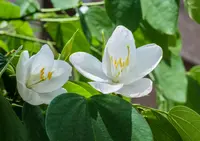
Dwarf white bauhinia (Bauhinia acuminata) is a small tropical shrub or compact tree grown mainly for its large, orchid-like white flowers. It typically has a rounded, bushy habit with twin-lobed leaves that resemble small butterfly wings, giving the plant a light, airy look.

This species is native to Southeast Asia and thrives in warm, frost-free climates, where it is often used as a flowering hedge, specimen shrub, or patio accent. It responds well to pruning and is considered moderately easy if its need for bright light, warmth, and free-draining soil is met.

Gardeners often focus on how to care for Dwarf White Bauhinia to keep flowering continuous and growth dense in home gardens or container plantings.

Main Plant Requirements

Care Difficulty

Moderate Care

Light Preference

Full Sun

Water Requirements

Moderate Water

Temperature Preference

Tropical / Frost Sensitive

Hardiness Zone

10–11

Soil Texture

Sandy, Loamy, Organic-rich

Soil pH

Acidic (5.5–6.5), Slightly acidic (6.5–7.0)

Soil Drainage

Well-drained

Fertilization

Minimal (feed rarely)

Get Personalized Care Plan

Scan your plant to receive care tips personalized for your specific plant

Available on iOS and Android

How to Care for the Dwarf White Bauhinia

Bauhinia acuminata thrives in bright, warm conditions with plenty of direct light.

  • Provide 6–8 hours of full sun daily, ideally with morning sun and light afternoon shade in very hot climates to reduce leaf scorch.
  • Plant in a position that receives at least half-day sun; it tolerates light partial shade but flowering will decrease if shaded for more than 4–5 hours.
  • In summer, strong afternoon sun in dry, hot regions may bleach leaves, while too little sun produces lanky growth and fewer blooms on Dwarf White Bauhinia.

This shrub prefers evenly moist but not saturated soil, with adjustments based on season and rainfall.

  • Water when the top 3–5 cm of soil feels dry, giving a deep soak so moisture reaches the root zone, then let excess drain freely.
  • In hot growing seasons, expect more frequent watering, while in cooler months reduce frequency so the soil dries slightly deeper between waterings.
  • Watch for yellowing, soft leaves and a sour soil smell as signs of overwatering, or crisp leaf edges and premature leaf drop as signs of underwatering in Bauhinia acuminata.

This species grows best in consistently warm, frost-free climates.

  • Aim for 70–90°F (21–32°C) for active growth; flowering and new shoots are strongest in this warm range.
  • Protect the plant whenever temperatures approach 40°F (4°C), since light frost can damage young shoots and repeated frost may kill branches.
  • It tolerates brief heat up to about 100°F (38°C) if soil moisture is maintained, but cool spells below 50°F (10°C) slow growth and can reduce future flowering.

This species prefers moderately humid air but usually adapts to typical household levels.

  • Aim for 40–60% relative humidity to support steady leaf and flower development.
  • It tolerates short periods of drier air, but prolonged humidity below 30% may cause leaf edge browning and increased leaf drop.
  • Increase humidity by grouping plants, placing the pot on a pebble tray with water, or using a nearby humidifier rather than misting leaves frequently.

This shrub grows best in loose, well-drained, moderately fertile soil.

  • Use a loamy mix with 40–60% organic matter such as compost plus coarse sand or fine gravel to keep the structure open.
  • Ensure very fast drainage, since constantly wet conditions promote root rot and decline in Bauhinia acuminata.
  • Aim for slightly acidic to neutral pH around 6.0–7.0, which keeps most nutrients available and prevents micronutrient lockout.
  • Improve aeration by blending in perlite or pine bark chips and avoid heavy clay or compacted ground that stays waterlogged after rain.

This species can be grown successfully in containers with attention to root space and stability.

  • Choose a deep, wide pot to accommodate its woody root system and reduce the risk of circling roots restricting growth.
  • Use a heavier material such as ceramic or thick plastic to stabilize the top-heavy canopy against wind outdoors.
  • Elevate the container slightly on pot feet so drainage holes stay clear and excess water exits quickly after watering.

Bauhinia acuminata responds well to modest, balanced nutrition during active growth.

  • Use a balanced, slow-release fertilizer or compost-rich soil at the start of spring for caring for Dwarf White Bauhinia.
  • Feed every 6–8 weeks through the growing season with a balanced NPK product at half the label strength.
  • Avoid high-nitrogen formulas that drive leafy growth at the expense of flowers.
  • Stop feeding in late fall and do not apply fertilizer in winter dormancy.

Pruning Bauhinia acuminata helps maintain a strong framework and encourage good flowering.

  • Carry out main pruning in late winter or very early spring before new growth starts.
  • Remove dead, diseased, crossing, or inward-growing branches using clean, sharp bypass pruners or loppers.
  • Shorten overly long shoots to shape the canopy and improve light penetration and airflow.
  • Make cuts just above a bud or branch junction to encourage healthy, outward growth.

This species is usually grown in the ground, so focus on careful transplanting rather than frequent repotting.

  • Transplant young plants in spring when soil is warming and the risk of frost has passed.
  • Look for signs such as roots circling the pot, water running straight through, or stunted growth before moving container-grown plants.
  • Shift into a hole or pot only 1–2 sizes larger, using well-drained soil and keeping the root flare at soil level.
  • Water thoroughly after planting, then keep soil evenly moist and shaded for 1–2 weeks to reduce transplant shock.

Bauhinia acuminata is commonly propagated from seed and semi-ripe cuttings.

  • Collect ripe seeds, scarify the coat lightly, then sow in warm conditions around 70–80°F in spring or early summer.
  • Keep seed trays or pots evenly moist, not waterlogged, with bright, indirect light for steady germination.
  • For semi-ripe cuttings, take 10–15 cm shoots in late spring to summer, remove lower leaves, and dip bases in rooting hormone.
  • Place cuttings in a moist, free-draining mix under high humidity and warmth until roots form.

This tropical shrub is sensitive to frost and needs winter protection in cool climates.

  • In USDA zones below 10, grow in containers and move indoors or into a heated greenhouse before temperatures drop near 40°F.
  • In mild climates, apply a 5–8 cm mulch layer over the root zone to moderate soil temperature.
  • Avoid overhead watering on cold nights to reduce risk of freeze damage to buds and young stems.

Care Tips

Encourage Bushy Shape

Pinch or lightly tip-prune young shoots after each main flush of growth to encourage branching and a denser canopy instead of a tall, leggy frame.

Flowering Cycle Rest

After a heavy blooming flush, reduce nitrogen-rich feeding and avoid major pruning for 4–6 weeks so the plant can store energy for the next cycle of buds.

Root Zone Mulching

Maintain a 5–8 cm ring of coarse organic mulch around the drip line, keeping it a few cm away from the trunk, to stabilize soil moisture and protect fine feeder roots from heat stress.

Storm And Wind Support

In windy or storm-prone sites, install a sturdy stake or low tree tie for young plants and orient the main ties slightly loose to allow gentle movement that strengthens the trunk without causing rub damage.

Targeted Pest Monitoring

From late spring through early fall, inspect the undersides of leaves and young shoots weekly with a hand lens for scale, aphids, or caterpillars, and treat early with a targeted product rather than broad-spectrum chemicals, which supports long-term success when growing Dwarf White Bauhinia.

Common Pests and Diseases

Leaf miner larvae

This pest tunnels inside young leaves, creating pale, winding trails that can cause distortion and early leaf drop on tender foliage. Damage is most visible on the newer, softer leaves and can reduce overall vigor if infestations are heavy.

Solution

Remove and destroy affected young leaves with fresh mines to reduce the larval population, and avoid excessive nitrogen that encourages very soft new growth. For ongoing problems, use a systemic insecticide labeled for leaf miners or apply spinosad to young foliage, repeating as directed, and encourage natural predators by avoiding broad-spectrum sprays.

Caterpillars

These insects chew holes in leaf blades and may skeletonize foliage, especially on young Bauhinia shrubs in warm, humid conditions. Symptoms include ragged leaves, frass (droppings) on lower leaves, and occasional defoliation on small plants.

Solution

Hand-pick visible caterpillars in the early morning or evening and prune heavily infested twigs where practical. If chewing continues, apply Bacillus thuringiensis (Bt) to the foliage following label directions, and keep nearby weeds trimmed to reduce egg-laying sites.

Scale insects

This pest appears as small, fixed bumps on stems and leaf undersides, often accompanied by sticky honeydew and black sooty mold on Bauhinia leaves. Heavy infestations cause yellowing, stunted growth, and twig dieback.

Solution

Wipe or gently scrub accessible stems with a cloth dipped in diluted soapy water or horticultural oil to remove adults and nymphs. For larger shrubs, use a horticultural oil spray covering stems and leaf undersides, repeat as needed, and prune out severely infested twigs to improve air circulation and light penetration, which supports overall Bauhinia acuminata care.

Powdery mildew

This disease produces white, talc-like patches on the upper leaf surface, often starting on shaded, crowded branches. Symptoms include distorted new leaves and premature yellowing and drop during warm days with cool, damp nights.

Solution

Improve airflow by thinning overcrowded interior branches and avoid frequent overhead watering that keeps foliage damp in the evening. Remove heavily infected leaves, dispose of them, and apply a labeled sulfur or potassium bicarbonate fungicide at the first sign of symptoms, repeating as recommended under conducive weather conditions.

Leaf spot

This disease causes small brown, tan, or purplish spots on leaves that may merge into larger blotches, sometimes with yellow halos. In humid climates, severe infection leads to early leaf shedding and a sparse canopy on otherwise healthy plants.

Solution

Collect and discard fallen, spotted leaves to lower the level of fungal spores around the plant, and water at the soil level to keep foliage dry. If spotting progresses, use a copper-based or chlorothalonil fungicide labeled for ornamental trees, applying at the first visible spots and repeating as directed, while maintaining good spacing and pruning for light and air movement around the canopy.

Interesting Facts

Distinctive butterfly leaves

The leaves are deeply bilobed, with two equal rounded lobes that resemble a butterfly or a camel’s hoof, a hallmark of this species within the genus.

Self-renewing flowers

Individual white flowers are short-lived, typically lasting only about a day, but the shrub produces them successively over a long warm season, keeping the plant in bloom for extended periods.

Night-scented blooms

The large white flowers open fully and release more fragrance in the evening and night, an adaptation that likely helps attract nocturnal pollinators such as moths.

Botan icon

Did you know?

This species has naturalized in many tropical and subtropical regions outside its native Southeast Asia, where it is commonly planted along roadsides and in urban landscapes because it tolerates heat, pruning, and a range of soil conditions while still flowering reliably.

FAQs about Dwarf White Bauhinia

In warm climates this shrub often flowers over a long season, typically from late spring through fall, with repeated flushes. Short dry spells followed by watering can trigger new blooms if the plant is otherwise healthy.

Grow Healthy Plants with Botan Care

Keep your plants happy and healthy with plant identification, disease detection, and easy care guidance.

Botan plant care app — identify plants on mobile

Explore More Plants