Pinch Young Shoots
Regularly pinch out soft shoot tips in early spring and after the first flush of flowers to create a denser framework and more flowering spurs along each stem.

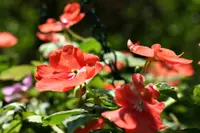
Fuchsia × standishii is a compact, deciduous shrub valued for its long flowering season and elegant, pendulous blooms. It is a hybrid fuchsia, usually grown as a garden ornamental or in containers rather than in the wild. Flowers are tubular with contrasting sepals and petals, often in shades of pink and purple, attracting bees and hummingbirds in suitable climates. The plant has a bushy habit and can be lightly shaped to keep a neat outline. It is considered moderately easy to grow if its needs are met. To care for Fuchsia × standishii, provide bright but not harsh sun, consistent moisture without waterlogging, and fertile, well-drained soil.

Care Difficulty
Moderate Care

Light Preference
Partial Shade

Water Requirements
Keep Soil Moist

Temperature Preference
Cool Climate

Hardiness Zone
7–9

Soil Texture
Loamy, Peaty, Organic-rich

Soil pH
Acidic (5.5–6.5), Slightly acidic (6.5–7.0)

Soil Drainage
Moist but well-drained

Fertilization
Moderate (every 2–4 weeks)
Scan your plant to receive care tips personalized for your specific plant
Available on iOS and Android
This shrub prefers bright, gentle light with protection from strong midday sun.
This plant likes consistently moist but not saturated soil, especially during active growth and flowering.
This species grows best in cool to mild conditions and dislikes extremes of heat or cold.
This plant benefits from consistently moist air and reacts quickly to dry indoor conditions.
Provide loose, moisture-retentive yet fast-draining soil to support healthy roots and flowering.
This species is well suited to container culture on patios, balconies, or shaded entries.
This shrub responds well to modest feeding during its active growing season for steady flowering.
Targeted pruning supports compact growth and abundant flowers on this shrub.
Container-grown plants benefit from periodic repotting or transplanting to maintain vigor.
This species is most commonly propagated from softwood or semi-ripe cuttings.
This shrub has some cold tolerance but benefits from simple winter protection, especially in containers.

Plant Health Check
Not sure what's wrong with your plant? Check your plant's health inside the app.
This garden hybrid, raised in 19th‑century England from Fuchsia magellanica and Fuchsia fulgens, is one of the few commonly grown fuchsias with a noticeable floral scent, especially in cool, still air.
Compared with many tender fuchsia hybrids, this plant can tolerate relatively cool conditions and light frost when established, which has made it a long‑lived shrub in mild, maritime climates.
The shrub develops a dense, twiggy framework with arching shoots that flower along their length, giving a distinctly layered appearance that differs from the more upright or basket‑forming growth of many modern fuchsia hybrids.

In parts of the UK and Ireland, long-established plantings of this hybrid have become traditional cottage garden shrubs, often passed on through cuttings from old gardens, so many local plants trace back to a small number of early Victorian introductions.
This shrub performs best outdoors in cool, mild climates where it receives bright, indirect light and consistent moisture. Indoors it is short-lived and more prone to pests, dry air stress, and poor flowering, so outdoor cultivation is generally preferred.
Keep your plants happy and healthy with plant identification, disease detection, and easy care guidance.