Encourage Bushier Form
Tip prune young shoots lightly in late spring to encourage branching and a denser, more wind-resistant framework rather than one or two tall, brittle stems.

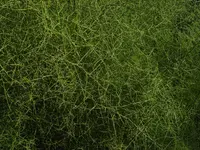
Koeberlinia spinosa, sometimes called crown of thorns, is a thorny, leafless shrub or small tree with dense, rigid green stems. It forms a spiny thicket that provides strong architectural structure in dry landscapes. Native to arid regions of the southwestern United States and northern Mexico, it is adapted to intense sun, heat, and low rainfall. The plant is slow-growing but long-lived, relying on deep roots and tough stems rather than showy foliage. It suits experienced gardeners who enjoy desert or xeric plants, though patient beginners can also succeed. Light, well-drained soil and minimal watering support healthy growth and make it easier to care for crown of thorns.

Care Difficulty
Easy Care

Light Preference
Full Sun

Water Requirements
Low Water

Temperature Preference
Warm Climate

Hardiness Zone
8–11

Soil Texture
Sandy, Loamy, Rocky

Soil pH
Slightly alkaline (7.0–7.5), Alkaline (7.5–8.5)

Soil Drainage
Well-drained

Fertilization
Minimal (feed rarely)
Scan your plant to receive care tips personalized for your specific plant
Available on iOS and Android
Koeberlinia spinosa thrives in intense, bright conditions similar to hot desert scrub.
This desert shrub prefers infrequent, deep watering and dries quickly between soakings.
This species is adapted to hot, dry climates with mild winters and strong seasonal temperature swings.
Koeberlinia spinosa handles low humidity well and rarely needs special humidity management.
This species prefers very fast-draining, mineral, lean soil that mimics arid, rocky habitats.
This species is suitable for container growing, especially in regions with cold winters or heavy rainfall.
Koeberlinia spinosa is a tough, low-demand desert shrub that needs only light feeding in containers or very poor soil, similar to many xeric shrubs and crown of thorns indoor care.
Koeberlinia spinosa needs minimal pruning, mainly to maintain structure and remove damaged growth.
This shrub is usually grown in the ground, so focus on careful transplanting rather than frequent repotting.
Koeberlinia spinosa is most reliably propagated from seeds, though this process is slow and best suited to patient growers.
Koeberlinia spinosa is quite cold hardy in its native range and usually needs little winter care in the ground.

Plant Health Check
Not sure what's wrong with your plant? Check your plant's health inside the app.
This species has very small, short-lived leaves and relies mainly on its green, spiny stems for photosynthesis, an adaptation that reduces water loss in its hot, arid habitat.
In the Chihuahuan and Sonoran deserts, it often forms dense, tangled thickets that provide refuge and nesting structure for birds and small animals despite offering little shade.
Koeberlinia spinosa is unusual in that it has been placed in its own family, Koeberliniaceae, and its taxonomic position has shifted between the caper order (Brassicales) and the soapberry order (Sapindales) as botanists study its evolutionary relationships.

The flowers of Koeberlinia spinosa are small and visually inconspicuous, but they produce nectar that supports native desert pollinators, including specialized bees that forage during brief, favorable weather windows in its harsh range.
This species performs best outdoors in hot, dry climates where it receives unfiltered sun and excellent drainage. Indoors it often becomes thin and sparse due to lower light intensity and reduced air movement, even with good crown of thorns indoor care.
Keep your plants happy and healthy with plant identification, disease detection, and easy care guidance.