Amur honeysuckle Care (Lonicera maackii)

Also known as: Bush Honeysuckle
Amur honeysuckle

About Amur honeysuckle

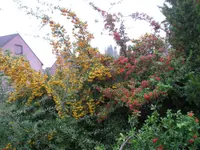
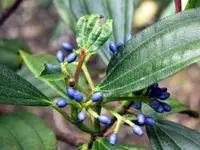
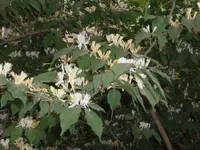
Amur honeysuckle (Lonicera maackii) is a deciduous shrub known for its fast growth and dense, arching branches. It often forms thickets that can dominate a planting area. Leaves are oval and medium green, with pairs of tubular white flowers that age to yellow, followed by bright red berries. The shrub is native to northeastern Asia but has naturalized widely in parts of North America. It is very tough, tolerating a range of soils, urban conditions, and some drought, which makes it easy to establish but also highly invasive outdoors. Understanding how to care for Amur honeysuckle includes managing its vigorous growth and unwanted spread.

Main Plant Requirements

Care Difficulty

Easy Care

Light Preference

Full Sun

Water Requirements

Moderate Water

Temperature Preference

Cold Hardy

Hardiness Zone

3–8

Soil Texture

Sandy, Loamy, Clay

Soil pH

Acidic (5.5–6.5), Slightly acidic (6.5–7.0)

Soil Drainage

Well-drained

Fertilization

Minimal (feed rarely)

Get Personalized Care Plan

Scan your plant to receive care tips personalized for your specific plant

Available on iOS and Android

How to Care for the Amur honeysuckle

This shrub thrives in full sun but tolerates light shade in many garden settings.

  • Provide 6–8 hours of direct sun daily for strongest flowering and dense growth in Amur honeysuckle.
  • Plant where it receives morning sun and, in hotter regions, some light afternoon shade to reduce leaf scorch and water stress.
  • In partial shade (3–4 hours sun), expect fewer flowers and a looser habit; monitor for lanky, stretched stems as a sign of insufficient light.

This hardy shrub prefers evenly moist, well-drained soil rather than constant wetness.

  • Allow the top 3–5 cm of soil to dry before deep watering, then wet the root zone thoroughly instead of applying frequent light splashes.
  • During the first growing season, check soil every few days in warm weather; reduce watering in cool, rainy periods and once the plant is established.
  • Watch for yellowing, soft leaves or a sour soil smell as signs of overwatering, and for dull, wilting foliage and dry, cracked soil as signs of underwatering in Lonicera maackii.

This species is cold hardy and adapts to a wide range of outdoor temperatures.

  • Active growth is strongest around 60–80°F (16–27°C), with good performance in typical spring and early summer conditions.
  • Dormant plants tolerate winter lows near -20°F (-29°C) in many regions, though young shrubs benefit from mulch to buffer extreme cold.
  • Mature plants handle summer heat up to about 90°F (32°C) if soil moisture is adequate, but prolonged hotter, dry conditions can stress foliage and reduce flowering.

Humidity is not a significant factor for Lonicera maackii, which adapts well to typical outdoor air in most regions.

Lonicera maackii prefers moderately fertile, moist but not waterlogged soil with a stable structure.

  • Use a loamy soil with a mix of mineral particles and organic matter so roots can anchor and access moisture evenly.
  • Aim for a slightly acidic to neutral pH around 6.0–7.0; avoid highly alkaline or saline sites that can limit nutrient uptake.
  • Blend compost into native soil to improve structure, water retention, and nutrient supply, especially in sandy or degraded areas.
  • On heavy clay sites, incorporate coarse sand or fine bark to increase aeration and drainage, and avoid low spots where water accumulates.

This species is not well suited to long-term container growing due to its vigorous root system and size potential.

This shrub grows vigorously in most soils and usually needs only light feeding.

  • Apply a thin layer of compost around the root zone in early spring to support healthy growth in Amur honeysuckle.
  • If growth is weak, use a balanced slow-release NPK fertilizer at 1/2 strength once in spring.
  • Avoid midsummer and late-fall feeding to prevent soft growth before cold weather.
  • Do not fertilize during winter dormancy, as nutrient uptake is minimal.

Pruning is important to control size and structure of Lonicera maackii and to remove weak growth.

  • Use sharp bypass pruners or loppers in late winter or very early spring before bud break.
  • Cut out dead, damaged, rubbing, or crossing branches at their base or to a strong side shoot.
  • Thin crowded interior stems to increase light and airflow, which supports healthier foliage.
  • Shorten overly long shoots to shape the shrub and maintain a manageable height and spread.

This honeysuckle is usually grown in the ground, so care focuses on transplanting rather than frequent repotting.

  • Transplant in early spring or fall when temperatures are mild and natural rainfall is higher.
  • Choose a site with well-drained soil, dig a hole 2–3× wider than the root ball, and plant at the same depth.
  • Water deeply before and after moving to limit root stress, then keep soil evenly moist for several weeks.
  • Container plants needing more space show circling roots or slowed growth and can be shifted to a pot 1–2 in wider.

Lonicera maackii can be propagated by seed, softwood cuttings, or simple layering under suitable conditions.

  • Collect ripe berries in fall, extract seeds, and sow in moist, well-drained mix; cold stratification improves germination.
  • Take softwood cuttings in late spring to early summer, use rooting hormone, and keep in high humidity with bright, indirect light.
  • For layering, bend a flexible stem to the ground, pin it under soil, and sever it once strong roots form.
  • Maintain moderate moisture and stable temperatures around 65–75°F for best rooting and early establishment.

This shrub is cold hardy in much of the US and usually needs minimal winter care outdoors.

  • Established in-ground plants tolerate typical winter frosts without extra covering.
  • Apply a 5–8 cm mulch layer over the root zone in late fall to moderate soil temperature and moisture swings.
  • Container-grown plants benefit from moving pots to a sheltered spot and insulating containers to reduce root freeze–thaw stress.

Care Tips

Early structural training

During the first 2–3 years, selectively keep 3–5 strongest stems and remove weak, crossing, or low-angled shoots to form a stable vase-shaped framework that resists storm damage and opens the center to light and air.

Root zone management

Maintain a clear, mulch-covered root zone 45–60 cm around the base, free from turfgrass and aggressive groundcovers, to reduce competition for water and nutrients and to simplify monitoring for suckers.

Sucker and seed control

Inspect monthly in the growing season for basal suckers and unwanted seedlings within several meters, cutting them flush with the soil and removing young plants before they establish deep roots and form thickets.

Targeted wildlife exclusion

Use bird netting or temporary mesh barriers around fruiting branches if local spread is a concern, and promptly collect and dispose of berries in sealed bags to limit seed dispersal by birds when growing Amur honeysuckle near natural areas.

Sanitation after pruning

After any major cut, especially where dieback or cankers are present, dispose of pruned material off-site and disinfect tools with 70% isopropyl alcohol between plants to reduce the risk of spreading fungal or bacterial problems.

Everything About Amur honeysuckle

Common Pests and Diseases

Honeysuckle aphids

This pest feeds on young shoots and leaf undersides, causing curling, distortion, and sticky honeydew that can lead to sooty mold. Infestations tend to build up on the most vigorous new growth in late spring and early summer.

Solution

Prune out heavily infested shoot tips and dispose of them, then wash remaining colonies from stems and leaves with a strong but controlled stream of water. If needed, apply insecticidal soap or a light horticultural oil, thoroughly coating leaf undersides and repeating at 7–10 day intervals until new growth appears clean; encourage or preserve natural predators such as lady beetles where possible.

Honeysuckle leaf blight

This disease causes brown to tan leaf spots that often enlarge and merge, leading to blighted patches and premature leaf drop, especially in dense or shaded plantings. Symptoms include more severe damage on inner, poorly ventilated branches after wet weather.

Solution

Remove and destroy affected leaves and thin crowded interior branches to improve light and air movement through the shrub. During extended wet periods, a labeled copper or chlorothalonil fungicide can be applied at the first sign of spotting, repeating as directed on the label, while also avoiding overhead irrigation to reduce leaf wetness duration.

Powdery mildew

This disease appears as white to gray powdery patches on upper leaf surfaces, which can cause leaf distortion and early yellowing in late summer. Symptoms include heavier development in shaded, humid locations with limited airflow.

Solution

Increase sun exposure where possible and selectively thin stems to improve air circulation through the canopy. Remove heavily infected leaves and, if needed, treat with a sulfur or potassium bicarbonate product labeled for powdery mildew on ornamentals, applying in dry weather and repeating according to label directions.

Scale insects

These insects attach to stems and sometimes leaves as small, rounded or oval bumps, sucking sap and weakening the plant while producing honeydew that may attract ants. This pest can cause twig dieback and a generally thin, stressed appearance over time.

Solution

Prune out and destroy heavily infested twigs, then scrub remaining scale patches on thicker stems with a soft brush dipped in soapy water. Apply a dormant-season horticultural oil to smother overwintering stages, and during the growing season use lighter oil sprays targeting crawler stages, ensuring thorough coverage of stems and branch crotches.

Leaf spot complex

Symptoms include small brown, tan, or purplish leaf spots caused by several fungi that collectively thin the foliage on stressed or overcrowded shrubs. This problem is more common on plants growing in partial shade with persistently damp foliage.

Solution

Rake and discard fallen leaves to remove fungal inoculum, and thin the shrub so that branches do not cross and rub, which helps foliage dry faster. If leaf spots recur each year and significantly defoliate the plant, a broad-spectrum ornamental fungicide may be applied at bud break and repeated during wet spells, combined with general improvements in site drainage and spacing as part of Lonicera maackii care instructions.

Interesting Facts

Bird-dispersed invader

The bright red berries are highly attractive to birds, which eat the fruit and spread the seeds into forests, roadsides, and urban green spaces, greatly aiding this shrub’s invasive expansion in North America.

Hollow pith twigs

Older stems develop a hollow, tube-like pith in the center, a feature that helps distinguish this species from some native honeysuckles that retain a solid or spongy pith.

Leaf-out advantage

This shrub leafs out earlier in spring and holds its foliage later into autumn than many native understory plants, allowing it to capture more light and outcompete local vegetation.

Botan icon

Did you know?

This species was widely planted in the mid-20th century in the US for wildlife habitat and erosion control, but is now listed as invasive or noxious in many states due to its ability to form dense thickets that reduce native plant diversity and alter forest understory structure.

FAQs about Amur honeysuckle

Poor flowering usually comes from too much shade, heavy pruning at the wrong time, or nutrient imbalance. Avoid cutting stems in late summer–spring, prevent dense shading, and use a balanced fertilizer rather than high-nitrogen lawn products.

Grow Healthy Plants with Botan Care

Keep your plants happy and healthy with plant identification, disease detection, and easy care guidance.

Botan plant care app — identify plants on mobile

Explore More Plants