Japanese wood poppy Care (Glaucidium palmatum)

Japanese wood poppy

About Japanese wood poppy

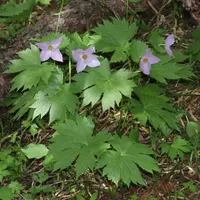
Glaucidium palmatum, commonly called Japanese wood poppy, is a woodland perennial valued for its large, soft green leaves and nodding poppy-like flowers. It forms a compact clump and slowly spreads, creating a refined, architectural presence in shaded borders.

This species is native to cool, moist mountain forests of Japan, which explains its preference for partial shade and consistently damp, humus-rich soil. It is not a beginner plant, as it resents heat, drought, and disturbance, but it can thrive for many years when conditions are stable.

Gardeners who learn how to care for Japanese wood poppy usually find it long-lived and reliable in suitable climates, especially in sheltered, woodland-style plantings.

Main Plant Requirements

Care Difficulty

Hard Care

Light Preference

Partial Shade

Water Requirements

Keep Soil Moist

Temperature Preference

Cool Climate

Hardiness Zone

4–7

Soil Texture

Loamy, Peaty, Organic-rich

Soil pH

Acidic (5.5–6.5), Slightly acidic (6.5–7.0)

Soil Drainage

Moist but well-drained

Fertilization

Minimal (feed rarely)

Get Personalized Care Plan

Scan your plant to receive care tips personalized for your specific plant

Available on iOS and Android

How to Care for the Japanese wood poppy

This woodland perennial prefers cool, shaded conditions with brief gentle sun exposure.

  • Provide dappled or filtered light under trees, with 1–3 hours of weak morning sun and full shade by early afternoon.
  • Avoid direct midday and afternoon sun, which can scorch leaves, fade flowers, and dry the soil too quickly for Japanese wood poppy.
  • In hotter climates, choose a north- or east-facing site; in cooler areas, light open shade is acceptable as long as the soil never bakes.

This plant needs consistently moist but not waterlogged soil throughout the growing season.

  • Water when the top 2–3 cm of soil feels slightly dry, then soak the root zone deeply so moisture penetrates 15–20 cm.
  • Use rich, humus-based soil with good drainage; standing water or sour smell indicates poor drainage and risks root rot for Glaucidium palmatum.
  • Increase monitoring during spring and early summer flush, and reduce watering in late autumn once foliage dies back and growth stops.

This cool-climate perennial thrives in mild summers and cold, dormant winters.

  • Optimal growth occurs around 55–70°F (13–21°C), especially in spring, with protection from hot, drying winds.
  • The plant tolerates winter lows down to about -10°F (-23°C) when well mulched, as long as soil drains freely and crowns do not sit in ice.
  • In regions where summer highs exceed 80°F (27°C), provide deep shade, organic mulch, and steady soil moisture to limit heat stress and leaf scorch.

This woodland perennial prefers cool, moist air and resents prolonged dryness.

  • Aim for 50–70% humidity, similar to a shaded, damp forest edge.
  • Leaves may droop, curl, or develop crisp brown edges when air stays too dry, especially in heat or wind.
  • Increase humidity by mulching heavily, grouping plants in sheltered shade, and using nearby water features or damp gravel trays close to Japanese wood poppy.

This species needs deep, humus-rich, consistently moist but well-drained soil.

  • Use a loose, loamy structure built from garden soil mixed with leaf mold or compost and fine bark.
  • Ensure drainage by avoiding heavy, compacted clay; incorporate coarse sand or grit where water lingers after rain.
  • Maintain slightly acidic to neutral pH, around 6.0–7.0, which supports balanced nutrient uptake in Glaucidium palmatum.
  • Avoid waterlogged, shallow, or very stony soils that dry out quickly or remain saturated for long periods.

This plant can be grown in containers, but only when careful attention is paid to moisture and root depth.

  • Choose a tall, stable pot that allows a deep root run and resists tipping in wind or uneven ground.
  • Use a woodland-style mix of loam, compost, and fine bark in a container with sharply draining holes to prevent stagnation while retaining moisture.
  • Place the pot in cool dappled shade where the container sides are shielded from direct sun to reduce root overheating and rapid drying.

Glaucidium palmatum benefits from light, steady feeding rather than heavy fertilization.

  • Apply a balanced, slow-release fertilizer (around 10-10-10) at half strength once in early spring as new growth emerges.
  • Supplement with a thin layer of compost around the root zone in spring to improve soil structure and nutrient availability.
  • During the growing season, use a diluted balanced liquid feed (1/4–1/2 strength) every 4–6 weeks if growth appears weak.
  • Stop feeding Japanese wood poppy in late summer and avoid fertilization in fall and winter during dormancy.

Glaucidium palmatum needs minimal pruning, focused mainly on cleanup and maintaining plant health.

  • Carry out pruning in late fall after frost has blackened foliage or in very early spring before new shoots emerge.
  • Remove dead, damaged, or diseased stems at ground level using clean, sharp hand pruners to reduce infection risk.
  • Thin out weak or crowded stems lightly to improve air flow while keeping the plant’s natural mounded shape.
  • Clip spent flower stalks after blooming if seed is not desired, which can help direct energy back to roots.

This woodland perennial is usually grown in the ground, and transplanting should be done infrequently and with care.

  • Plan transplanting for early spring just as buds swell, or in early fall so roots can establish in cool, moist soil.
  • Look for signs such as slow growth, reduced flowering, or a dense root mass circling inside a container if it is potted.
  • Transplant only every several years, choosing a shaded, humus-rich, moist but well-drained site and planting at the same depth.
  • Water thoroughly after moving, keep soil evenly moist, and use a light organic mulch to limit root stress and temperature swings.

Glaucidium palmatum is slow-growing and propagation is possible but requires patience and careful handling.

  • Divide mature clumps only in early spring, lifting carefully and splitting into large sections with several buds each.
  • Sow fresh seed in pots outdoors in fall, exposing them to natural winter cold to break dormancy and encourage spring germination.
  • Provide cool, shaded conditions with consistently moist, humus-rich substrate for both divisions and seedlings.
  • Avoid frequent disturbance; allow young plants to establish for several years before considering any further division.

This species is cold hardy in many temperate gardens and usually needs only modest winter care.

  • Tolerates freezing conditions once established, with top growth dying back while underground buds remain viable.
  • Apply a 5–8 cm layer of leaf mold or bark mulch over the root zone in late fall to moderate soil temperature.
  • In very cold or exposed sites, mark the planting area and avoid disturbance, as dormant crowns sit just below the soil surface.
  • For container plants in colder regions, move pots into a sheltered, unheated but frost-sheltered location and keep soil lightly moist.

Care Tips

Cool root zone

In warmer regions, lay a 3–5 cm layer of leaf mold or fine bark mulch over the root area each spring to keep the soil cool and stable while protecting the shallow, fleshy roots from heat and physical disturbance.

Gentle clump division

If division is needed, do it only on well-established clumps in early spring just as new shoots emerge, cutting the crown into large pieces with at least 2–3 buds each and replanting immediately at the same depth to minimize transplant shock.

Wind and hail protection

Install low windbreaks such as lattice or shrub planting on the windward side and use a temporary mesh or shade cloth barrier during hail or severe storms to prevent tearing of the broad, delicate leaves and flowers.

Slug and snail management

Place wildlife-safe slug bait, copper bands, or rough mineral barriers (like horticultural grit) around the clump before shoots emerge in spring, since new growth is highly attractive to slugs and can be destroyed in a single night.

Leaf spot prevention

Remove and dispose of spotted or yellowing leaves promptly and irrigate at soil level rather than overhead, which reduces humidity around foliage and helps limit fungal leaf spot issues when caring for Japanese wood poppy.

Common Pests and Diseases

Slugs and snails

This pest is strongly attracted to the tender, early spring foliage and can rapidly shred leaves and young shoots, especially in cool, moist woodland conditions.

Solution

Hand-pick at dusk or early morning, use beer traps or copper barriers, and place iron phosphate bait if damage is severe; reduce hiding places such as dense debris around the crown while still maintaining overall soil moisture for the plant.

Vine weevils

These insects damage plants in two stages: adults notch leaf edges, while the soil-dwelling larvae chew on roots and crowns, causing sudden wilting or collapse in otherwise moist, shaded sites.

Solution

Inspect foliage for notching and hand-pick adults at night, then target larvae by applying beneficial nematodes to the soil in late summer or early fall; avoid keeping containers or beds constantly saturated to reduce larval survival while still providing steady moisture.

Botrytis blight

This disease favors cool, damp, still air and causes soft brown lesions on leaves, buds, and flowers that may develop fuzzy gray mold on the surface.

Solution

Remove and discard all affected foliage and spent blooms, improve airflow by thinning crowded plants, and water at soil level rather than over the leaves; in persistently wet springs, a targeted fungicide labeled for gray mold on ornamentals may be used as a last resort.

Powdery mildew

Symptoms include a white to gray powdery coating on leaves, often appearing after periods of humid weather with poor air circulation in shaded borders.

Solution

Prune to open up dense plantings, water in the morning at soil level, and remove heavily infected leaves; if the problem recurs yearly, apply a preventive fungicidal spray labeled for powdery mildew on perennials early in the season when new growth emerges.

Interesting Facts

Monotypic woodland genus

This Japanese woodland perennial is the only species in the genus Glaucidium, making it taxonomically unique within the buttercup family Ranunculaceae.

Unusual leaf and flower form

It combines deeply lobed, palm-shaped leaves with large, poppy-like flowers, an uncommon morphology in Ranunculaceae that often leads to confusion with true poppies (Papaveraceae).

Cool-climate forest specialist

In the wild it occurs in cool, moist montane forests of northern Honshu and Hokkaido, where it grows in dappled light under deciduous trees and melts back to underground buds during winter snow cover.

Botan icon

Did you know?

In its native range this species is considered rare and highly localized, and wild populations are of conservation interest because they are restricted to relatively undisturbed, mature mountain forests that are sensitive to habitat loss.

FAQs about Japanese wood poppy

Poor flowering usually comes from plants being too young, stressed after recent division, or planted in conditions that are too dry or bright. Stable moisture, rich organic soil, and several years of establishment are often needed before reliable flowering.

Grow Healthy Plants with Botan Care

Keep your plants happy and healthy with plant identification, disease detection, and easy care guidance.

Botan plant care app — identify plants on mobile

Explore More Plants