majestic prayer plant Care (Goeppertia majestica)

majestic prayer plant

About majestic prayer plant

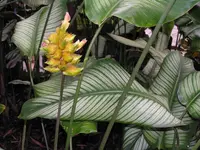
Goeppertia majestica, often called majestic prayer plant, is a tropical foliage plant grown mainly for its bold, patterned leaves. It forms a clumping, low bush of upright stems with large, oblong leaves that show striking light and dark striping.

This species comes from the warm, humid understories of South American rainforests, where it grows in filtered light and consistently moist, loose soil. Its sensitivity to dry air, irregular watering, and cold drafts makes it moderately challenging indoors, especially for beginners. Those learning how to care for majestic prayer plant should focus on stable warmth, gentle light, and steady humidity to keep it healthy and attractive.

Main Plant Requirements

Care Difficulty

Hard Care

Light Preference

Bright Indirect Light

Water Requirements

Keep Soil Moist

Temperature Preference

Tropical / Frost Sensitive

Hardiness Zone

11–12

Soil Texture

Loamy, Peaty, Organic-rich

Soil pH

Acidic (5.5–6.5)

Soil Drainage

Moist but well-drained

Fertilization

Light (every 4–6 weeks)

Get Personalized Care Plan

Scan your plant to receive care tips personalized for your specific plant

Available on iOS and Android

How to Care for the majestic prayer plant

This shade-loving tropical prefers soft, filtered light rather than direct sun.

  • Provide 6–8 hours of bright, indirect light each day, such as near an east- or north-facing window for majestic prayer plant indoor care.
  • Allow weak early morning sun only; avoid harsh midday or afternoon sun that can cause leaf scorch, bleaching, and crispy edges.
  • In winter, move plants closer to bright windows or use a grow light to compensate for shorter days and prevent leggy, pale growth.

This species prefers evenly moist, not soggy, soil throughout the growing season.

  • Water when the top 2–3 cm of soil feels dry, using room-temperature, low-mineral water to reduce leaf tip browning in Goeppertia majestica.
  • Reduce watering in fall and winter, letting the top 3–4 cm dry, but do not allow the entire root zone to dry out hard or leaves may curl and droop.
  • Use a free-draining mix and a pot with drainage holes; watch for yellowing, mushy stems as overwatering signs and crisp, folding leaves as underwatering signs.

This plant thrives in warm, stable temperatures with no cold drafts.

  • Keep day temperatures around 68–80°F (20–27°C) for best growth and color, with only slight drops at night.
  • Avoid exposing it below 60°F (16°C); growth slows under 65°F (18°C), and prolonged exposure near 50°F (10°C) can cause leaf damage.
  • Protect from sudden heat spikes above 85°F (29°C) by increasing humidity and shade; never expose to frost or cold windowsills in winter.

This species needs consistently high humidity to maintain healthy foliage.

  • Aim for 60–80% humidity; use a room humidifier or humidity tray if indoor air stays below 50%.
  • Dry air causes brown, crispy leaf edges, curling, and stalled growth in majestic prayer plant.
  • Increase humidity by grouping plants, running a small humidifier nearby, and keeping the plant away from heater vents or strong drafts.

This plant prefers a loose, airy, organic-rich substrate that drains freely yet holds steady moisture.

  • Use a peat- or coco coir-based mix with added perlite and fine pine bark to create a soft, crumbly, moisture-retentive structure.
  • Aim for slightly acidic to neutral pH around 5.8–7.0 to support nutrient uptake in Goeppertia majestica.
  • Ensure fast drainage; mix in extra perlite or pumice if water sits on the surface for more than a few seconds after watering.
  • Avoid heavy garden soil, pure compost, or compacted mixes that stay waterlogged or form dense clumps when squeezed.

This species grows very well in containers when the pot helps manage moisture and root space.

  • Choose a slightly wider than deep pot to allow shallow, spreading roots to fill the surface layer without becoming cramped at the base.
  • Select a stable ceramic or terracotta container if foliage becomes top heavy so the pot does not tip when the substrate is moist.
  • Ensure the drainage holes stay clear by placing a flat mesh over them rather than stones, which can trap water around the roots.

This species benefits from light, consistent feeding during active growth to support foliage quality.

  • Use a balanced liquid fertilizer (around 10-10-10 or 20-20-20) diluted to 1/4–1/2 strength for the majestic prayer plant.
  • Apply every 4–6 weeks in spring and summer when new leaves are forming.
  • Skip compost-heavy mixes in pots and avoid slow-release pellets that can burn sensitive roots.
  • Reduce feeding to 1 light application in fall and stop entirely in winter dormancy.

Pruning Goeppertia majestica focuses on hygiene and keeping the clump neat rather than shaping it heavily.

  • Best timing is during active growth in spring or summer so the plant recovers faster.
  • Remove yellow, brown, torn, or pest-damaged leaves at the base with clean, sharp scissors or pruners.
  • Trim only completely faded or misshapen leaves to maintain an even, attractive dome of foliage.
  • Disinfect tools before and after use to limit spread of fungal or bacterial problems.

This plant prefers slightly snug pots but still needs occasional repotting to refresh soil and root space.

  • Check for roots circling the bottom, pushing through drainage holes, or slowed growth as signs it needs a larger pot.
  • Plan to repot every 2–3 years in spring, moving up just 2–5 cm in pot diameter.
  • Use a loose, peat- or coco-based mix with perlite, and handle roots gently to limit stress.
  • Water thoroughly after repotting, keep humidity high, and shade from harsh light for 1–2 weeks while roots re-establish.

Propagation of this species is mainly done by division rather than by seed or stem cuttings.

  • Best season for division is spring, when new growth is starting and conditions are stable.
  • Remove the plant from its pot and gently separate natural clumps, keeping several stems and healthy roots per division.
  • Plant each section in fresh, airy mix and keep humidity high with warm, stable temperatures around 70–80°F.
  • Maintain lightly moist soil, bright indirect light, and avoid heavy feeding until new leaves appear.

Goeppertia majestica is tropical and not frost tolerant, so indoor winter care is important in temperate climates.

  • Keep plants indoors above 60°F, ideally 65–75°F, away from cold drafts and heater blasts.
  • Provide bright, indirect light since winter days are shorter.
  • Reduce watering slightly but never allow the root ball to dry out completely.
  • Maintain higher humidity with trays, humidifiers, or grouping plants together.

Care Tips

Rotate For Symmetry

Turn the pot 90° every 1–2 weeks so new leaves distribute evenly around the plant and the petioles do not lean permanently in one direction.

Support Heavy Leaves

If outer leaves begin to flop, insert short, slim supports near the pot edge and loosely tie petioles with soft plant ties to keep foliage upright without cutting healthy leaves.

Quarantine And Inspect

Keep new plants in a separate room for 2–3 weeks and inspect leaf undersides and petiole bases with a hand lens to catch spider mites or scale before placing them near an established majestic prayer plant.

Use Tepid, Settled Water

Fill a watering can and let it sit for 12–24 hours to reach room temperature and allow chlorine to dissipate, which reduces stress to sensitive roots and leaf edges.

Gentle Leaf Cleaning

Wipe leaves every 4–6 weeks with a slightly damp, soft cloth while supporting each leaf from below to remove dust, improve light capture, and maintain healthy stomata without using leaf-shine products when caring for majestic prayer plant.

Common Pests and Diseases

Spider mites

This pest thrives in warm, dry indoor air and feeds on the undersides of leaves, causing tiny pale speckles and fine webbing on Goeppertia majestica foliage. Symptoms include dull, stippled leaves that may curl or dry at the edges.

Solution

Rinse both sides of the leaves under a gentle lukewarm shower, then wipe with a soft cloth to remove mites and webs, and repeat weekly until clear. Increase humidity to 60–70%, isolate the plant, and use insecticidal soap or a ready-to-use neem oil spray directed at leaf undersides for several consecutive treatments.

Fungus gnats

These insects develop in consistently wet potting mix and their larvae feed on fine roots, which can stress Goeppertia majestica and lead to slow growth and yellowing leaves. Adults are small black flies that hover around the soil surface when disturbed.

Solution

Allow the top 2–3 cm of soil to dry slightly between waterings, improve drainage, and remove any fallen leaves from the pot surface. Use yellow sticky traps to capture adults and apply a biological control such as Bacillus thuringiensis israelensis (Bti) or a soil drench with hydrogen peroxide diluted to 3–4 ml per 240 ml of water to reduce larvae.

Leaf spot (fungal)

This disease appears as small water-soaked or brown circular spots on the broad leaves, sometimes with yellow halos and irregular expansion along the veins. Symptoms include coalescing lesions that reduce the decorative value of Goeppertia majestica foliage.

Solution

Promptly remove and discard affected leaves, avoid splashing water on the foliage, and improve air movement around the plant. Water at the soil level, keep leaves dry, and if spots continue to spread, apply a labeled indoor ornamental fungicide according to directions while reducing crowding with nearby plants.

Bacterial leaf blight

This disease produces irregular, translucent or dark brown patches that may start at leaf edges or along midribs, often with a yellow margin and a slightly greasy look. Symptoms include rapid tissue collapse in humid, warm conditions, especially if leaves stay wet.

Solution

Isolate the plant, remove and destroy all affected leaves, and sterilize scissors or knives with alcohol between cuts. Keep foliage dry, increase airflow, reduce overhead misting, and discard the plant entirely if new lesions continue to appear despite sanitation, rather than trying to propagate from infected material.

Mealybugs

These insects hide in leaf axils and along midribs, leaving white cottony clusters and sticky honeydew on the decorative leaves. This pest can cause leaf yellowing, distortion, and a general decline in vigor if left unmanaged.

Solution

Dab visible clusters with cotton swabs dipped in 70% isopropyl alcohol, then gently wipe leaf surfaces and petiole bases. For larger infestations, rinse the plant, isolate it, and use repeated treatments with insecticidal soap or neem oil every 7–10 days until no new mealybugs are seen, while monitoring nearby plants for spread as part of Goeppertia majestica plant care.

Interesting Facts

Distinctive leaf banding

This species shows strong cream to light-green banding along the lateral veins, creating a striped pattern that is noticeably bolder and more linear than in many other calatheas, including close relatives like Goeppertia ornata.

Large, paddle-shaped foliage

Mature plants can develop broad, elongated leaves that are significantly larger than those of many commonly grown prayer plants, giving it a more architectural, almost tropical understory appearance in cultivation.

Taxonomic reclassification history

The species was long cultivated under the name Calathea majestica, but molecular phylogenetic studies led to its transfer into the genus Goeppertia, reflecting a revised understanding of relationships within the Marantaceae family.

FAQs about majestic prayer plant

Brown leaf edges usually result from low humidity, inconsistent watering, or excess fertilizer salts. Hard tap water and cold drafts can worsen damage. Improve humidity, flush the pot occasionally, and trim only fully dead tissue.

Grow Healthy Plants with Botan Care

Keep your plants happy and healthy with plant identification, disease detection, and easy care guidance.

Botan plant care app — identify plants on mobile

Explore More Plants