Red-capped Scaber Stalk Care (Leccinum aurantiacum)

Also known as: Orange-capped Bolete, Copper-Top, Orange Oak Bolete, Orange Bolete
Red-capped Scaber Stalk

About Red-capped Scaber Stalk

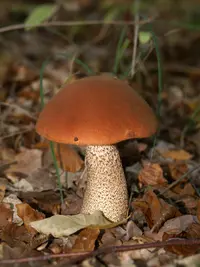
Red-capped scaber stalk, Leccinum aurantiacum, is a fleshy wild mushroom rather than a leafy plant. It forms stout stems with dark, scaly dots and a smooth orange to brick-red cap. These fungi grow in mycorrhizal partnership with trees, especially aspens and birches, and are typically found in temperate woodlands. The fruiting bodies appear from summer to fall, often in small groups on the forest floor.

For anyone learning how to care for Red-capped Scaber Stalk in a cultivation setting, it is helpful to know that it prefers moist, well-drained, organic-rich substrates and stable, cool conditions. It is generally considered challenging to cultivate at home because it depends on a living tree host for proper development.

Main Plant Requirements

Care Difficulty

Moderate Care

Light Preference

Partial Shade

Water Requirements

Keep Soil Moist

Temperature Preference

Cool Climate

Hardiness Zone

3–7

Soil Texture

Loamy, Sandy, Organic-rich

Soil pH

Acidic (5.5–6.5), Slightly acidic (6.5–7.0)

Soil Drainage

Moist but well-drained

Fertilization

Minimal (feed rarely)

Get Personalized Care Plan

Scan your plant to receive care tips personalized for your specific plant

Available on iOS and Android

How to Care for the Red-capped Scaber Stalk

This fungus fruits best in bright woodland conditions with moderated, filtered light rather than open field sun.

  • Provide dappled or filtered light under deciduous trees, with roughly 3–6 hours of gentle morning or late-afternoon sun reaching the forest floor.
  • Red-capped Scaber Stalk tolerates partial shade; dense shade reduces fruiting, while full, all-day sun can dry the substrate and suppress mushroom development.
  • In summer, protect habitat from direct midday sun using canopy cover or leaf litter, and rely on seasonal leaf-out to diffuse intense light.

This ectomycorrhizal fungus relies on consistently moist but not waterlogged soil conditions around its host trees.

  • Aim for soil that stays evenly moist 5–10 cm deep; surface can dry slightly between rains, but deeper layers should not become dusty or hard.
  • Where rainfall is low, add water only when the top 3–5 cm of soil feel dry, ensuring excess drains away so Leccinum aurantiacum mycelium is not standing in pooled water.
  • Watch for overwatering signs such as sour odor, slimy leaf litter, or standing puddles, and underwatering signs like cracked soil and sparse, small fruiting bodies.

This species prefers cool to mild conditions and fruits mainly when soil and air temperatures align with temperate forest seasons.

  • Optimal fruiting often occurs around 55–68°F (13–20°C), with stable, cool nights helping trigger mushroom development in late spring to autumn.
  • The fungus tolerates cool weather down to about 40°F (4°C), but hard frost below 32°F (0°C) can damage exposed fruiting bodies and slow mycelial activity.
  • Sustained heat above 77–82°F (25–28°C), especially with dry soil, reduces fruiting; maintain shade and moisture during hot spells to buffer temperature swings.

Humidity is not a controlling factor for Leccinum aurantiacum compared with host tree association and soil conditions.

Leccinum aurantiacum requires specific outdoor soil conditions that cannot be replicated with standard potting mixes.

  • Provide a loose, well-aerated mineral soil with a mix of sandy and loamy particles to support fine root and fungal development.
  • Aim for slightly acidic conditions around pH 4.5–6.0, avoiding limy or strongly alkaline soils that suppress mycorrhizal activity.
  • Incorporate well-decomposed leaf litter or forest humus rather than peat-based composts to mimic natural woodland organic matter.
  • Avoid compacted, waterlogged, or heavily fertilized areas, which reduce aeration and disrupt the symbiosis with host tree roots.

This mycorrhizal fungus is not suitable for container growing because it depends on a stable association with the roots of mature trees in open ground.

This mycorrhizal fungus lives with tree roots and usually needs no added fertilizer in natural soil.

Leccinum aurantiacum is not pruned, since it is a wild mycorrhizal mushroom rather than a garden shrub or tree.

This fungus fruits from a hidden mycelium network in soil and is not suited to typical repotting or container culture.

  • Avoid digging up or moving the host trees or surrounding soil where mushrooms appear, as this disrupts the mycelium.
  • If habitat is disturbed, the underground network may decline or stop fruiting for many years.
  • For those wishing to grow Leccinum aurantiacum, focus on maintaining healthy host trees and undisturbed leaf litter.
  • Handle fruiting bodies gently when harvesting so the underlying soil structure remains intact.

Practical home propagation of Leccinum aurantiacum is unreliable and usually left to natural spore spread and mycelium growth.

This species is naturally cold hardy in its native range and requires no special winter care in the ground.

Care Tips

Establish mycelium first

Introduce spawn into a mixed hardwood mulch rich in aspen, poplar, or birch residues and keep it evenly moist for several months before expecting fruiting, as the fungus must first build a stable mycelial network and associate with host tree roots.

Choose host trees

Plant or use existing birch, aspen, or poplar as host trees and avoid heavy root disturbance around them, since stable, undamaged fine roots are critical for the mycorrhizal partnership that allows this species to fruit reliably.

Control competing fungi

Remove surface layers of old, heavily colonized woody debris or obvious competing mushrooms in the fruiting area and top up with fresh, compatible hardwood chips yearly to reduce competition and keep the substrate favorable.

Regulate fruiting moisture

During dry spells, give the fruiting area a gentle, fine spray in the evening for 5–10 minutes, aiming to keep the upper 3–5 cm of soil and mulch evenly damp without creating standing water that encourages rot.

Harvest to encourage flushes

Cut mushrooms cleanly at the base with a knife as soon as caps expand fully, then gently cover any exposed mycelium with loose leaf litter or mulch to protect it and potentially support additional fruiting waves when growing Red-capped Scaber Stalk.

Common Pests and Diseases

Mycophagous fly larvae

This pest targets developing fruiting bodies and tunnels through the cap and stem, causing soft, discolored, and sometimes collapsing mushrooms. Symptoms include small entry holes, spongy texture, and rapid decay of the flesh.

Solution

Harvest mushrooms when young and firm, and discard any specimens that show tunneling or mushy, off‑color tissue. In garden or managed settings, remove and dispose of infested fruiting bodies promptly to reduce future fly populations, and avoid leaving cut or damaged mushrooms on the ground where flies can breed.

Slug and snail damage

These mollusks feed on the soft mushroom tissue, leaving irregular holes, shredded edges, and slime trails on caps and stems. This pest often concentrates feeding on young fruiting bodies, making them unharvestable.

Solution

Hand‑pick slugs and snails in the evening or early morning and remove hiding spots such as boards, dense debris, and low‑lying trash around the fruiting zone. Use physical barriers like copper tape or rough mulches and, if needed, place iron phosphate slug baits away from children and pets to reduce grazing pressure on emerging mushrooms.

Moldy fruiting bodies

This disease occurs when competing fungi colonize the mushroom surface under prolonged wet or stagnant conditions, leading to fuzzy white, gray, or green patches and rapid breakdown of tissue. Symptoms include off odors, softening, and visible mold growth on caps and pores.

Solution

Harvest only clean, firm mushrooms and leave any moldy or heavily soiled specimens in place, then remove and discard them away from the collecting area. Improve air movement and avoid disturbing or compacting the leaf litter around the host trees so that fruiting bodies can dry between rains, and never consume any specimen with visible mold or suspicious softening.

Bacterial soft rot

This disease thrives in warm, saturated conditions and causes water‑soaked, slimy patches on the stem and cap that quickly spread, making the mushroom collapse. Symptoms include foul smell, translucent tissue, and sticky, disintegrating pores or flesh.

Solution

Avoid harvesting fruiting bodies that show any soft, wet, or foul‑smelling areas, and remove obviously rotting mushrooms from the site to limit spread of bacteria by insects and splashing water. In managed mushroom beds, maintain moderate moisture instead of constant saturation and ensure some air circulation so mushrooms dry off after rainfall.

Parasitic bolete fungus

This disease is caused by specialized parasitic fungi that attack the fruiting bodies, leading to distorted shapes, abnormal color patches, and premature decay. Symptoms include uneven cap surfaces, localized crusty or powdery areas, and loss of the typical firm bolete texture.

Solution

Do not harvest or consume deformed or discolored mushrooms suspected of parasitism; remove and dispose of them away from the host tree area to reduce spore load. In semi‑cultivated settings, keep the habitat close to natural forest conditions and avoid excessive disturbance, since a resilient fungal community and good host tree health can help limit severe parasitic outbreaks while you are growing Red-capped Scaber Stalk.

Interesting Facts

Color-changing flesh

The whitish flesh of this mushroom often turns gray, violet, or almost black when cut or cooked, due to oxidation of specific pigmented compounds in the cells.

Aspen specialist

This bolete forms mycorrhizal partnerships mainly with aspen and related poplars, exchanging mineral nutrients for sugars and strongly preferring these hosts over many other trees.

Scabered stem surface

Its stem is covered with dark, stiff, scaly projections called scabers, which are characteristic for this genus and help distinguish it from other orange-capped boletes in the field.

Botan icon

Did you know?

In parts of northern and eastern Europe, this species has long been considered one of the most reliable wild mushrooms for drying and preserving, because its firm texture holds shape and flavor well after long cooking and storage.

FAQs about Red-capped Scaber Stalk

Yes, this bolete is considered edible when correctly identified and thoroughly cooked. Some people experience digestive upset, so new foragers should try only a small portion first and avoid consuming specimens that are very old or insect-damaged.

Grow Healthy Plants with Botan Care

Keep your plants happy and healthy with plant identification, disease detection, and easy care guidance.

Botan plant care app — identify plants on mobile

Explore More Plants