

watercress Identification (Nasturtium officinale)

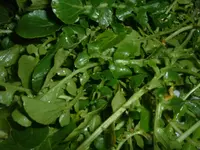
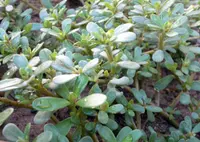
To recognize watercress, look for creeping, hollow stems that root at the nodes, and compound leaves with 3 to 9 rounded leaflets plus a larger terminal leaflet.

The flowers are small, white, and four-petaled, held in short clusters above the foliage. Plants form low, spreading mats rather than upright clumps.

Nasturtium officinale Identification

Check Your Plant ID

Upload a clear image to check whether your plant ID is correct.

Clear images work best. Avoid photos taken too close or too far away

Check watercress for a low, trailing plant with divided leaves and small white flowers.

  • Stems are smooth, round, and sprawling, often rooting at stem joints.
  • Leaves are alternate and pinnate, usually with 3-9 rounded leaflets and a larger end leaflet.
  • Leaflets are broad, smooth-edged to slightly toothed, and look fleshy rather than thin.
  • Flowers are tiny, white, and four-petaled, carried in small clusters above the leaves.
  • Seed pods are slender, straight, and stick out from the flower cluster.

Use the larger terminal leaflet and four-petaled white flowers as the fastest visual checks.

Watercress shows clear visual shifts from early leafy growth to flowering and seed set.

  • Seedling: Seedlings show small, simple first leaves before the characteristic compound leaves appear, with a thin stem and a low, delicate creeping habit.
  • Young plant: Young plants form pinnate leaves with several rounded leaflets and a larger terminal leaflet, while stems begin rooting at nodes and branching outward.
  • Flowering stage: Flowering stems rise above the leafy mat to about 2 feet (60 cm), carrying small white four-petaled flowers in short clusters at branch tips.
  • Fruiting stage: After flowering, narrow upright seed pods replace the flowers along the same cluster, making the upper stems look more angular and less leafy.

In spring through summer, watercress is easiest to confirm when small white, four-petaled flowers rise just above the foliage in short clusters. These blooms add a noticeable seasonal cue to the rounded leaflets and trailing aquatic stems. After flowering, slender seed pods become visible along the upper stems. In mild climates the plant often stays green through winter, so flowers and pods are the clearest seasonal identification changes.

Several edible streamside plants are confused with watercress.

garden cress(Lepidium sativum)

Both have peppery green leaves, but garden cress usually forms finer, more deeply cut foliage on upright stems. Nasturtium officinale has rounder leaflets and a creeping, hollow-stemmed habit.

yellowcress(Rorippa palustris)

This mustard relative can grow in wet ground and carry small white flowers. It differs by having more toothed or lobed leaves rather than distinct rounded leaflets along one central stalk.

lesser celandine(Ficaria verna)

Dense patches near water can mislead at a glance. Lesser celandine has single, heart-shaped glossy leaves and bright yellow daisy-like flowers, not compound leaves with small white four-petaled flowers.

Nasturtium officinale is native to Europe and parts of western Asia, and it is closely tied to freshwater habitats. It occurs in springs, shallow streams, ditches, and seepage areas, usually in cool, clean, slow-moving water. That habitat is useful for identification because true watercress is typically rooted in or floating across running water, rather than growing on ordinary garden soil or dry ground nearby.

Confirm the Species with Botan

Use a photo to identify or verify the plant, which helps avoid mix-ups before labeling, purchasing, or comparing similar species.

FAQ

For fast watercress identification, look for smooth, rounded leaflets arranged along a central stalk, with a larger terminal leaflet at the tip, on hollow stems growing in or beside clean, shallow moving water.

More Plant Identification Guides

Know Your Plant Better

Identify it from a photo with Botan, then review plant details, care information, and common problems for that species.

Botan app identifying a plant from a photo
How To Revive a Dying Plant: 6 Steps To Bring A Plant Back To Life

6 min read · 1 Sept 2026

How To Revive a Dying Plant: 6 Steps To Bring A Plant Back To Life

Drooping leaves and brown tips don't always mean the end, and a weakened plant can often recover with a little help. These six simple steps will help you revive a dying plant and restore its health.

Plant Care
How To Revive a Dying Plant: 6 Steps To Bring A Plant Back To Life
Thorny Plants: A Comprehensive Guide

10 min read · 25 Aug 2026

Thorny Plants: A Comprehensive Guide

Many plants defend themselves with sharp thorns. This guide explores over 20 examples among flowers, shrubs, trees, and vines. You'll learn what each plant looks like, why it grows thorns, and how to quickly identify them.

Plant Recommendations
Thorny Plants: A Comprehensive Guide
How to Winterize Your Garden in 6 Steps

5 min read · 28 Sept 2026

How to Winterize Your Garden in 6 Steps

Learn how to prepare your garden for winter with a practical six-step checklist covering cleanup, tender plant care, watering, mulching, winter protection, and winterizing equipment and containers.

Plant Care
How to Winterize Your Garden in 6 Steps