

Control Spread
Use floating containment rings or a shallow planting tray to limit horizontal spread so the plant does not overrun ponds, small water features, or other aquatic species.

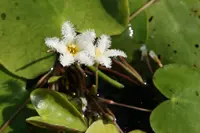
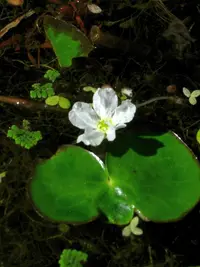
Crested floatingheart, Nymphoides cristata, is an aquatic perennial grown for its round, floating leaves and small, fringed white flowers. It forms spreading mats on the water surface. This species is native to tropical Asia but is now found in ponds, lakes, and slow-moving waters in many warm regions, including parts of the United States. It can become invasive outdoors where conditions are ideal. The plant prefers still or gently moving, warm, nutrient-rich water and strong light. In cultivation, it is considered moderately easy if water quality is stable. Understanding how to care for crested floatingheart starts with managing its fast growth and preventing it from overcrowding other aquatic plants.

Care Difficulty
Moderate Care

Light Preference
Full Sun

Water Requirements
Aquatic

Temperature Preference
Tropical / Frost Sensitive

Hardiness Zone
9–11

Soil Texture
Loamy, Silty, Organic-rich

Soil pH
Slightly acidic (6.5–7.0), Neutral (7.0)

Soil Drainage
Waterlogged tolerant

Fertilization
Light (every 4–6 weeks)
Scan your plant to receive care tips personalized for your specific plant
Available on iOS and Android
This aquatic plant prefers bright, warm conditions with stable light across the growing season.
Nymphoides cristata grows in shallow, still or slow-moving water and depends on consistently flooded conditions.
This species favors warm, frost-free climates with stable water temperatures.
This aquatic species relies on high humidity but stays flexible in typical outdoor pond conditions.
Nymphoides cristata prefers saturated, organic-rich substrates rather than typical potting soil.
This species is suitable for container culture when grown in submerged baskets or tubs within a pond or water feature.
This aquatic species benefits from light, consistent nutrition during active growth in warm months.
Nymphoides cristata responds well to periodic pruning to maintain surface coverage and water quality.
This plant is usually grown in ponds or containers and only needs transplanting when overcrowded or declining.
This aquatic species is commonly propagated to expand coverage or renew tired plantings.
In mild climates this plant overwinters in ponds with minimal intervention, but it is sensitive to hard frost.

Plant Health Check
Not sure what's wrong with your plant? Check your plant's health inside the app.
The white flowers show a distinct crested or fringed margin on each petal, formed by fine lobes of tissue that increase surface area and help the flower stand out on the water surface.
The plant forms floating leaf rosettes anchored by long, flexible stems to the substrate, allowing leaves to access full light at the surface while roots remain in nutrient-rich sediment below.
Outside its native Asian range, this species has become invasive in some warm regions of the southeastern United States, where dense surface mats can shade out native aquatic plants and alter habitat structure for fish and invertebrates.

The species can reproduce both sexually by seed and vegetatively from detached leaf fragments or stolon pieces, which allows small plant parts moved by boats or water currents to start new colonies far from the original population.
This species spreads quickly by runners and fragments, forming dense mats in warm, still water. In ponds and lakes it often becomes aggressive, so regular thinning and physical removal are usually needed to prevent it from covering the whole surface.
Keep your plants happy and healthy with plant identification, disease detection, and easy care guidance.

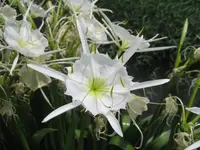
Cahaba lily
Hymenocallis coronaria

American white waterlily
Nymphaea odorata
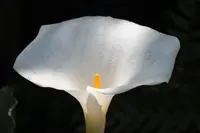
spotted calla lily
Zantedeschia albomaculata
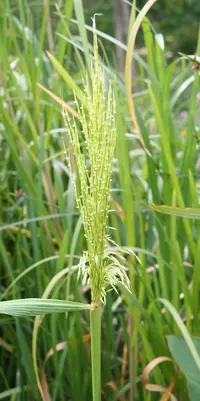
annual wildrice
Zizania aquatica
crested floating-heart
Nymphoides hydrophylla
inland leatherfern
Acrostichum danaeifolium

northern wildrice
Zizania palustris
Mangrove Fern
Acrostichum speciosum