silvervein creeper Care (Parthenocissus henryana)

silvervein creeper

About silvervein creeper

Silvervein creeper, Parthenocissus henryana, is a deciduous climbing vine grown mainly for its striking foliage rather than its flowers or fruit. It uses tendrils with small adhesive pads to cling to walls, trellises, or supports and forms a dense, ornamental cover over time.

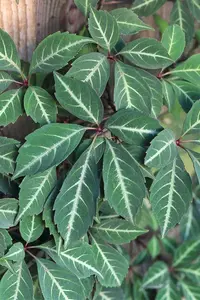
Leaves are typically dark green with silver-white veins and often show bronze or reddish tones, especially in cooler weather. This contrast gives the plant a refined, textured look that stands out in shaded or partially shaded spots.

Native to central China, silvervein creeper is generally adaptable and moderate in vigor, which makes it easier to manage than some other vigorous vines. Those who want to learn how to care for silvervein creeper should know it prefers sheltered sites with moist, well-drained soil and protection from harsh, direct sun.

Main Plant Requirements

Care Difficulty

Easy Care

Light Preference

Partial Shade

Water Requirements

Moderate Water

Temperature Preference

Cool Climate

Hardiness Zone

5–9

Soil Texture

Loamy, Sandy, Organic-rich

Soil pH

Acidic (5.5–6.5), Slightly acidic (6.5–7.0)

Soil Drainage

Moist but well-drained

Fertilization

Minimal (feed rarely)

Get Personalized Care Plan

Scan your plant to receive care tips personalized for your specific plant

Available on iOS and Android

How to Care for the silvervein creeper

Parthenocissus henryana prefers bright, gentle light that mimics a woodland edge.

  • Provide 3–5 hours of morning sun with light or dappled shade from midday onward to protect foliage from scorching.
  • Tolerates partial to full shade, but in deep shade growth becomes looser and leaf color and silver veining of silvervein creeper are less pronounced.
  • In hotter summers, use filtered afternoon light or shade from structures/trees; in cooler climates, slightly more direct sun (up to 6 hours) enhances autumn color.

Parthenocissus henryana prefers moderate, consistent soil moisture rather than extremes.

  • Outdoors in the ground, water when the top 3–5 cm of soil feels dry, focusing on the root zone instead of frequent light sprinkles.
  • Use well-drained soil; prolonged standing water or a sour smell indicates overwatering and encourages root rot, so improve drainage or reduce volume.
  • In the first growing season, check soil every few days; wilting, crispy leaves signal underwatering, while yellowing and leaf drop with wet soil suggest excess moisture.

This vine is hardy and copes with a broad temperature range once established.

  • Best growth occurs around 60–80°F (16–27°C), typical of mild spring and early summer conditions in many temperate gardens.
  • Mature plants usually tolerate down to about 0°F (-18°C) with proper root mulching, but young vines benefit from protection in severe freezes.
  • Handles summer heat up to about 90–95°F (32–35°C) if soil moisture is maintained; prolonged heat plus drought can cause leaf scorch and early leaf drop.

This species tolerates a wide humidity range and usually needs no special humidity management indoors or outdoors.

  • Target 40–60% humidity for best foliage appearance, similar to most heated or air-conditioned homes.
  • Dry indoor air can slightly crisp leaf edges; increase humidity if tips brown while soil moisture is correct.
  • Raise humidity locally with grouped plants or a nearby water tray, rather than misting leaves directly.

Parthenocissus henryana prefers loose, well-drained, moderately fertile soil that still holds some moisture.

  • Use a loamy mix combining roughly 40% compost, 40% garden soil, and 20% mineral material such as perlite or coarse sand.
  • Aim for slightly acidic to neutral pH, around 6.0–7.0, which supports balanced nutrient uptake and root function.
  • In heavy clay, improve aeration and drainage by incorporating coarse sand, fine gravel, and organic matter before planting.
  • Avoid compacted, waterlogged, or very shallow soils, as poor drainage quickly leads to root decline and weak growth.

This vine adapts well to container growing when given stable support and controlled moisture.

  • Choose a wide, heavy container that prevents tipping once the vine climbs or catches wind on a balcony or patio.
  • Provide a tall trellis or wires anchored firmly in the pot so stems can attach and distribute weight evenly.
  • Use a deep pot to give the extensive root system room to anchor, which also helps the substrate dry evenly between waterings.

Parthenocissus henryana grows well in average soil and needs only light feeding to support healthy foliage.

  • Apply a balanced liquid fertilizer (e.g., 10-10-10) at half strength every 4–6 weeks during spring–summer for silvervein creeper in poor or depleted soil.
  • Use a thin layer of compost around the root zone in spring to improve soil structure and slow nutrient release.
  • Avoid high-nitrogen lawn fertilizers near the vine, which can cause weak, lush growth prone to pests.
  • Stop feeding in late summer and do not fertilize during fall–winter, when the plant is dormant.

Pruning helps manage Parthenocissus henryana size, support structures, and maintain a neat outline.

  • Plan main pruning for late winter or very early spring before new growth starts, when stems are easy to see.
  • Use clean, sharp bypass pruners to remove dead, damaged, or diseased stems back to healthy wood.
  • Thin out congested or crossing shoots to improve air flow and light, guiding the vine along its support.
  • Shorten overly long or wandering stems to control spread and shape, cutting just above a strong bud.

This vigorous climber is usually grown in the ground, so focus on thoughtful site planting and occasional transplanting.

  • Transplant in early spring or fall when soil is workable and temperatures are mild, avoiding hot, dry spells.
  • Look for signs such as slow growth, poor coverage, or roots circling a container as indicators that a potted plant needs a larger space.
  • Move container plants only every 2–3 years, stepping up 1–2 in in pot size with well-drained, fertile soil.
  • Reduce root stress by watering thoroughly before and after moving, handling the root ball gently, and shading for 3–5 days if conditions are sunny.

Parthenocissus henryana is commonly propagated from cuttings and layering to match the parent plant.

  • Take 10–15 cm semi-ripe stem cuttings in late spring–summer, including 2–3 nodes, and remove lower leaves.
  • Insert cuttings into moist, free-draining mix, keep at 65–75°F, and maintain high humidity until rooted.
  • For simple layering, bend a flexible stem to the soil in spring, pin it down, and cover a node with moist soil.
  • Leave layered sections attached until strong roots form, then cut from the parent and transplant carefully.

This deciduous climber is generally cold hardy in temperate climates and needs only modest winter care outdoors.

  • Expect top growth to die back and leaves to drop after frost; the woody framework usually survives normal winters.
  • Apply 5–8 cm of organic mulch around the root zone in late fall, keeping it slightly away from the main stems.
  • In colder zones or exposed sites, shelter young plants from drying winter winds using a temporary windbreak or screen.
  • Move container-grown vines into a cool, frost-free but bright area, or against a sheltered wall, to prevent root freezing.

Care Tips

Early support training

Install trellis wires or mesh before planting and loosely tie young vines with soft garden ties so new growth follows the support instead of attaching to unwanted surfaces like siding or gutters.

Controlled spread management

Once a year, trace main stems back from gutters, windows, or roof edges and remove or reroute any shoots headed toward structures where the adhesive pads could cause long-term maintenance issues.

Enhancing autumn color

For stronger fall coloration, avoid high-nitrogen fertilizers and maintain moderate light exposure, since slightly lean soil and good light encourage the foliage to color more intensely.

Root zone protection

Apply a 5–7 cm layer of organic mulch around but not touching the stems to buffer soil temperature, reduce evaporation, and protect the shallow roots from damage by foot traffic or lawn tools.

Vine health inspection

During peak growth, inspect both sides of leaves and stem nodes every few weeks for scale insects or spider mites, since early detection allows simple treatment and keeps caring for silvervein creeper much easier over time.

Common Pests and Diseases

Japanese beetles

These insects feed on the foliage, often skeletonizing leaves and leaving only veins behind, especially on sun-exposed parts of the vine.

Solution

Hand-pick adults in early morning into soapy water, use lightweight mesh or row covers on smaller plantings during peak flight, and encourage birds and beneficial insects; for severe outdoor infestations, apply a targeted product containing neem or spinosad to the foliage in the evening, following label instructions carefully.

Grape leafhoppers

These insects suck sap from the underside of leaves, causing pale speckling, loss of color intensity, and reduced vigor in new growth.

Solution

Regularly check the undersides of leaves, hose down foliage to dislodge nymphs, remove nearby weedy hosts, and if needed apply insecticidal soap or a light horticultural oil to the undersides of leaves, repeating as directed until population declines.

Two-spotted spider mites

This pest thrives on sun-exposed, drought-stressed vines, causing fine stippling, dulling of the leaf surface, and sometimes fine webbing between leaf lobes.

Solution

Increase humidity around the plant, spray foliage with a firm stream of water to knock mites off, prune and dispose of heavily infested leaves, and use insecticidal soap or horticultural oil directed at leaf undersides in several cycles to catch newly hatched mites, which is an important part of Parthenocissus henryana care in hot, dry sites.

Powdery mildew

This disease appears as white to gray powdery patches on the upper leaf surface, which can dull the silver veining and lead to premature leaf drop in shaded or crowded plantings.

Solution

Improve air circulation by thinning dense stems, avoid wetting foliage late in the day, remove and discard infected leaves, and apply a sulfur, potassium bicarbonate, or horticultural oil-based fungicide labeled for powdery mildew at the first sign of symptoms if cultural steps are not sufficient.

Leaf scorch

Symptoms include browning and crisping of leaf edges, especially on newly planted vines exposed to strong sun and wind or irregular watering, while veins may remain somewhat green.

Solution

Provide consistent soil moisture without waterlogging, apply a 5–8 cm organic mulch over the root zone, and in hot or windy locations give some afternoon shade or wind protection; prune off badly scorched leaves to improve appearance, as new growth often emerges healthier under improved conditions.

Interesting Facts

Distinctive silver venation

This Chinese climber is recognized by its deep green to bronze leaves marked with sharp, silvery-white veins that stay visible even in moderate shade, making it one of the most visually striking members of its genus.

Shade-adapted coloration

In lower light, the foliage tends to be darker with stronger contrast between the silver veins and the leaf blade, while higher light often brings out reddish and bronze tones, especially in cooler weather.

Gentler wall attachment

Unlike some vigorous relatives, this species usually forms a relatively lighter holdfast system on walls and trellises, so it is often chosen where a less aggressive, more easily managed clinging vine is desired.

Botan icon

Did you know?

The species was introduced to Western horticulture from central China in the late 19th century and has since been valued by botanical gardens as a reference plant for studying leaf variegation patterns and shade-adapted climbing strategies within Vitaceae.

FAQs about silvervein creeper

Growth is moderate. In suitable conditions it usually extends 30–90 cm per year, sometimes more once established. Rate depends on soil fertility, moisture, light levels, and support. Young plants start slower, then increase after the second season.

Grow Healthy Plants with Botan Care

Keep your plants happy and healthy with plant identification, disease detection, and easy care guidance.

Botan plant care app — identify plants on mobile

Explore More Plants