

Rocky placement
Tuck plants into crevices between rocks or along the upper edge of a rock wall so roots stay cool and well-drained while the foliage gets maximum light and air movement.

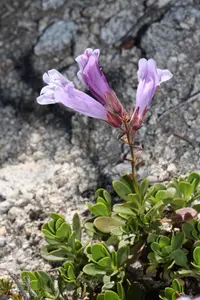
Davidson's penstemon (Penstemon davidsonii) is a low, mat-forming evergreen perennial from rocky mountain slopes and ridges in western North America. It naturally tucks into crevices, forming dense cushions of small leaves.
In late spring to early summer it produces short spikes of tubular, usually purple to violet flowers that attract bees and other pollinators. Plants stay compact, which suits rock gardens, troughs, and well-drained slopes.
This species prefers full sun, cool conditions, and sharply drained, often gravelly or sandy soil, which makes moisture control important. Once its needs are understood, it is reasonably straightforward to care for Davidson's penstemon.

Care Difficulty
Moderate Care

Light Preference
Full Sun

Water Requirements
Low Water

Temperature Preference
Cold Hardy

Hardiness Zone
4–8

Soil Texture
Sandy, Loamy, Rocky

Soil pH
Acidic (5.5–6.5), Slightly acidic (6.5–7.0)

Soil Drainage
Well-drained

Fertilization
Minimal (feed rarely)
Scan your plant to receive care tips personalized for your specific plant
Available on iOS and Android
This alpine subshrub needs abundant sun to flower and stay compact.
This species prefers dry, fast-draining conditions and is sensitive to excess moisture.
This cold-hardy perennial tolerates low temperatures but prefers cool, stable conditions.
This alpine subshrub prefers relatively dry air and usually does not need humidity adjustment indoors or outdoors.
This species needs very sharply drained, gritty soil that mimics rocky alpine slopes.
This species is suitable for container growing, especially in rock-garden style troughs.
This alpine shrub stays compact and floriferous with only light feeding in lean, well-drained soil.
Thoughtful pruning keeps Penstemon davidsonii dense, tidy, and flowering well.
This mat-forming species dislikes frequent disturbance, so transplant or repot only when clearly necessary.
Propagation of this low, woody penstemon is most reliable from semi-ripe cuttings and division of established mats.
This species is quite cold hardy when grown in sharply drained soil, so winter care is usually minimal.

Plant Health Check
Not sure what's wrong with your plant? Check your plant's health inside the app.
This species is strongly associated with exposed granitic or other acidic rock in high-elevation habitats of the Pacific Northwest and northern California, often growing in crevices where few other shrubs can persist.
It forms low, woody, evergreen mats that can slowly spread across rock surfaces, helping to stabilize thin alpine soils while keeping its foliage close to the ground for protection from wind and cold.
Its tubular, purple to violet flowers are structured for pollination by hummingbirds and long-tongued bees, with a narrow tube and contrasting nectar guides that direct visitors toward the nectar and reproductive organs.

Some populations are naturally tetraploid, meaning they carry four sets of chromosomes instead of the usual two, and this cytological difference has been used to study how chromosome number variation relates to adaptation and speciation in alpine penstemons.
This species is a low, woody, evergreen subshrub. The foliage usually stays green year-round, especially in cooler climates with good drainage. In very harsh or exposed sites, some leaves may bronze or suffer minor winter burn but typically persist.
Keep your plants happy and healthy with plant identification, disease detection, and easy care guidance.

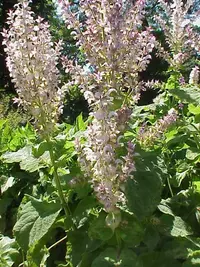
clary sage
Salvia sclarea
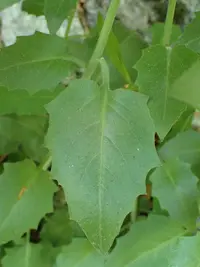
Cevenne Rockcress
Arabidopsis cebennensis
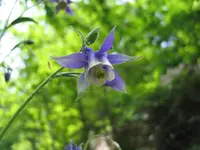
Pyrenean Columbine
Aquilegia pyrenaica
purple Chinese houses
Collinsia heterophylla
red-seeded dandelion
Taraxacum erythrospermum
pinwheelflower
Tabernaemontana divaricata
Sacred flower of the Incas
Cantua buxifolia
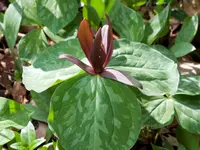
little sweet Betsy
Trillium cuneatum