Staggered Division
Divide mature clumps every 4–6 years in early spring or early fall, replanting sections at slightly different distances to create a layered, natural-looking drift and keep plants vigorous.

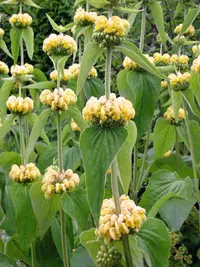
Turkish sage, Phlomis russeliana, is a hardy perennial grown mainly for its bold foliage and unusual tiered flower spikes. It forms low clumps of soft, heart-shaped leaves and sends up upright stems with whorls of pale yellow, hooded flowers in summer.
This species is native to areas of Turkey and nearby regions, where it grows in sunny, open habitats with well-drained soil. Once established, it is valued for its durability, drought tolerance, and low maintenance needs, which makes it relatively simple to care for Turkish Sage in many garden settings.
It generally prefers full sun to light shade and soil that does not stay wet for long periods.

Care Difficulty
Easy Care

Light Preference
Full Sun

Water Requirements
Low Water

Temperature Preference
Cold Hardy

Hardiness Zone
4–9

Soil Texture
Sandy, Loamy, Rocky

Soil pH
Slightly acidic (6.5–7.0), Slightly alkaline (7.0–7.5)

Soil Drainage
Well-drained

Fertilization
Minimal (feed rarely)
Scan your plant to receive care tips personalized for your specific plant
Available on iOS and Android
This hardy perennial thrives in bright, open sites that mimic its native sunny slopes.
This species is drought-tolerant once established and prefers infrequent, deep watering in freely draining soil.
This plant is a cold-hardy perennial that copes well with a wide range of outdoor temperatures in temperate climates.
Phlomis russeliana handles a wide humidity range and rarely needs special humidity management.
Phlomis russeliana prefers lean, well-drained mineral soil that does not stay wet for long.
This species can be grown in containers if the pot is prepared to mimic its dry, free-draining garden conditions.
Phlomis russeliana thrives in lean soils and usually needs only light feeding for best growth.
Pruning supports tidy shape and sustained flowering in Phlomis russeliana.
This perennial is more often transplanted in the garden than kept long-term in containers.
Phlomis russeliana is commonly propagated by division, cuttings, or seeds.
This hardy perennial tolerates typical winter cold in much of the US and needs only modest care.

Plant Health Check
Not sure what's wrong with your plant? Check your plant's health inside the app.
The plant produces its yellow flowers in distinct horizontal tiers, called verticillasters, stacked up the stem, which gives a strong architectural outline even after flowering.
Its old flower stems and seed heads remain upright and structurally intact through winter, providing visual interest and shelter for small invertebrates long after the growing season has ended.
The broad, softly hairy leaves form a dense groundcover that helps suppress weeds and also reflects light, which makes the foliage appear pale green even in strong sun.

Phlomis russeliana is native to rocky slopes and open woodlands in Turkey and parts of the eastern Mediterranean, where its deep root system allows it to survive hot, dry summers that quickly stress many other herbaceous perennials.
Lack of flowers often comes from too much shade, overly rich or wet soil, or plants that were recently divided or moved. Ensure full sun, free-draining soil, and avoid high‑nitrogen fertilizers to support reliable flowering.
Keep your plants happy and healthy with plant identification, disease detection, and easy care guidance.