Perfoliate Pondweed Care (Potamogeton perfoliatus)

Also known as: claspingleaf pondweed, Clasped pondweed
Perfoliate Pondweed

About Perfoliate Pondweed

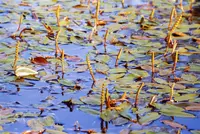
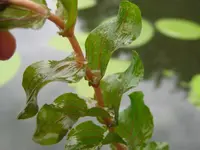
Perfoliate pondweed (Potamogeton perfoliatus) is a submerged aquatic plant commonly found in lakes, ponds, and slow-moving rivers. It anchors in the sediment while its flexible stems and leaves move with the water. The plant has translucent, oval leaves that clasp completely around the stem, giving it a distinctive perfoliate look. Small, inconspicuous flower spikes rise toward the water surface in suitable conditions. This species plays an important role in freshwater habitats by offering cover for fish and invertebrates. It is generally straightforward to grow in outdoor ponds if water quality is stable and not heavily polluted. Understanding how to care for Perfoliate Pondweed helps maintain clear, oxygenated water and a balanced aquatic ecosystem.

Main Plant Requirements

Care Difficulty

Moderate Care

Light Preference

Full Sun

Water Requirements

Aquatic

Temperature Preference

Cool Climate

Hardiness Zone

4–9

Soil Texture

Sandy, Loamy, Silty

Soil pH

Slightly acidic (6.5–7.0), Neutral (7.0)

Soil Drainage

Waterlogged tolerant

Fertilization

Minimal (feed rarely)

Get Personalized Care Plan

Scan your plant to receive care tips personalized for your specific plant

Available on iOS and Android

How to Care for the Perfoliate Pondweed

This submerged aquatic plant depends on stable light levels filtered through the water column.

  • Provide 4–8 hours of indirect to lightly filtered sun, such as morning or late-afternoon light reaching through the water surface.
  • Perfoliate Pondweed tolerates partial shade, but in dense shade stems may elongate, leaves thin, and overall growth becomes sparse.
  • In shallow, clear water, strong midday sun can encourage algae that compete for nutrients, so use 30–50% shade cover if water is very clear and warm.

Potamogeton perfoliatus relies on consistent water depth and quality rather than traditional soil watering.

  • Grow in ponds, lakes, or large water features with stable water levels; avoid frequent drawdowns that expose stems or roots to air.
  • Use a silty or loamy substrate with moderate organic matter; avoid highly anaerobic black mud that smells of sulfur, as this indicates poor oxygen and potential root decline.
  • Signs of stress include yellowing or transparent leaves in low-nutrient, very clear water, and rotting, slimy foliage when nutrient and organic buildup is excessive.

This hardy aquatic species is adapted to cool to moderately warm freshwater conditions.

  • Optimal growth occurs around 59–77°F (15–25°C), with steady temperatures supporting dense foliage and stable rooting.
  • The plant tolerates down to about 32°F (0°C) in many climates, dying back above the sediment while overwintering from rhizomes where water does not freeze solid.
  • In hot periods above 82–86°F (28–30°C), growth may slow and algae pressure increases, so deeper or partially shaded water helps moderate summer temperature swings.

This submerged aquatic species relies on water conditions, not air humidity, so atmospheric levels are generally irrelevant for Potamogeton perfoliatus.

This aquatic plant anchors best in soft, mineral-rich substrates under water rather than typical garden soil.

  • Use a fine to medium-textured sand or sandy loam with added clay to hold nutrients and keep roots stable on the pond bottom.
  • Aim for slightly acidic to neutral conditions, around pH 6.5–7.5, which support nutrient availability and healthy growth.
  • Avoid highly organic, fluffy mixes that float or cloud the water; they reduce visibility and can smother stems and leaves.
  • If the substrate compacts, gently top-dress with a thin layer of clean sand instead of disturbing rooted sections.

This species can be grown in containers submerged in ponds or water features for controlled spread and easier management.

  • Select a wide, low planter or aquatic basket at least 20–30 cm deep to allow creeping rhizomes to anchor securely.
  • Line mesh baskets with a thin layer of hessian or similar fabric so the fine substrate stays in place but water can flow through.
  • Use a heavy substrate and, if needed, weight the container edges with rocks to keep it stable against water movement and fish activity.

In natural or established pond settings, Potamogeton perfoliatus usually needs no added fertilizer if water nutrients are adequate.

  • Where growth is weak in low-nutrient ponds, use a slow-release aquatic fertilizer tablet pushed into the planting substrate near the roots.
  • Apply at the start of the growing season, then once more mid-season if needed, avoiding overuse to prevent algal blooms.
  • Use about half the manufacturer’s recommended aquatic dose, as Perfoliate Pondweed is sensitive to excessive nutrient levels.

Pruning Potamogeton perfoliatus helps manage spread, maintain water flow, and keep open areas for wildlife and recreation.

  • Cut back overgrown or surface-matting stems during active growth, typically late spring to late summer.
  • Remove dead, damaged, or yellowing shoots with long-handled aquatic shears to maintain plant health.
  • Thin crowded patches by taking whole stem sections from dense areas, which improves light penetration and water movement.
  • Avoid cutting too low into the crown so stems can regrow and maintain stable underwater habitat.

This pond species is usually grown in natural sediments or aquatic baskets, so focus on careful transplanting rather than frequent repotting.

  • Transplant in spring or early summer when water temperatures are rising and plants resume active growth.
  • Move clumps when growth is sparse, stems are weak, or baskets are full of roots circling inside the container.
  • Gently lift plants, keep roots submerged, and transfer quickly into a basket or soft, silty soil to limit root stress.
  • Plant crowns just into the substrate and anchor lightly; allow at least 20–30 cm spacing so colonies can expand.

Potamogeton perfoliatus is most often propagated vegetatively to maintain local genetic types and predictable growth.

  • Use stem fragments with several healthy nodes, collected in late spring or summer during strong growth.
  • Place cut sections horizontally on or just into fine, silty substrate under 20–80 cm of calm, well-oxygenated water.
  • Anchor stems lightly with small stones or biodegradable clips so nodes remain in contact with the substrate.
  • Provide good light and stable water levels; new roots and shoots normally develop from nodes along the stem.

In most temperate climates this hardy aquatic forms overwintering buds and needs little special winter care once established in ponds.

  • Ensure pond depth is sufficient so crowns and winter buds stay below ice, typically deeper than 40–50 cm in cold regions.
  • For plants in shallow containers, lower baskets to deeper zones of the pond before hard frosts arrive.
  • Avoid disturbing sediments and rhizomes during winter so stored energy in buds supports regrowth in spring.

Care Tips

Manage Water Depth

Adjust planting depth seasonally, keeping the crown 30–80 cm below the water surface so leaves can photosynthesize efficiently without being damaged by waves or ice.

Thin Stems Regularly

Remove older, shaded, or tangled stems every few weeks during peak growth to maintain water flow, reduce self-shading, and keep the stand from becoming too dense.

Control Nutrient Load

Limit fish stocking density and avoid fertilizer runoff into the pond to prevent algal blooms that shade the plants and outcompete them for nutrients.

Anchor Rhizomes Securely

When establishing new plants, secure rhizomes in fine gravel or sandy loam and cover lightly so currents and fish do not dislodge them before roots take hold.

Monitor Water Clarity

Use a simple Secchi disk or a white object on a marked pole to check water clarity; if visibility drops below 30–40 cm, reduce nutrient input and manage algae to support healthy growth when caring for Perfoliate Pondweed.

Common Pests and Diseases

Aphids

These insects feed on the soft underwater stems and young leaves, causing distortion and reduced vigor. This pest is more common in slow-flowing or nutrient-rich waters where natural predators are limited.

Solution

Manually dislodge aphids by increasing gentle water movement or by rinsing infested stems under clean water during maintenance, and remove heavily infested shoots. In outdoor ponds, encourage natural predators such as fish and aquatic insects; in controlled systems, use targeted, aquatic-safe insecticidal soaps applied outside the water in a separate holding container, then rinse thoroughly before returning plants.

China mark moth larvae

This pest consists of aquatic caterpillars that cut and roll Potamogeton leaves into tubes, feeding from inside and leaving irregular holes and reduced leaf area. Damage can thin stands and weaken plants over time.

Solution

Hand-remove leaf rolls and damaged leaves during inspections, and physically remove larvae from the pond whenever seen. Reducing surface debris and overgrown marginal vegetation can limit shelter for adults, while maintaining a balanced fish population helps control larvae through predation.

Leaf spot fungi

This disease produces small brown to black spots on submerged leaves that may coalesce into larger necrotic areas, especially in warm, nutrient-rich, and slow-moving water. Symptoms include premature leaf breakdown, which reduces photosynthetic capacity and stand density.

Solution

Thin and harvest older, heavily spotted shoots to reduce inoculum, and avoid excessive nutrient levels that favor fungal growth. Improving water movement and light penetration, plus regular removal of decaying plant material, forms the core of practical Potamogeton perfoliatus care instructions for managing leaf spot issues.

Epiphytic algae overgrowth

This problem occurs when filamentous or slimy algae colonize leaf and stem surfaces, forming dense coatings that block light and interfere with gas exchange. Symptoms include dull, smothered foliage and slowed growth despite apparently adequate water chemistry.

Solution

Manually remove algae by gently wiping or shaking plants during routine maintenance and by harvesting excess free-floating algae. Reduce nutrient loading (especially phosphorus), increase water circulation, and, where appropriate, use shading or floating plants to limit light levels that favor algal overgrowth while keeping enough light for Potamogeton growth.

Interesting Facts

Submerged leaf design

This species has fully submerged, oval leaves that wrap around and clasp the stem, a feature that reduces drag in flowing water and helps the plant stay anchored in rivers and lakes.

Wide ecological tolerance

It can grow in both soft and moderately hard, slightly acidic to slightly alkaline waters, and tolerates a broad temperature range, which explains its presence across much of the Northern Hemisphere.

Important habitat builder

Dense stands provide shelter and spawning substrate for fish and invertebrates, and the leaves and seeds are eaten by many waterfowl, making it a key structural and food resource in freshwater ecosystems.

Botan icon

Did you know?

This species is often used as a bioindicator in freshwater monitoring programs because its presence, absence, and growth form can reflect long-term changes in water clarity, nutrient loading, and overall ecological health.

FAQs about Perfoliate Pondweed

This species spreads by creeping rhizomes and fragments, forming dense underwater stands where conditions are favorable. In managed ponds it can become dominant, so periodic harvesting or area limitation is often necessary to keep open water.

Grow Healthy Plants with Botan Care

Keep your plants happy and healthy with plant identification, disease detection, and easy care guidance.

Botan plant care app — identify plants on mobile

Explore More Plants