Root flare check
When planting or inspecting an established tree, gently remove excess mulch and soil from the trunk base until the root flare (where the trunk widens) is visible, which helps prevent rot and improves stability.

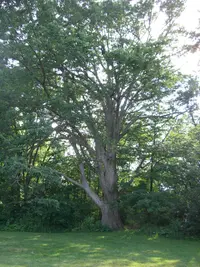
Chinkapin oak, Quercus muehlenbergii, is a long-lived deciduous tree native to central and eastern North America. It belongs to the white oak group and develops a broad, rounded crown with age.
Leaves are glossy, with shallow teeth that resemble chestnut leaves, and the bark becomes light gray and flaky on mature trees. Acorns are relatively sweet and valued by wildlife.
This species prefers full sun, good air circulation, and well-drained, often alkaline or limestone-based soils. Once established, it shows good drought tolerance and relatively low maintenance needs, which simplifies how to care for chinkapin oak in suitable climates.

Care Difficulty
Easy Care

Light Preference
Full Sun

Water Requirements
Moderate Water

Temperature Preference
Cold Hardy

Hardiness Zone
5–7

Soil Texture
Sandy, Loamy, Clay

Soil pH
Slightly acidic (6.5–7.0), Slightly alkaline (7.0–7.5)

Soil Drainage
Well-drained

Fertilization
Minimal (feed rarely)
Scan your plant to receive care tips personalized for your specific plant
Available on iOS and Android
This oak prefers full sun in most landscapes for strong growth and dense canopies.
This deep-rooted species prefers infrequent, thorough watering once established.
This hardy oak tolerates a wide temperature range when established in the landscape.
Humidity is rarely a limiting factor for this species in typical outdoor conditions.
This oak prefers deep, well-aerated mineral soils that drain freely yet retain moderate moisture.
This species is only suitable for temporary container growing during its juvenile stage.
This species usually grows well in average soils, so fertilizing is optional rather than essential when caring for chinkapin oak.
Pruning Quercus muehlenbergii focuses on structural health and safety rather than heavy shaping.
This oak is rarely kept in containers long term, so guidance centers on transplanting young trees from nursery pots into the landscape.
Seed propagation is the standard method for Quercus muehlenbergii, while vegetative methods are uncommon and more challenging.
This species is cold hardy in much of its native range and usually needs minimal winter care once established.

Plant Health Check
Not sure what's wrong with your plant? Check your plant's health inside the app.
Chinkapin oak naturally favors limestone and other calcareous soils with high pH and often grows poorly on very acidic sites, which is unusual among many North American oaks.
Its acorns are notably sweeter and less bitter than those of many other oaks due to lower tannin levels, making them highly preferred by wildlife and historically used as a foraged food after simple processing.
The bark develops a light gray to pale brown color with thin, irregular flakes that sometimes resemble that of white oak, helping distinguish it from the darker, more deeply furrowed bark of many other oak species.

The chinkapin oak can naturally hybridize with several related white oak species in areas where their ranges overlap, and these hybrids sometimes make field identification difficult because they blend leaf, bark, and acorn traits from both parents.
This species is generally moderate growing, adding about 30–60 cm per year once established. Growth is faster in deep, well-drained, limestone-rich soils and slower on very dry, compacted, or nutrient-poor sites.
Keep your plants happy and healthy with plant identification, disease detection, and easy care guidance.