Chinese rhubarb Care (Rheum palmatum)

Also known as: Ornamental Rhubarb, East Indian Rhubarb, Turkey Rhubarb
Chinese rhubarb

About Chinese rhubarb

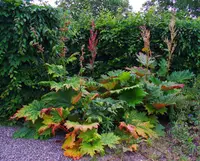
Chinese rhubarb, Rheum palmatum, is a robust herbaceous perennial grown for its bold foliage and architectural presence. It forms large clumps of broad, deeply lobed leaves on thick, upright stems.

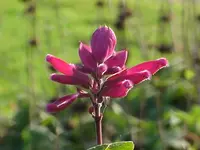
Tall flower spikes with numerous small, often reddish or creamy flowers rise above the foliage in late spring to summer, adding strong vertical structure. The plant is native to central and western China, where it grows in cool, mountainous regions.

Gardeners care for Chinese rhubarb mainly as an ornamental or for traditional medicinal use rather than for eating like culinary rhubarb. It prefers cool conditions, moisture-retentive but well-drained soil, and a site with full sun to light shade, which influences how easy it is to maintain.

Main Plant Requirements

Care Difficulty

Moderate Care

Light Preference

Partial Sun

Water Requirements

Regular Water

Temperature Preference

Cold Hardy

Hardiness Zone

5–8

Soil Texture

Loamy, Clay, Organic-rich

Soil pH

Acidic (5.5–6.5), Slightly acidic (6.5–7.0)

Soil Drainage

Moist but well-drained

Fertilization

Light (every 4–6 weeks)

Get Personalized Care Plan

Scan your plant to receive care tips personalized for your specific plant

Available on iOS and Android

How to Care for the Chinese rhubarb

Rheum palmatum grows best in bright conditions with protection from intense midday sun.

  • Provide 4–6 hours of direct morning sun with light or dappled shade in the afternoon to prevent leaf scorch.
  • Plant Chinese rhubarb where it receives partial shade, especially in hotter regions, such as an east-facing or lightly shaded north-facing border.
  • Monitor foliage: pale, weak stems indicate too little light, while crispy, brown leaf edges signal excessive strong sun exposure.

Rheum palmatum prefers consistently moist but not waterlogged soil.

  • Aim for soil that feels evenly moist; allow only the top 2–3 cm to dry slightly before watering again, especially in active growth.
  • Use deep, thorough watering rather than light splashes, and ensure soil drains freely to prevent root rot and foul, sour smells from saturation.
  • In hot, dry periods, watch for drooping leaves by midday (thirst) and for yellowing, mushy stalk bases as a sign of overwatering.

This hardy perennial tolerates cold winters but grows best in cool to mild conditions.

  • Optimal growth occurs around 55–75°F (13–24°C), with strong leaf production in cool springs and mild summers.
  • Dormant crowns typically survive down to about 0–5°F (-18 to -15°C) under mulch or snow cover, provided soil does not stay waterlogged.
  • In hot spells above 85°F (29°C), provide shade and extra moisture, as prolonged heat can cause wilting, leaf scorch, and reduced vigor.

Rheum palmatum handles a wide humidity range and usually does not need special humidity management outdoors.

Rheum palmatum prefers deep, fertile, moisture-retentive but free-draining soil for strong foliage and root development.

  • Use a loamy soil rich in organic matter, incorporating 30–50% well-rotted compost or leaf mold into the top 30–40 cm.
  • Ensure drainage by avoiding heavy, compacted clay; if needed, lighten soil with coarse sand or fine gravel at 10–20%.
  • Aim for slightly acidic to neutral pH around 6.0–7.0, avoiding very alkaline sites that can limit nutrient availability.
  • Improve aeration by breaking up clods and mixing in organic material thoroughly, avoiding smeared or puddled planting holes.

This species is generally not ideal for long-term container growing due to its large root system and strong growth.

Rheum palmatum responds well to moderate feeding that supports strong foliage without forcing overly lush, weak growth.

  • Apply a balanced granular fertilizer (around 10-10-10) or well-rotted compost in early spring as new shoots emerge.
  • Top up with a light side-dressing of compost or a slow-release fertilizer once more in midseason during active growth.
  • Use at 50–75% of the label rate, and water in thoroughly to avoid root burn and nutrient salt buildup.
  • Stop feeding Chinese rhubarb by late summer and avoid fertilization during winter dormancy to let crowns rest.

Rheum palmatum benefits from light, targeted pruning to maintain plant health and encourage strong new shoots.

  • In late winter or very early spring, remove dead, damaged, or diseased stalks at the base with clean, sharp pruners.
  • During the growing season, cut back yellowing or tattered leaves to improve airflow and reduce foliar disease risk.
  • Deadhead spent flower stalks after blooming if seed is not desired, which can help conserve energy for root and leaf growth.
  • Avoid heavy cutting into healthy crowns; focus on thinning crowded stems to maintain a balanced, open clump form.

This species is usually grown in the ground, so care focuses more on transplanting and spacing than on frequent repotting.

  • Transplant divisions or young Rheum palmatum plants in early spring or early fall when soil is cool and moist.
  • Move plants only when necessary; signs include overcrowding, reduced vigor, or poor leaf size despite good care.
  • Dig a wide hole, keep the root ball as intact as possible, and replant at the same depth to limit root stress.
  • Water deeply after transplanting, then keep soil evenly moist and shaded for 1–2 weeks to help roots re-establish.

Rheum palmatum is most reliably propagated by division, with seed used when genetic variation or breeding is desired.

  • Divide mature clumps in early spring before strong growth, lifting the root crown carefully with a spade or fork.
  • Cut the crown into sections, each with at least 1–2 healthy buds and substantial root, using a clean, sharp knife.
  • Replant divisions immediately into fertile, well-drained soil, setting buds just below the surface and watering thoroughly.
  • For seed, sow fresh in late summer or stratified seed in spring, keeping the seedbed moist and cool for steady germination.

This hardy perennial tolerates typical temperate winters well but benefits from simple crown and root-zone protection in colder regions.

  • After hard frost blackens foliage, cut stems back to just above crown level to reduce rot and disease carryover.
  • Apply a 5–8 cm layer of straw, shredded leaves, or compost over the root zone to buffer freeze–thaw cycles.
  • In very cold areas or for container-grown plants, move pots to a sheltered, unheated space and insulate the container sides.

Care Tips

Deep mulching

Apply a 5–8 cm layer of organic mulch around the crown each spring, keeping it 3–5 cm away from the stems to conserve moisture, cool the root zone, and suppress weeds without risking rot.

Staggered crown division

Divide mature clumps every 4–6 years in early spring, replanting only the healthiest, thickest crown sections so plants stay vigorous and produce larger, better-colored leaves and stalks.

Wind and stalk support

In exposed sites, install low, sturdy hoops or discreet stakes before full leaf-out so large leaves and flower stalks are supported against wind damage without constricting growth.

Slug and snail barriers

Place copper tape collars or rough mineral grit in a 5–8 cm band around the plant base early in the season to reduce slug and snail feeding on emerging shoots and young leaves.

Summer moisture buffering

In hot or dry spells, use a wide dripline soaker hose on a slow setting once or twice per week to deliver water directly to the root zone, which stabilizes growth and reduces stress when growing Chinese rhubarb in lighter soils.

Common Pests and Diseases

Leaf spot

This disease causes small water-soaked lesions on leaves that turn brown, often with yellow halos, and may merge into large dead patches. Symptoms include premature leaf dieback during warm, wet periods.

Solution

Remove and dispose of affected leaves as soon as spots appear and keep foliage as dry as possible by watering at soil level. Improve spacing and airflow, avoid overhead irrigation, and use a copper-based fungicide or chlorothalonil spray labeled for ornamental perennials if leaf spot progresses despite cultural changes.

Crown and stalk rot

This disease leads to soft, brown or black decay at the base of the stalks and crown, often with a foul smell and sudden collapse of large leaves. Symptoms include wilting despite moist soil and mushy tissue at soil level.

Solution

Cut out and discard all rotted tissue, including severely affected stalks and surrounding mulch, and allow the crown area to dry and ventilate. Improve drainage, avoid waterlogging, keep mulch slightly away from the crown, and do not replant Rheum palmatum in badly infested, poorly drained soil; in severe cases remove the entire plant and solarize or replace the soil before replanting.

Rhubarb curculio

This pest is a large, rusty-brown weevil that chews irregular holes in stalks and leaves and creates deep feeding punctures that may ooze sap. This pest can also introduce rot organisms into wounded tissue.

Solution

Handpick adult weevils from stalks and nearby weeds on warm days and drop them into soapy water, then remove and destroy any wild dock, burdock, or related weeds that act as alternative hosts. Keep the area clean of old stalks and debris, and where infestations are persistent, consider using a perimeter band of sticky traps on support stakes to intercept walking adults.

Slugs and snails

These pests feed at night on young leaves, leaving large ragged holes and silvery slime trails on foliage and petioles. Damage is often worse in shaded, damp spots or under dense mulch around the crowns.

Solution

Hand-pick slugs and snails in the evening, reduce hiding spots by tidying plant debris, and use coarse barriers such as crushed eggshells or diatomaceous earth in a ring around crowns. In wet climates, place shallow beer traps or iron phosphate slug baits labeled for edible crops near but not touching the crowns to reduce populations, which supports long-term Rheum palmatum plant care.

Powdery mildew

This disease appears as white, powdery patches on upper leaf surfaces that can spread to cover large areas and cause leaves to yellow and distort. Symptoms include reduced vigor and early leaf decline, especially in crowded or shaded plantings with dry soil and humid air.

Solution

Remove and discard heavily infected leaves and improve spacing and airflow around plants by thinning and cutting back dense neighbors. Water at soil level, avoid overhead wetting of foliage, and apply a labeled fungicide such as sulfur, potassium bicarbonate, or horticultural oil at the first signs of mildew, repeating as directed during high-risk periods.

Interesting Facts

Distinct palmate leaves

This species develops large, deeply lobed leaves with a hand-like (palmate) shape, which inspired its species name palmatum and helps distinguish it from culinary rhubarb.

Ornamental flower panicles

It produces tall, branched flower panicles with many small reddish to pinkish flowers, making it a long-used architectural accent in traditional and modern ornamental gardens.

Origin in Asian mountains

Rheum palmatum is native to high-altitude regions of China and surrounding areas, where it grows on mountain slopes and open woodland margins, adapted to cool summers and cold winters.

Botan icon

Did you know?

Dried roots of Rheum palmatum are one of the classical plant materials in traditional East Asian pharmacopoeias and have been studied for compounds such as anthraquinones, which show documented effects on intestinal motility in controlled laboratory settings.

FAQs about Chinese rhubarb

Lack of flowering often comes from plants being too young, stressed by heat or drought, or overcrowded. Rich but not waterlogged soil, steady moisture, and division of congested clumps every few years usually restore flowering.

Grow Healthy Plants with Botan Care

Keep your plants happy and healthy with plant identification, disease detection, and easy care guidance.

Botan plant care app — identify plants on mobile

Explore More Plants