


New England aster Identification (Symphyotrichum novae-angliae)

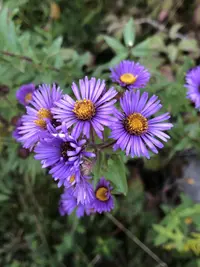
Recognize New England aster by its upright, clumping stems, lance-shaped leaves that clasp the stem without stalks, and many daisy-like flower heads with yellow centers and numerous narrow purple rays.

Plants typically form dense clumps and reach several feet tall, with leaves arranged alternately along sturdy, hairy stems.

Symphyotrichum novae-angliae Identification

Check Your Plant with Botan

Upload a clear image to check whether your plant ID is correct.

Clear images work best. Avoid photos taken too close or too far away

  • 1 free identification
  • No sign-up
  • 30,000+ plants in database

Check the flower heads, leaves, and stems for a quick match to Symphyotrichum novae-angliae.

  • Plants form upright, bushy clumps, often 3-6 feet (0.9-1.8 m) tall.
  • Flower heads are daisy-like, about 1-2 inches (2.5-5 cm) wide, with many narrow purple to pink rays around a yellow center.
  • Leaves are alternate, lance-shaped, stalkless, and clasp the stem at the base.
  • Stems are sturdy, leafy, and usually hairy rather than smooth.

Dense clusters of flower heads near the stem tips help confirm the overall look.

New England aster shows clear visual shifts from early leafy growth to flowering stems.

  • Young plant: Early plants form a tight leafy clump with broad lance-shaped leaves. Stems are short, little branched, and the plant stays close to the ground.
  • Mature plant: Before blooming, the clump sends up stout upright stems, often 3-6 feet (0.9-1.8 m) tall, with many clasping leaves and denser upper branching.
  • Flowering stage: Stem tips expand into crowded flower clusters. Purple ray florets surround yellow disk centers, and the upper plant looks top-heavy compared with the leafy lower stems.
  • Fruiting stage: After petals fade, the heads shrink and become less colorful. Small dry achenes with a fine pappus replace the showy flower centers.

New England aster has several named selections that can be separated in the garden by flower color and plant height.

  • 'Purple Dome': A dwarf cultivar, usually about 18 to 24 inches (45 to 60 cm) tall, with dense branching and masses of deep purple ray flowers.
  • 'Alma Pötschke': Noted for vivid rose-pink to raspberry-pink flowers, a clear color shift from the usual purple tones.
  • 'Harrington's Pink': Shows soft pink ray flowers rather than violet-purple, giving a distinctly lighter look in bloom.
  • 'Barr's Blue': Bears lavender-blue flowers, separating it from typical richer purple forms.

By late summer into fall, New England aster becomes much easier to spot as masses of purple to rose-purple daisy-like flowers with yellow centers open at stem tips. After flowering, fluffy seed heads replace the blooms. In winter, the plant dies back, leaving dry upright stems and a persistent clump at ground level.

Several late-season asters can be mistaken for New England aster.

New York aster(Symphyotrichum novi-belgii)

Often confused because both have many purple daisy-like flower heads. New England aster has clasping, hairy leaves and hairy stems; New York aster is usually smoother, with narrower leaves that do not clasp the stem as strongly.

Smooth blue aster(Symphyotrichum laeve)

Similar flower color can mislead at a glance. Smooth blue aster has bluish, smooth leaves and mostly hairless stems, while Symphyotrichum novae-angliae has greener, noticeably hairy foliage and stems.

Native to central and eastern North America, from the Great Plains east to the Atlantic and from southern Canada into the central and eastern United States. It is most often found in moist to wet meadows, prairies, marsh edges, streambanks, and open roadsides. Finding it in sunny, damp ground helps separate it from similar asters of drier fields or deeper woodland shade.

Check Your Plant ID

Use Botan to identify or confirm it from a photo, helping avoid mix-ups before you label, buy, or plant it.

FAQ

The most reliable clue is the dense hairiness. Stems and clasping leaves are usually rough and hairy, and the leaf bases wrap the stem instead of having leaf stalks. This combination is central to New England aster identification.

More Plant Identification Guides

Identify Your Plant and Learn More

Upload a photo to identify it with Botan, then see plant details, care information, and common problems for that species.

Botan app identifying a plant from a photo
How to Bottom Water Plants: Complete Guide

6 min read · 13 Jul 2026

How to Bottom Water Plants: Complete Guide

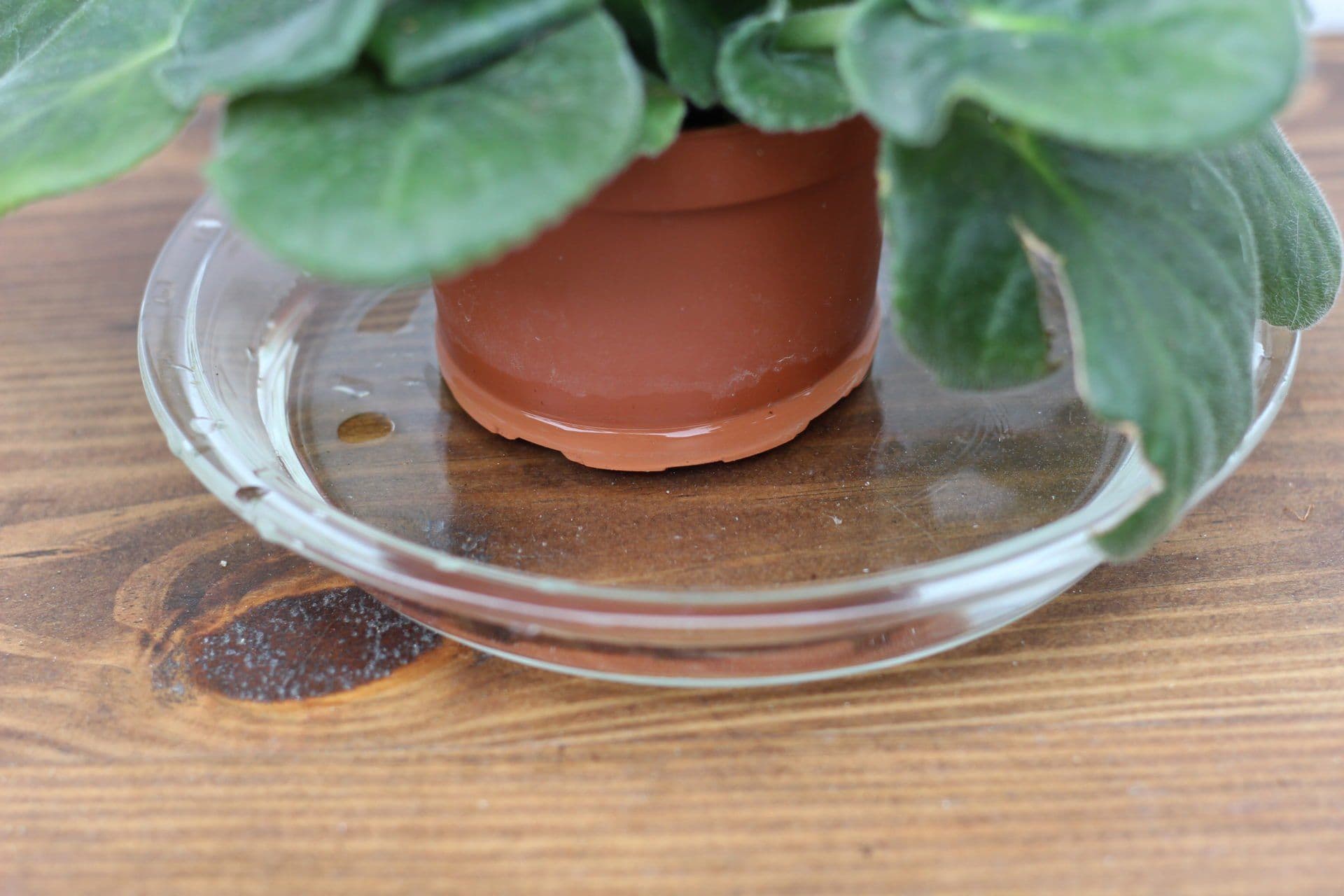
Bottom watering helps soil absorb moisture evenly and keeps foliage dry, reducing the risk of missed dry spots or root problems. Place the pot in a tray of water for a short time, then let it drain well.

Plant Care
How to Bottom Water Plants: Complete Guide
How to Use a Moisture Meter for Plants

5 min read · 4 Sept 2026

How to Use a Moisture Meter for Plants

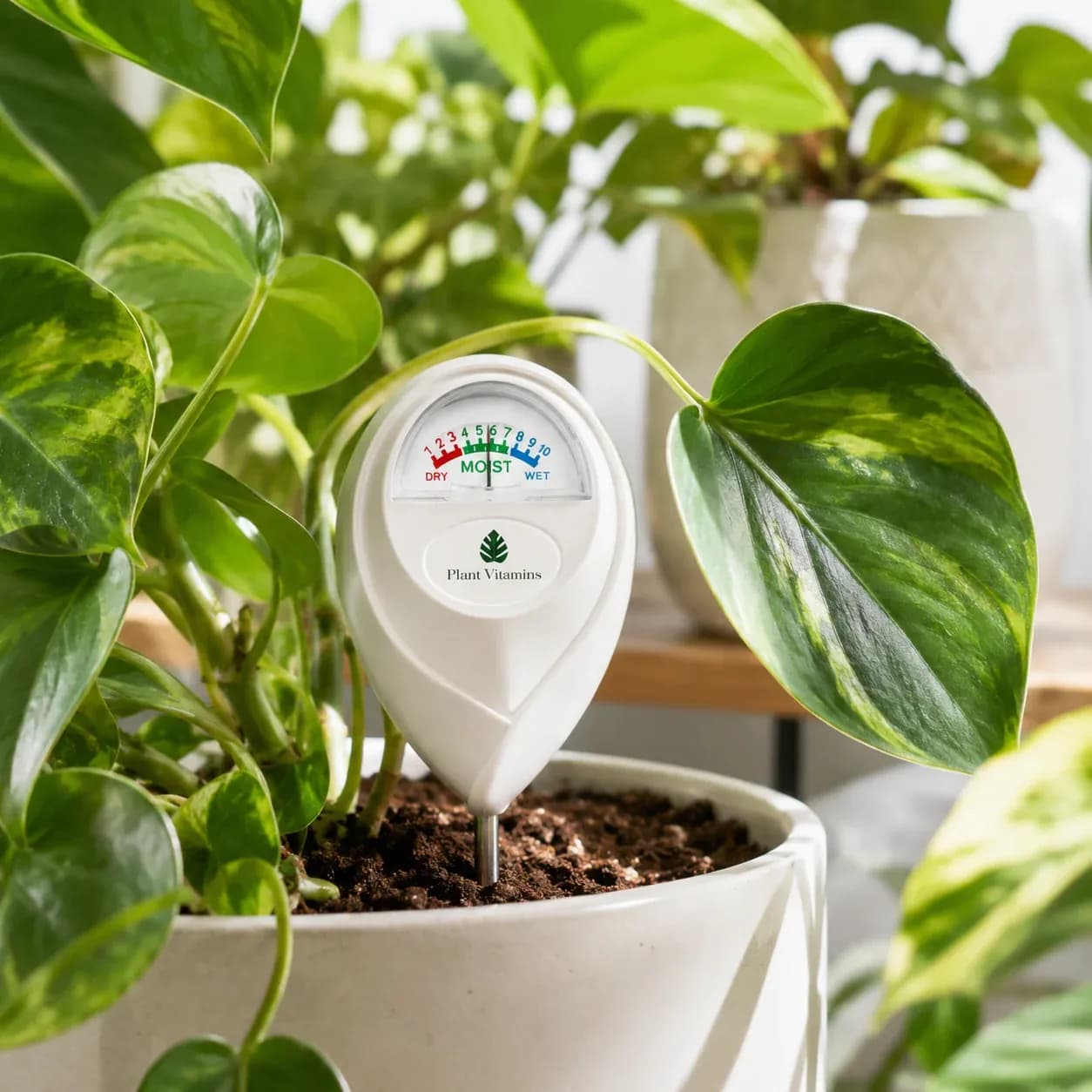
Watering by feel kills plenty of houseplants. A moisture meter checks the soil for you, and takes the guesswork out of it. This guide will show you how to use it correctly, from the first touch to the final reading.

Beginner Guides
How to Use a Moisture Meter for Plants
Dill Companion Plants – What to Grow Next to Dill

9 min read · 17 Jul 2026

Dill Companion Plants – What to Grow Next to Dill

Dill is an easy-to-grow plant that gets along well with many vegetables. This guide describes 15 plants that can be planted alongside it, a few to avoid, and mistakes that can quietly sabotage the entire process.

Plant Recommendations
Dill Companion Plants – What to Grow Next to Dill