plumed crinklemat Care (Tiquilia greggii)

plumed crinklemat

About plumed crinklemat

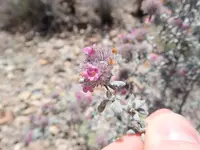
Plumed crinklemat (Tiquilia greggii) is a low, spreading desert perennial known for its fine, gray-green foliage and tiny, pale lavender to whitish flowers. It forms dense mats that hug the ground, giving a soft, textured look to dry landscapes.

This species is native to arid regions of the southwestern United States and northern Mexico, where it thrives in full sun and very well-drained, sandy or gravelly soils. It is drought adapted and slow growing, which makes it relatively easy to maintain if overwatering is avoided and basic guidance on how to care for plumed crinklemat is followed.

Main Plant Requirements

Care Difficulty

Moderate Care

Light Preference

Full Sun

Water Requirements

Low Water

Temperature Preference

Warm Climate

Hardiness Zone

8–11

Soil Texture

Sandy, Rocky, Loamy

Soil pH

Slightly acidic (6.5–7.0), Slightly alkaline (7.0–7.5)

Soil Drainage

Well-drained

Fertilization

Minimal (feed rarely)

Get Personalized Care Plan

Scan your plant to receive care tips personalized for your specific plant

Available on iOS and Android

How to Care for the plumed crinklemat

This desert subshrub thrives in intense sun typical of its native habitat.

  • Provide 6–10 hours of direct sun daily; full, open exposure suits plumed crinklemat best in most arid and semi-arid climates.
  • In extremely hot regions, light afternoon shade or filtered sun can reduce leaf scorch while still maintaining compact, flowering growth.
  • Monitor plants in winter and cloudy seasons, as prolonged low light leads to weak, stretched stems and reduced blooming, especially in denser plantings.

This species is strongly drought-adapted and prefers very lean watering habits.

  • Allow soil to dry completely between waterings; in sandy ground this often means no irrigation until the top 5–10 cm are bone dry and pale.
  • During warm, dry seasons, use deep but infrequent soakings, then let excess drain away; in cool months, withhold irrigation unless plants visibly wilt or shrivel.
  • Watch for yellowing, mushy stems and a sour smell as signs of overwatering, while crisp leaf tips and severe wilting indicate prolonged drought stress for Tiquilia greggii.

This plant is adapted to hot, arid regions but has defined temperature limits.

  • Optimal growth occurs around 70–95°F (21–35°C), with strong heat tolerance up to about 105°F (40°C) if soil is very well drained.
  • The plant tolerates brief dips to 20–25°F (-6 to -4°C), but repeated hard freezes or wet cold greatly increase the risk of root and stem damage.
  • In winter, drier, cool conditions are best; avoid cold, saturated soil, and protect from frost pockets or areas where cold air settles.

This desert shrub thrives in very dry air and does not need added humidity.

  • Target 10–30% relative humidity; higher levels are tolerated if the soil stays very sharply drained.
  • Dry indoor air is acceptable, and plumed crinklemat rarely shows humidity stress unless combined with overwatering.
  • If leaves yellow or rot while air feels humid, increase air movement and reduce watering rather than trying to raise humidity.

This species needs very lean, fast-draining, mineral soil that dries quickly between waterings.

  • Use a gritty mix such as 60–70% coarse sand or fine gravel with 30–40% sandy loam or cactus mix to mimic native desert substrates.
  • Ensure rapid drainage; water should clear the pot within seconds, not sit on the surface or in the saucer.
  • Aim for slightly acidic to slightly alkaline pH, roughly 6.0–8.0, since Tiquilia greggii tolerates a broad mineral range.
  • Avoid peat-heavy, compact, or richly amended soils; if mix feels dense when wet, lighten it with extra coarse sand or pumice for better aeration.

This plant can be grown in containers if the pot is set up to stay very dry and well drained.

  • Choose a wide, shallow pot that matches the spreading root system, which helps prevent water pooling at depth.
  • Use unglazed terracotta to speed evaporation so the mix returns to a dry state soon after watering.
  • Raise the pot on feet or bricks so drainage holes stay clear and runoff leaves the container area quickly after each watering.

This desert native needs very little feeding, so caring for plumed crinklemat focuses more on light and drainage than fertilizer.

  • Use a light top-dressing of compost in spring only if growth appears weak or soil is very poor.
  • If using fertilizer, choose a low-dose, balanced NPK product and apply at 1/4 strength.
  • Feed at most once during the main growing season, then stop entirely in fall and winter.

Tiquilia greggii benefits from minimal, targeted pruning to keep the mound tidy and healthy.

  • Prune in late winter or early spring before strong new growth begins.
  • Remove dead, damaged, or winter-burned stems with clean, sharp scissors or hand pruners.
  • Thin out crowded, crossing shoots lightly to maintain an open, low dome shape.
  • Avoid hard cutting into old woody tissue, which may not resprout well.

This species is usually grown in the ground, so management focuses on careful transplanting rather than frequent repotting.

  • Transplant in late spring when soil is warm and the risk of hard frost has passed.
  • Choose a very well-drained, gravelly site and disturb the root ball as little as possible.
  • Move plants only when roots lightly fill the pot or growth stalls despite good light.
  • Water lightly after transplanting, then allow soil to dry between waterings to limit root stress.

Propagation of Tiquilia greggii is usually done from seed, with success depending on warmth and sharp drainage.

  • Sow seeds in late spring in a gritty, fast-draining mix kept barely moist, not wet.
  • Provide warm conditions around 70–80°F and bright light to encourage germination.
  • Lightly cover seeds with sand or fine grit to stabilize them without burying deeply.
  • Allow good air flow around seedlings and avoid overwatering to prevent damping-off disease.

This desert shrub is fairly cold hardy in its native range and usually needs little structured winter care in the ground.

  • Tolerates light to moderate frost when soil drains quickly and does not stay wet.
  • In marginal climates, apply a thin gravel or mineral mulch to keep the crown dry, not insulated and wet.
  • Container plants in colder zones can be moved to a cool, bright, frost-free area for winter.

Care Tips

Heat-reflective placement

Site plants near south- or west-facing rocks, gravel, or walls that reflect heat and light, which mimics their natural desert microhabitat and promotes denser, more compact growth.

Surface gravel mulch

Apply a 2–3 cm layer of coarse mineral gravel around the crown to keep stems dry at the base, reduce soil splash during rare rains, and protect fine surface roots from temperature swings.

Controlled spreading space

Grow the plant in a wide, shallow bed or container so stems can spread naturally, then lightly redirect or trim only the most wayward runners to maintain an even, low mat without crowding neighboring plants.

Winter rain protection

In regions with cool, wet winters, use a simple clear cover or cold frame roof to shed excess rainfall while still allowing maximum light, reducing the risk of rot in this desert-adapted species.

Sparse companion planting

Combine with only a few equally drought- and heat-tolerant companions and leave open gravel between clumps to maintain airflow, which is one of the most effective practices when caring for plumed crinklemat in humid or irrigated landscapes.

Common Pests and Diseases

Spider mites

This pest is attracted to the dry, hot conditions where plumed crinklemat grows and can cause stippled, pale foliage and fine webbing on stems and leaves.

Solution

Rinse plants with a firm stream of water to dislodge mites, then improve airflow and avoid overhead misting; for persistent problems, use a horticultural oil or insecticidal soap labeled for mites, applied in the early morning or late afternoon to avoid leaf burn.

Leafhoppers

These insects feed by piercing and sucking plant sap, leading to pale speckling, leaf edge yellowing, and sometimes distorted new growth on this desert subshrub.

Solution

Reduce nearby weedy vegetation that shelters leafhoppers, then treat affected plants with insecticidal soap or a light horticultural oil, repeating at 7–10 day intervals until new growth appears clean.

Cercospora leaf spot

This disease can develop during unusually wet or humid periods, producing small, dark leaf spots that may enlarge and merge, causing premature leaf drop.

Solution

Remove and discard affected leaves, increase spacing and airflow around plants, and avoid overhead watering; in areas with repeated outbreaks, use a copper-based fungicide preventively during extended wet spells according to label directions.

Powdery mildew

This disease occasionally appears when nights are cool and humidity rises, creating white, powdery patches on leaves that can lead to reduced vigor and distorted growth.

Solution

Improve air circulation by thinning crowded stems and avoiding overhead watering late in the day; if needed, apply a sulfur or potassium bicarbonate fungicide at the first sign of symptoms and repeat as directed to protect new foliage.

Interesting Facts

Desert pavement specialist

This species often grows in extremely sparse desert pavements and gravelly washes in the Sonoran and Chihuahuan deserts, anchoring itself in shallow, rocky soils that offer very little organic matter.

Heat and drought tolerance

The small, grayish, densely hairy leaves reduce water loss and reflect intense sunlight, allowing the plant to stay functional under very high temperatures and prolonged drought common in its native range.

Low desert wildflower

In wet years it produces small purple to bluish funnel-shaped flowers that contribute to spring wildflower displays, providing nectar resources for native bees and other desert pollinators.

Botan icon

Did you know?

This species is considered an important component of some desert restoration projects, because its deep, fibrous root system helps stabilize fragile soils and its tough physiology allows it to establish where many other plants fail.

FAQs about plumed crinklemat

This species forms low, open mats and slowly widens from the crown, but it is not considered aggressive. It stays fairly localized, especially in poor, sandy soils, and usually coexists well with other drought-tolerant plants.

Grow Healthy Plants with Botan Care

Keep your plants happy and healthy with plant identification, disease detection, and easy care guidance.

Botan plant care app — identify plants on mobile

Explore More Plants