

Wandering Jew (Tradescantia zebrina) Light Needs

Wandering Jew grows best in bright, indirect light with a few hours of gentle direct sun.

Light Preference

Bright Indirect Light

Tradescantia zebrina Light Requirements

Tradescantia zebrina is native to parts of Mexico and Central America, where it grows as a creeping plant along shaded ground, rocky banks, and forest edges. In these sites, foliage often receives filtered light, broken sun, or short periods of open sun rather than all-day exposure. This background explains its flexibility indoors and outdoors. Its preferred light is bright, indirect or filtered light.

  • Ideal exposure:

    Ideal exposure: Tradescantia zebrina needs about 6–8 hours of bright, indirect or filtered light daily, including up to 2–3 hours of gentle direct morning sun.

  • Direct sun:

    It can tolerate full sun outdoors or in a window after gradual acclimation, but harsh midday rays can scorch leaves.

  • Lower light:

    Shade is tolerated for short periods, yet growth usually becomes longer, weaker, and less colorful.

  • Sun timing:

    Morning sun is safer than hot afternoon sun, especially behind west or south glass.

Indoors, window choice matters because this plant colors best with bright light but can scorch in harsh sun.

NConditional
North-facing window:

Use only if the window is large, unobstructed, and the plant sits close to the glass; color may fade in winter.

EBest
East-facing window:

Place it within a few feet of an east-facing window where it gets bright morning sun and softer light later in the day.

SSuitable
South-facing window:

A south-facing window works if the plant is set 2–4 ft back or protected by a sheer curtain during strong midday sun.

WConditional
West-facing window:

West-facing windows are usable when afternoon rays are filtered or the plant is kept several feet from hot glass.

If growth leans or color fades, adjust the plant closer to the light source before choosing a brighter but harsher exposure.

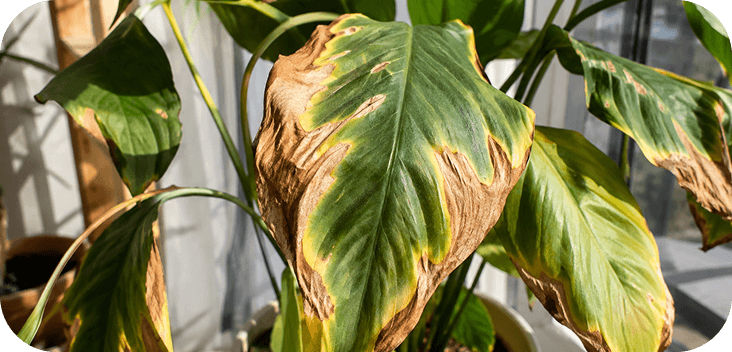
Strong sun can stress Tradescantia zebrina, especially after a sudden move.

Bleached color:

Purple and silver tones may look washed out on the brightest side of the plant.

Sun-facing patches:

Dry tan or pale spots often appear where direct rays hit the leaves.

Crisp exposed leaves:

Leaves closest to hot glass may become papery while shaded growth looks normal.

Tight curling:

Some leaves may cup or curl during intense afternoon exposure.

Move it back from the glass or filter the sun with a sheer curtain. Reintroduce brighter light gradually over 1–2 weeks.

Low light usually shows in the stems before the leaves.

  • Long spacing:

    Stems stretch with wider gaps between leaves as the plant reaches for stronger light.

  • Leaning growth:

    Vines may angle toward the nearest window instead of trailing evenly.

  • Duller color:

    Purple striping can fade, and new leaves may look more green than usual.

  • Small new leaves:

    Fresh growth may come in smaller during the active growing season.

Move it to a brighter spot with indirect light, or bring it within a few feet of a suitable window. Increase exposure gradually if direct sun is involved.

If ideal light is not available, choose the brightest spot that avoids hot afternoon rays. A place with strong ambient light and brief morning sun is a better compromise than deep shade.

Rotate the pot every 1–2 weeks so both sides receive light. If colors fade, move the plant 1–2 ft closer to the light source.

Avoid placing it far inside a room, where stems stretch even when the room appears bright.

Get Personalized Care Plan

Scan your plant to receive care tips personalized for your specific plant

FAQ

The best light for Wandering Jew is bright, indirect light for most of the day, with a little gentle morning sun if available. This keeps growth compact and leaf color stronger.

Everything About Wandering Jew

More Plant Light Guides

Get the Botan App

Discover how to care for your plants with Botan.

Botan app identifying a plant with a phone camera
Top 15 Fast-Growing Trees For Your Garden

13 min read · 28 Jul 2026

Top 15 Fast-Growing Trees For Your Garden

Learn which of the 15 fastest-growing trees will suit your area. We’ll share detailed information on each: growth rate, mature spread, key tree demands, and main vulnerabilities. Read on and make the best choice possible.

Plant Recommendations
Top 15 Fast-Growing Trees For Your Garden
What Plants Don't Like Epsom Salt?

11 min read · 29 Jul 2026

What Plants Don't Like Epsom Salt?

Learn which plants can be seriously damaged by Epsom salt and which will thrive on it. We’ll explain when and how to use it properly, provide tips for indoor & outdoor plants — read on and enjoy a healthy garden.

Plant Care
What Plants Don't Like Epsom Salt?
How Fast Does Bamboo Grow Per Day, Month, and Year

10 min read · 7 Jul 2026

How Fast Does Bamboo Grow Per Day, Month, and Year

Bamboo grows extremely fast: some species can reach 5-6 m in just 3-4 months under the right conditions. This guide explains how much bamboo can grow per day, week, and year, and what affects its growth rate.

Plant Recommendations
How Fast Does Bamboo Grow Per Day, Month, and Year