


Mark Dormant Clumps
After flowering, place small, durable markers where each plant grows so you do not accidentally dig into the crowns when the foliage disappears in summer dormancy or during fall planting of companions.

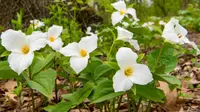
White trillium (Trillium grandiflorum) is a long-lived woodland perennial native to eastern North America. It forms clumps of three broad leaves topped by a single showy white flower. The blooms usually open pure white, then often age to soft pink before fading, creating a changing display in spring. Plants spread slowly by rhizomes, forming dense patches in stable, undisturbed shade. White trillium prefers cool, moist, humus-rich forest soils and good drainage, which can make it slow to establish in gardens. Once settled, it is durable but resents disturbance or frequent division, so planning ahead helps when learning how to care for white trillium.

Care Difficulty
Moderate Care

Light Preference
Partial Shade

Water Requirements
Regular Water

Temperature Preference
Cold Hardy

Hardiness Zone
3–8

Soil Texture
Loamy, Silty, Organic-rich

Soil pH
Acidic (5.5–6.5), Slightly acidic (6.5–7.0)

Soil Drainage
Moist but well-drained

Fertilization
Minimal (feed rarely)
Scan your plant to receive care tips personalized for your specific plant
Available on iOS and Android
This woodland perennial prefers cool, dappled light similar to a deciduous forest floor.
This species needs consistently moist, never soggy, soil during active growth.
This woodland plant is hardy to cold but grows best in cool to mild seasonal temperatures.
Humidity plays a minor role for Trillium grandiflorum, which is adapted to temperate woodland air.
Trillium grandiflorum prefers cool, humus-rich woodland soil with steady moisture and excellent structure.
This species can be grown in containers but is more demanding than in the ground.
This woodland perennial needs very modest feeding, as it is adapted to nutrient-rich but undisturbed forest soils.
Trillium grandiflorum requires almost no pruning, since each stem carries a single whorl of leaves and a single flower.
This species is usually grown in the ground, and its fleshy rhizomes prefer minimal disturbance.
Trillium grandiflorum is most reliably propagated by division, with seed propagation slower and more specialized.
This woodland native is cold hardy in much of the US and usually needs little specific winter care once established.

Plant Health Check
Not sure what's wrong with your plant? Check your plant's health inside the app.
This species can take 7–10 years to grow from seed to first flowering, which makes it very slow to recover from disturbance or overharvesting in its native eastern North American forests.
Its flowers are self-incompatible, meaning pollen from the same plant cannot fertilize the ovules, which promotes genetic diversity but also makes populations vulnerable when plants are sparsely distributed.
The seeds carry a fatty appendage called an elaiosome that attracts ants, which carry the seeds to their nests, eat the elaiosome, and leave the intact seeds in nutrient-rich soil chambers where they can germinate.

In parts of Ontario, Canada, this species is so strongly associated with spring woodlands that it was officially designated the provincial floral emblem in 1937, leading to long-standing public interest in conservation of its natural habitats.
Lack of flowers often comes from plants being too young, recently disturbed, or planted too shallow or deep. Dry spring soil, too much sun, or excess nitrogen fertilizer also reduce flowering for several seasons.
Keep your plants happy and healthy with plant identification, disease detection, and easy care guidance.

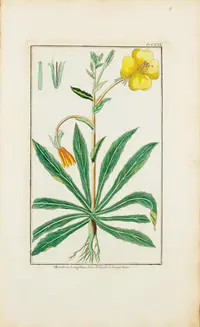
Long-flowered Evening-primrose
Oenothera longiflora
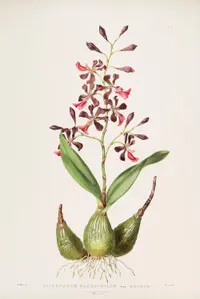
Encyclia cordigera
Encyclia cordigera
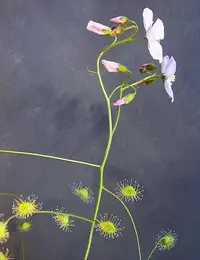
Bridal Rainbow
Drosera macrantha
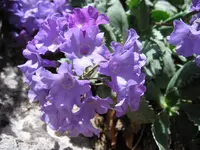
silver-edged primrose
Primula marginata
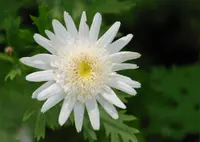
Marguerite daisy
Argyranthemum frutescens
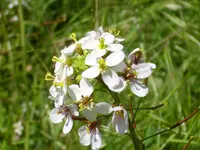
white wallrocket
Diplotaxis erucoides
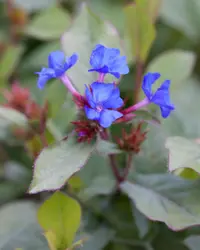
Hardy plumbago
Ceratostigma plumbaginoides
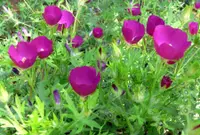
purple poppymallow
Callirhoe involucrata