


8 min read · 16 Oct 2026
20 Funny Plant Names That Make You Laugh
Some plants carry names that sound like jokes. This guide explains the origins of 20 funny plant names. You will also see which of these plants you can grow at home.

Recognize Highbush blueberry by its upright, many-stemmed woody shrub form, simple oval leaves set alternately on the stems, and clusters of small, urn-shaped white to pink flowers.
Mature plants are typically 6 to 12 feet tall (1.8 to 3.7 m), with smooth gray-brown stems arising from the base.

Not sure about your plant ID? Upload a photo and check it with Botan.
Clear images work best. Avoid photos taken too close or too far away
Use these quick visual checks for Vaccinium corymbosum.
Check several stems, leaves, flowers, or fruits together for the clearest match.
Vaccinium corymbosum shows clear visual shifts from young shoots to flowers and berries.
Several Highbush blueberry cultivars are identifiable by plant size, berry color, or fall leaf color.
In spring, Vaccinium corymbosum leafs out with fresh green foliage, and small white to pink, urn-shaped flowers become clearly visible. By early to mid summer, clusters of berries ripen from green to blue. In fall, the leaves often turn red, orange, or burgundy before dropping. Winter reveals the bare twig structure and pointed buds, which can help with identification when the shrub is leafless.
Several blueberry relatives can be mistaken for Highbush blueberry.
lowbush blueberry(Vaccinium angustifolium)
Similar leaves and blue berries cause confusion. It stays much shorter, usually under 2 feet (0.6 m), and has smaller leaves than Vaccinium corymbosum.
rabbiteye blueberry(Vaccinium virgatum)
Often mistaken when shrubs are fruiting. Leaves are narrower, and ripe berries usually show a more prominent calyx, the small crown at the tip.
sparkleberry(Vaccinium arboreum)
Another blueberry relative with similar flowers and berries. It becomes a tall shrub or small tree up to about 20 feet (6 m) and has thicker, glossier leaves.
Vaccinium corymbosum is native to eastern North America, from southeastern Canada south through the eastern and southeastern United States. In the wild it is most often found in bogs, marsh edges, wet woods, and shrub swamps. This range and habitat are useful identification clues because a tall blueberry growing naturally in acidic, wet ground in the eastern US or adjacent Canada is more likely to be this species than a drier-site Vaccinium.
Botan compares your photo to help identify the plant or verify your result, which can reduce mix-ups with similar species.
Compared with huckleberries and some other Vaccinium species, this plant usually has clusters of blue berries with a whitish bloom and many small seeds, not a few hard, noticeable seeds. Twigs are woody and upright.
Use Botan to identify it from a photo, then get plant details, care information, and common problems for that species.


8 min read · 16 Oct 2026
Some plants carry names that sound like jokes. This guide explains the origins of 20 funny plant names. You will also see which of these plants you can grow at home.

7 min read · 30 Jul 2026
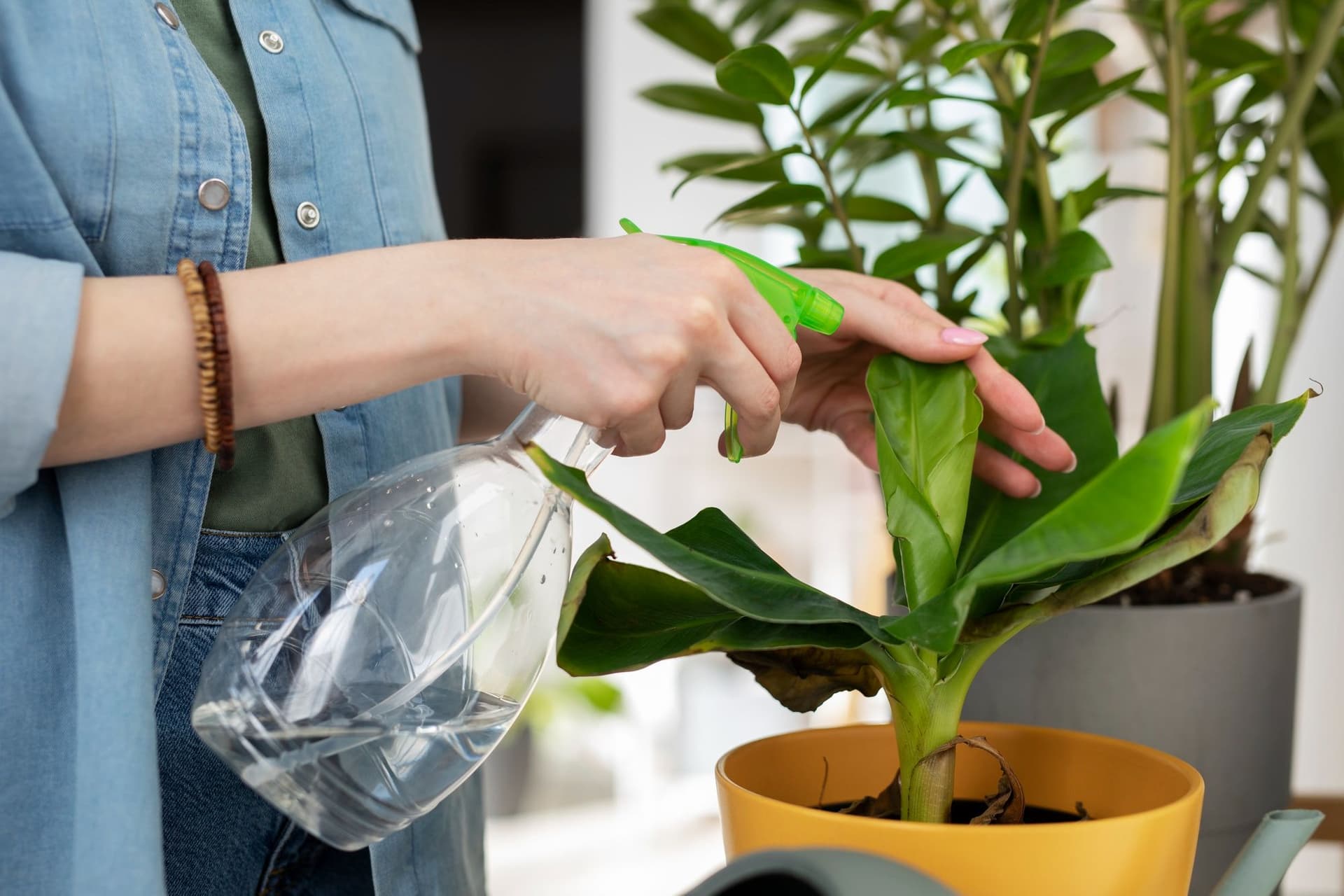
Find out when misting works well and when to avoid it. Here, you’ll find detailed information about compatible and incompatible species, tips on how often to mist plants and do it correctly, and some great alternatives for raising humidity.

7 min read · 28 May 2026
In spring, many plants need repotting—an essential part of care. To avoid stress, consider the plant’s type and size. This article offers a step-by-step guide for repotting indoors or outdoors and shows how to check plant health and get care tips using the Botan App.